What is a Batch Solar Water Heater and Why Build One?
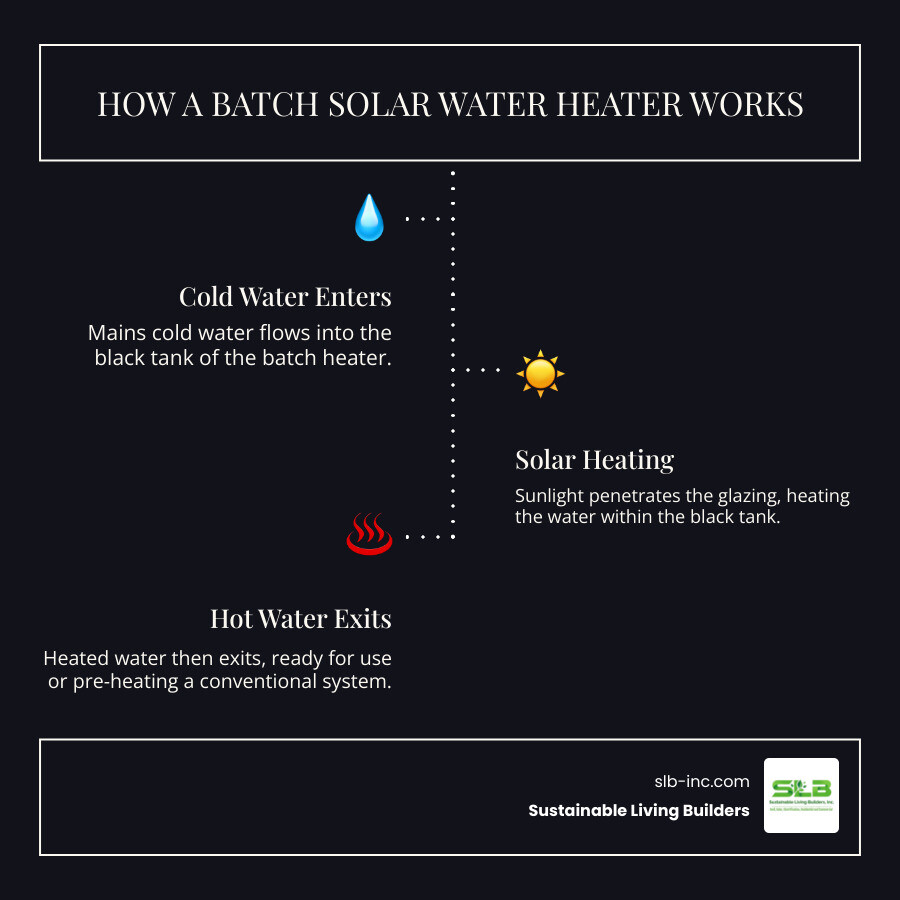
A batch hot water heater, also known as an Integral Collector-Storage (ICS) system, is the simplest type of solar water heater you can build. It’s essentially a tank painted black, sitting in an insulated, glazed box that captures sunlight to heat water—no pumps, no electricity, no complicated controls. This passive system uses mains water pressure to push heated water into your conventional water heater, preheating your supply and dramatically cutting energy costs. If you’re a homeowner looking to reduce your utility bills and shrink your carbon footprint without spending thousands on commercial systems, building a DIY batch heater from salvaged materials offers a practical, eco-friendly solution.
Key Facts About Batch Hot Water Heaters:
- How it works: Cold water enters the black tank, the sun heats it through glass glazing, and hot water exits to your existing heater
- No moving parts: Completely passive—relies only on sunlight and water pressure
- Best climates: Mild-freeze areas where temperatures rarely drop below freezing
- Typical capacity: 40-85 gallon tanks can serve households of 2-4 people
- Water temperature: Can reach 150°F on hot, sunny days
- Installation: Works as a pre-heater in line with your conventional water heater
These systems work best for households with significant daytime and evening hot water needs, though they require protection from freezing in colder climates. The beauty of a batch heater lies in its simplicity—you can build one for under $100 using an old water heater tank, some plywood, insulation, and a salvaged glass door.
Why Build a DIY Batch Heater? Pros and Cons
If you’re considering building your own batch hot water heater, you’re probably wondering whether it’s really worth the effort. The short answer? For the right home and climate, absolutely. But like any home improvement project, it comes with both benefits and limitations worth understanding before you grab your tools.
Advantages of a DIY Batch Heater
The appeal of a homemade batch heater goes beyond just saving money—though that’s certainly a big part of it. When you build one of these systems yourself, you’re making a genuine impact on both your wallet and the environment.
The environmental benefits are immediate and tangible. Every time you repurpose an old water heater tank instead of sending it to the landfill, you’re keeping hundreds of pounds of metal and materials out of the waste stream. And by using free solar energy to heat your water, you’re reducing your reliance on natural gas or electricity, which means fewer fossil fuels burned and a smaller carbon footprint for your household.
The simplicity of these systems is their greatest strength. Because a batch hot water heater is completely passive, there are no pumps to break, no controllers to reprogram, and no electricity required. Water flows through using your existing mains pressure, the sun does all the heating work, and that’s it. This means fewer things can go wrong, and when properly built, these systems can last for decades with minimal fuss.
You’ll see real energy savings month after month. When you plumb your batch heater in line with your existing water heater, it preheats the incoming cold water before it reaches your conventional system. On sunny days, your regular water heater might not need to fire up at all, or only briefly. This can translate to significant reductions in your energy bills, especially during the warmer months when solar gain is highest.
Maintenance is refreshingly straightforward. With no moving parts to service or replace, your main tasks will be occasional cleaning of the glazing and checking connections—simple jobs that take minutes rather than hours.
Disadvantages and Limitations
Now for the honest talk about where batch heaters fall short. Understanding these limitations helps you decide if this project makes sense for your situation.
Freezing weather is the biggest concern. Because these systems hold a large volume of water in an outdoor enclosure, they’re vulnerable when temperatures drop below freezing. While our California climate in Santa Rosa, Sebastopol, and throughout Sonoma County, Marin County, and Napa County is generally mild, we do get occasional cold snaps. If you live in an area prone to hard freezes, you’ll need to either drain the system during winter months or add freeze protection measures.
Performance varies with weather conditions. On cloudy days or during our foggy mornings, your batch heater simply won’t produce as much hot water. That’s the trade-off with passive solar—you’re entirely dependent on the sun showing up. The system also loses heat overnight, so the water that was piping hot at sunset might only be lukewarm by sunrise, even with good insulation.
These systems work best for specific usage patterns. If your household uses most of its hot water in the late afternoon and evening—after the sun has had all day to work its magic—a batch heater is ideal. But if everyone showers first thing in the morning before the tank has warmed up, you’ll rely more heavily on your backup conventional heater.
Aesthetics might be a consideration depending on where you install your system. A DIY solar collector isn’t always the most attractive addition to your property, though thoughtful placement and construction can help it blend in better.
The key is matching the system to your climate and needs. In mild-freeze areas with good sun exposure and daytime hot water usage, a batch hot water heater can be an excellent addition to your home’s energy strategy.
Essential Materials and Tools for Your Project
One of the most satisfying aspects of building a batch hot water heater is the treasure hunt for materials. We’re essentially creating something valuable from items that might otherwise end up in a landfill—and that’s exactly the kind of resourcefulness we love at Sustainable Living Builders.
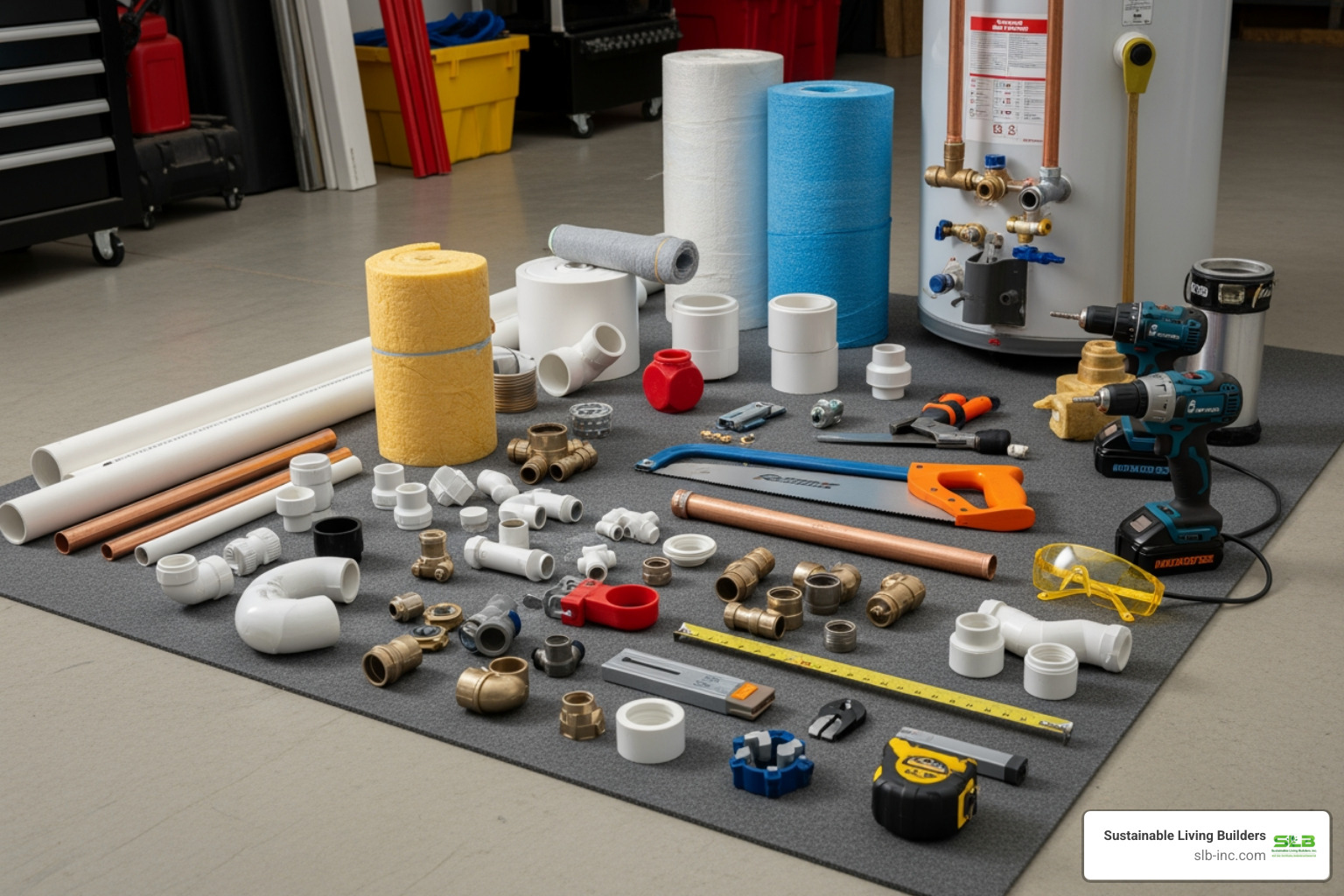
What You’ll Need to Build Your Solar Water Heater
The heart of your project is a salvaged water heater tank, ideally around 40 gallons. We’re typically looking for an old gas heater tank that’s still structurally sound, even if the heating elements or gas components have given up. Check with local plumbers, appliance recyclers, or even neighbors who are replacing their systems. The tank doesn’t need to work—it just needs to hold water without leaking.
For the insulated box, we’ll build a sturdy enclosure using plywood sheets. You’ll need both 1/2 inch and 5/8 inch plywood for different parts of the box. Inside this box goes two sheets of 1-inch foam insulation with reflective foil backing. This combination creates a thermos effect, keeping the heat where we want it—in the water. Don’t forget weatherproof sealant or caulk to seal the corners and rim, though we’ll leave the bottom uncaulked for drainage.
The glazing is where we can really save money by hunting for deals. A double-glazed patio sliding glass door, roughly 3 feet wide (36″ x 79″), works beautifully. Check salvage yards, Habitat for Humanity ReStores, or online marketplaces. Double glazing is worth seeking out because it insulates much better than single-pane glass, reducing overnight heat loss.
You’ll need one pint of flat black metal paint for the tank itself—this is crucial for solar absorption. Also grab a quart of exterior stain or primer and paint to protect your plywood box from our California weather. Even in sunny Sonoma County, moisture protection matters.
On the plumbing side, gather copper or steel pipe for creating a cold water inlet disperser, along with various fittings and valves. Shut-off valves let you isolate the system for maintenance, and a drain valve is essential if you need to empty the tank during an unexpected freeze. Pipe insulation is particularly important for any exposed plumbing—it minimizes heat loss and provides extra freeze protection during those rare cold snaps we get in Napa and Marin Counties. Pick up some plugs to seal any unused openings in the tank.
For structural support, you’ll need lumber like 2x8s to create a stable platform for the tank inside the box. Round out your materials list with basic hardware—screws, nails, and possibly hinges if you’re planning to add a nighttime insulation cover. Some builders also add reflective material inside the box to bounce more sunlight onto the tank.
The Tools That Make It Happen
The good news is that most homeowners already have these tools in their garage. For carpentry, you’ll need a saw (circular or jigsaw works great), a drill with various bits, a measuring tape, and a pencil. Clamps are incredibly helpful for holding pieces steady while you work, and a caulking gun is essential for weatherproofing.
Your plumbing toolkit should include a pipe wrench, a tube cutter for copper pipe, and either a soldering torch with solder or the appropriate tools for threaded connections, depending on your plumbing approach. Keep thread sealant tape (Teflon tape) handy for ensuring leak-free connections.
Safety gear is non-negotiable. Always wear safety glasses to protect your eyes, work gloves when handling materials, and a dust mask when cutting wood or sanding. If you’re soldering, heat-resistant gloves are a smart addition.
The beauty of this project is its accessibility. We’re not talking about specialized equipment or hard-to-find exotic materials. Just honest, straightforward supplies and tools that most DIY enthusiasts already know how to use. With everything gathered and ready to go, we can move forward with confidence into the build itself.
How to Build Your Batch Hot Water Heater: A Step-by-Step Guide
Now comes the fun part—changing salvaged materials into a working batch hot water heater that’ll slash your energy bills and make you feel like a solar pioneer! Don’t worry if you’re not a master carpenter or plumber; this project is surprisingly straightforward. Let’s roll up our sleeves and get building.
Step 1: Preparing the Tank
The soul of our solar water heater is that salvaged tank, and giving it a proper makeover is essential for performance.
Start by salvaging an old tank—ideally a 40-gallon gas or electric water heater. Check with local plumbing contractors, scrap yards, or even neighbors who are replacing their systems. You’re looking for a tank with a sound inner vessel, even if the heating elements are shot.
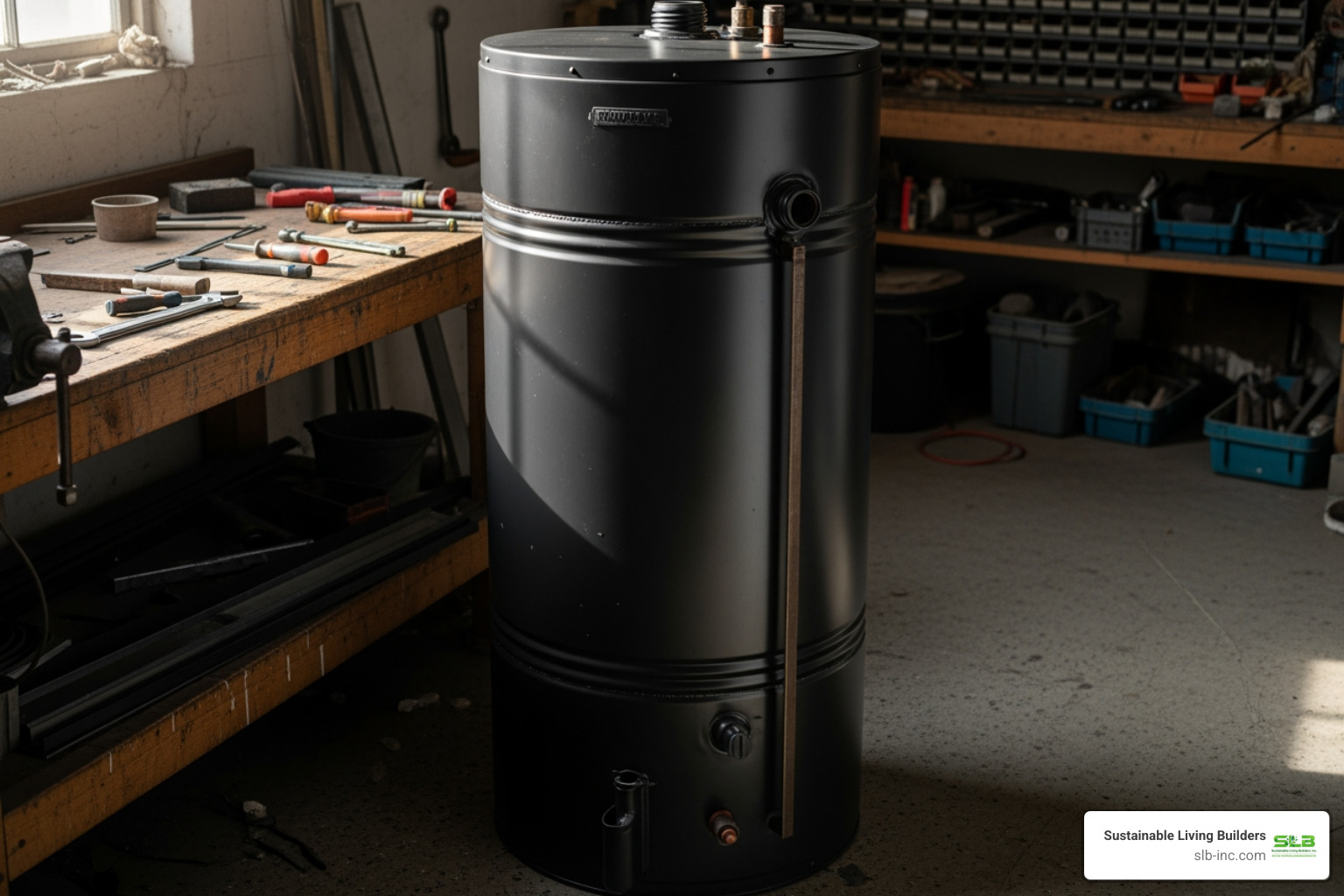
Next comes the stripping process. Carefully remove the outer metal casing and peel away all that old insulation. This can be messy and a bit tedious, but it’s necessary. Watch out for sharp edges as you work. Once you’ve got the bare metal tank exposed, grab some sandpaper and work off any rust or flaking paint. You want a clean, smooth surface for the paint to grip.
Now for the magic ingredient: flat black paint. This isn’t just about aesthetics—flat black paint absorbs nearly all wavelengths of sunlight and converts them directly into heat. Roll or brush on a complete coat of flat black metal paint over the entire exterior of the tank, making sure you don’t miss any spots. Let it dry thoroughly before moving on. That glossy black tank is now a solar absorption powerhouse.
Step 2: Constructing the Insulated Box
Think of the box as your tank’s personal greenhouse—it captures sunlight, traps heat, and keeps the cold at bay.
Build a sturdy plywood box that comfortably fits your tank and accommodates your salvaged glass door. A trapezoid shape works beautifully because the angled sides add structural strength and help reflect additional light onto the tank. Use quality plywood—this box needs to withstand our California weather in Santa Rosa, Sebastopol, and throughout Sonoma County, Marin County, and Napa County.
Line the interior with foam insulation, positioning the sheets so the reflective foil faces inward toward where the tank will sit. This reflective barrier bounces radiant heat back to the tank rather than letting it escape through the walls. Make sure the insulation fits snugly in all corners and along all walls—gaps mean heat loss.
Weatherproofing is critical for longevity. Run a generous bead of caulk along all the internal corners, external corners, and especially around the rim where the glazing will rest. This creates a weather-tight seal that keeps rain out and heat in. Here’s a clever trick: leave the very bottom seam of the box uncaulked. If any moisture does sneak in or condensation forms, this gives it an escape route rather than pooling and rotting your plywood.
Step 3: Plumbing Your Batch Hot Water Heater
Connecting your batch hot water heater to your home’s water system is where theory becomes reality.
The cold water inlet disperser is your secret weapon for maintaining thermal stratification. Construct this clever device from copper and steel pipe—it introduces cold water at the bottom of the tank gently, without disturbing the hot water that’s naturally risen to the top. This means you get consistently hotter water from your system.
Before you start connecting pipes, angle matters. Prop up one end of your finished box so the tank tilts about 30 degrees toward the south. This positioning maximizes solar exposure throughout the day. Now you can see which tank opening is truly at the bottom (your hot water outlet) and which is at the top (your cold water inlet).
Connect a 3/4-inch angle pipe to the lowest connection point on your angled tank—this is where your heated water will exit. Thread the cold water inlet pipe with its disperser into the highest hole. Use thread sealant tape generously on all connections, and tighten everything securely. Any unused holes on the tank should be plugged completely.
This system operates on mains pressure, so all your plumbing connections need to be robust and properly sealed. You’ll be connecting the cold water supply to your batch heater’s inlet, and the hot water outlet will feed into the cold water inlet of your conventional water heater. This setup turns your batch hot water heater into an efficient pre-heater that does the heavy lifting before your conventional heater takes over.
Step 4: Final Assembly and Installation
We’re in the home stretch now—time to bring all the pieces together into a functioning solar water heater.
Carefully lower your painted, plumbed tank into the insulated box. Take your time with this step; you don’t want to damage the insulation or knock any plumbing connections loose. Once the tank is positioned, fabricate supports from sturdy lumber like 2x8s to cradle it securely within the box. These supports prevent the tank from shifting and potentially damaging your careful work.
Double-check that all insulation remains properly positioned after placing the tank. If you’ve built a hinged cover for nighttime insulation (a smart move for maximizing efficiency), now’s the time to attach those hinges.
Position your double-glazed glass panel over the top opening of the box. This glazing is what creates the greenhouse effect, letting sunlight in while keeping heat from escaping. Secure it firmly, running a continuous bead of caulk around the entire perimeter. This seal is your defense against both heat loss and water intrusion.
Finally, install your completed unit in its permanent home. Whether you’re mounting it on a sturdy roof structure or building a ground-level stand, make sure it’s angled approximately 30 degrees toward the south for optimal sun exposure throughout the day. Stability is paramount—this unit will be exposed to wind, weather, and the weight of 40 gallons of water.
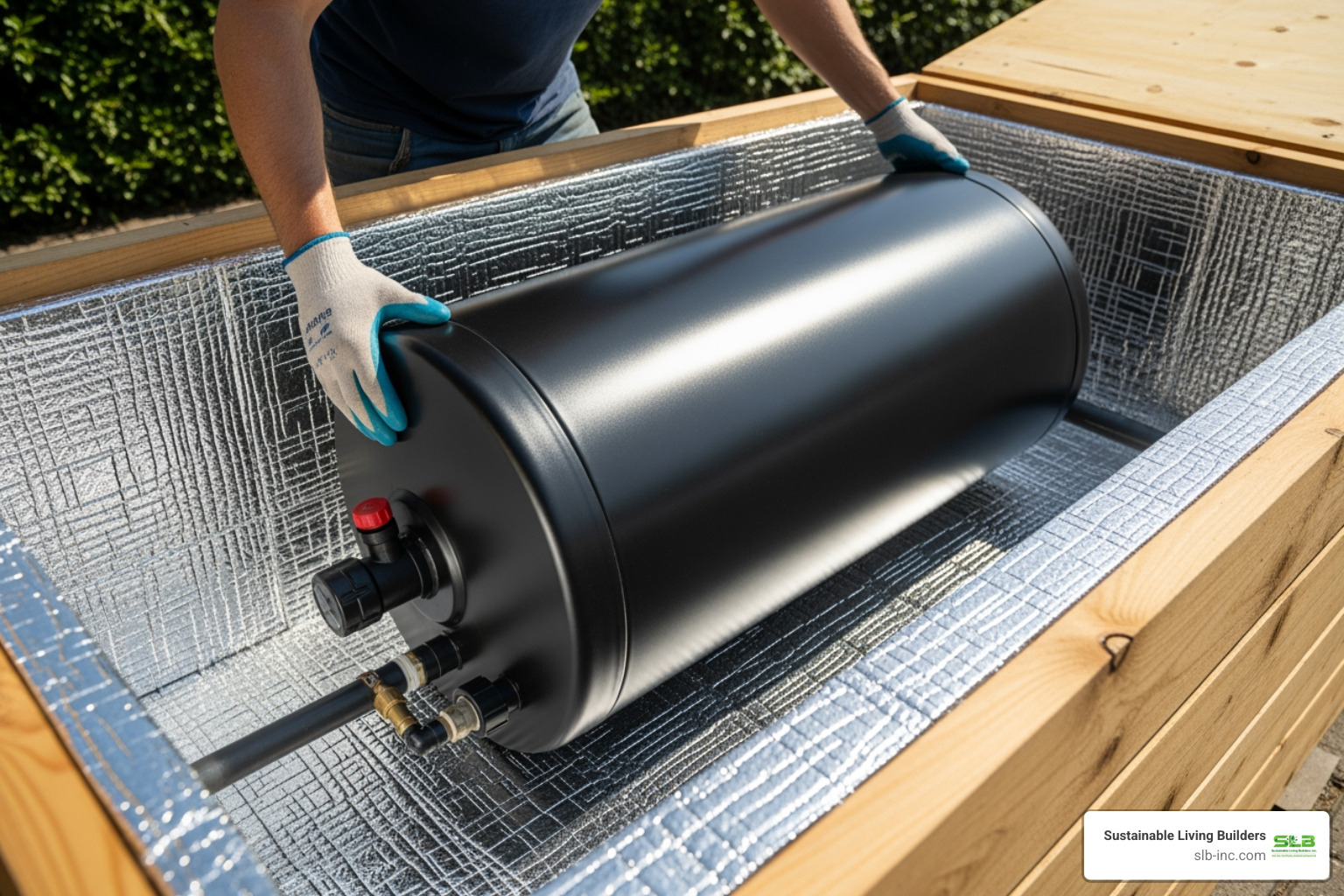
Stand back and admire your handiwork—you’ve just built a solar water heater from salvaged materials! Once you connect it to your home’s plumbing system, you’ll be using free solar energy to heat your water, reducing your carbon footprint and energy bills with every sunny day.
Optimizing and Maintaining Your Solar Heater
Getting the most from your batch hot water heater isn’t complicated, but a little thoughtfulness about placement and some simple upkeep will make all the difference. We want your system to work efficiently year after year, delivering warm water to your home here in Santa Rosa, Sebastopol, Sonoma County, Marin County, and Napa County.
Ideal Location and Orientation
Think of the sun as your fuel source—the better its access, the warmer your water. For those of us in the Northern Hemisphere, facing your collector directly South is the sweet spot. This orientation captures the maximum amount of sunlight as it arcs across the sky throughout the day.
Before you finalize your installation spot, spend some time observing it. Watch how shadows move across the area at different times of day, and consider how those patterns might change with the seasons. Trees, buildings, and other obstructions can cast shade that dramatically cuts your system’s performance. Even partial shading for a few hours can make a noticeable difference in how much heat you collect.
You have two main options for installation: ground-level or roof-mounted. Ground installation makes construction easier and gives you convenient access for maintenance. Roof installation, on the other hand, often provides better sun exposure and keeps the unit out of your yard space. If you’re considering the roof, make absolutely certain the structure can handle the weight—a 40-gallon tank full of water is heavy, and the collector box adds more weight on top of that.
One practical consideration that’s easy to overlook is proximity to your existing water heater. The closer your batch hot water heater sits to your conventional electric or gas heater, the less heat you’ll lose in the connecting pipes. This keeps more of that solar-warmed goodness in your water where it belongs.
Performance-Boosting Tips
Once your system is up and running, a few smart tweaks can help it perform even better. We already mentioned the importance of angling your collector about 30 degrees toward the South. This angle works well year-round for our California latitude, catching the sun’s rays most directly whether it’s high in the summer sky or lower in winter.
A challenge with batch heaters is that they can lose heat overnight when temperatures drop. A hinged, insulated cover for your glazing is a simple solution that makes a real difference. Close it at sunset to trap the warmth inside, and you’ll wake up to noticeably warmer water in the morning. Some builders use rigid foam insulation board attached to a wooden frame—it’s surprisingly effective.
Inside your collector box, reflective material on the walls can bounce scattered sunlight back onto your black tank. Some designs use aluminum foil or reflective insulation with the shiny side facing inward. That trapezoid box shape we discussed earlier? It’s not just for structural strength—those angled sides naturally direct more light toward the tank.
Don’t forget about the seals around your glazing. Even small gaps let precious heat escape, especially on windy days. A good bead of caulk around the perimeter keeps everything tight and efficient.
Simple Maintenance for Your Batch Hot Water Heater
The beauty of a passive batch hot water heater is how little fuss it requires. No pumps to service, no controllers to troubleshoot—just a few straightforward tasks to keep things running smoothly.
Clean your glazing regularly to let the maximum amount of sunlight through. Dust, pollen, and debris build up surprisingly quickly, especially during our dry California summers. A simple rinse with water and a wipe with a soft cloth every few weeks keeps things clear.
Every couple of months, take a walk around your system and inspect the plumbing connections. Look for any signs of dripping or moisture. Catching a small leak early prevents bigger problems down the road and keeps your system operating at full capacity.
Here in Santa Rosa, Sebastopol, Sonoma County, Marin County, and Napa County, we’re fortunate to have generally mild winters. But we do get the occasional cold snap, and freeze protection is something to take seriously. When temperatures are forecast to drop below freezing, the safest approach is to drain your system. Close the inlet valve, open the drain valve at the bottom of the tank, and let all the water out. Yes, it’s a bit of a hassle, but it’s far easier than dealing with burst pipes. When warmer weather returns, simply close the drain valve and let the system refill. Heavy insulation on all exposed pipes provides some protection for those borderline nights.
Every few years, give your system a more thorough once-over. Check the condition of the box exterior and apply fresh paint or stain if needed to protect the wood from weather damage. Look at the insulation inside to make sure it hasn’t degraded or gotten damp. If the flat black paint on your tank is fading or peeling, a fresh coat will restore its heat-absorbing efficiency.
These simple maintenance habits don’t take much time, but they’ll keep your DIY batch hot water heater delivering free, sun-warmed water for many years to come. It’s one of those satisfying projects where a little attention goes a long way.
Conclusion: Enjoy Your Solar-Heated Water
There’s something deeply satisfying about building something with your own hands that not only works but actually makes a difference. Our batch hot water heater does exactly that—turning simple materials and a bit of elbow grease into free hot water, courtesy of the California sun.
Throughout this guide, we’ve walked through every step together, from understanding how these passive systems work to assembling your own collector box and getting it installed. We’ve seen how a salvaged tank, some plywood, insulation, and a glass door can transform into a reliable source of preheated water that takes real pressure off your conventional heater. And the best part? You did it yourself, keeping materials out of landfills while using clean, renewable energy.
Yes, our batch hot water heater needs some attention during those occasional cold snaps here in Santa Rosa, Sebastopol, Sonoma County, Marin County, and Napa County. And sure, cloudy days won’t produce the same results as bright, sunny ones. But for most of the year, you’ll enjoy the benefits of solar-heated water without moving parts, electricity bills, or complicated maintenance schedules. It’s sustainable living in its most practical form—one warm shower at a time.
This DIY project is just the beginning of what’s possible when we commit to energy independence and environmental responsibility. While building your own solar water heater is a fantastic start, creating a truly sustainable home often requires expertise in integrating multiple systems—from comprehensive solar installations to energy-efficient roofing and smart home technologies that work together seamlessly.
That’s where we come in. At Sustainable Living Builders, we specialize in holistic, eco-friendly home solutions that go beyond individual projects. Whether you’re ready to explore a full solar system, upgrade to an energy-efficient roof, or integrate smart home technologies that maximize your energy savings, our team brings the expert guidance and custom solutions to make it happen. We’re passionate about helping homeowners throughout our region reduce both energy costs and carbon footprints with strategies custom to your specific needs.
Ready to take the next step in your sustainable living journey? Learn more about our sustainable building services and find how we can help transform your home into an energy-efficient haven.