Your Guide to Sustainable Flat Roofing in Santa Rosa
If you’re searching for contractors who install sustainable flat roof systems in Santa Rosa, you’re looking for an eco-friendly, energy-efficient solution for your property. Santa Rosa’s climate is ideal for sustainable flat roofing. With an average of 260 sunny days per year, reflective cool roof systems can dramatically reduce cooling costs and lower your carbon footprint. These systems use advanced materials like TPO and PVC membranes that reflect sunlight, keeping your building cooler without overworking your air conditioning.
Choosing the right contractor is key to ensuring your investment delivers long-term value. Here’s what to look for in a qualified professional:
- Valid California contractor license and insurance
- Manufacturer certifications (e.g., GAF Master Elite, Owens Corning Platinum Preferred)
- Specialization in cool roof systems like TPO and PVC
- A portfolio of local projects in Santa Rosa
- Knowledge of Title 24 energy codes and local incentives
The right contractor will help you steer material choices, understand local energy codes, and access available rebates that make sustainability more affordable. Whether you’re replacing an aging commercial roof or upgrading a residential flat roof, working with experienced professionals who understand Santa Rosa’s unique climate is essential.
Why Choose a Sustainable Flat Roof for Your Santa Rosa Property?
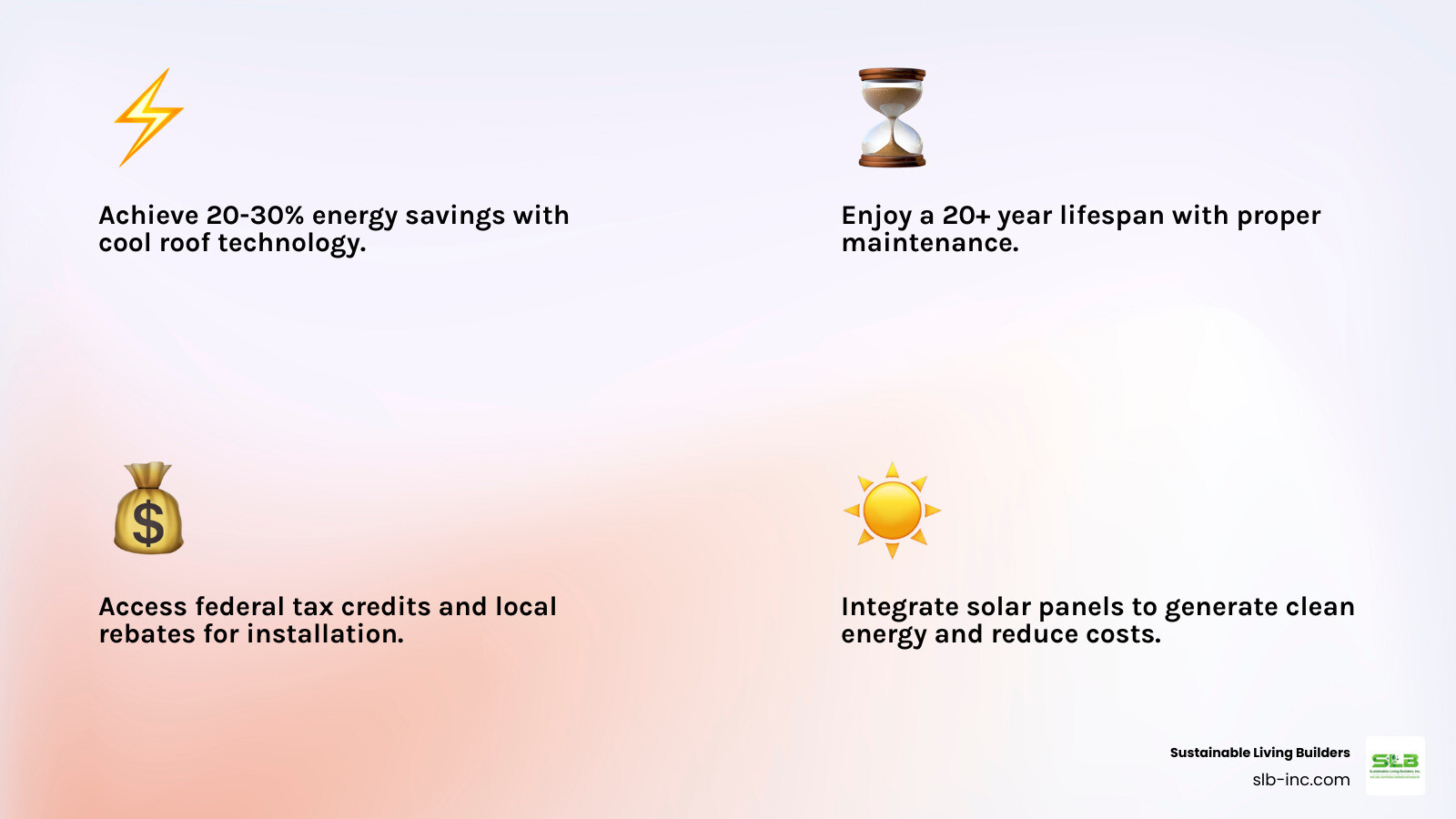
Choosing a sustainable flat roof system for your property in Santa Rosa, Sonoma County, Marin County, or Napa County is a smart investment for both your wallet and the planet. These eco-friendly solutions offer tangible benefits like significant energy savings, lower utility bills, and a reduced carbon footprint, all while increasing your property’s value. By reflecting sunlight and absorbing less heat, they keep buildings cooler, reducing strain on air conditioning systems. This helps combat the urban heat island effect and aligns with a greener lifestyle. Plus, these systems are built for durability, specifically designed to withstand California’s climate. For more on how these systems benefit you, explore the Advantages of Sustainable Roofing and learn about The Most Durable Roofing Materials for California’s Climate.
How Sustainable Roofs Boost Energy Efficiency
The energy efficiency of sustainable flat roofs comes from their “cool roof” technology. Unlike dark roofs that absorb solar radiation, cool roofs have high solar reflectivity and thermal emissivity. This means they reflect most of the sun’s rays and quickly release any absorbed heat, rather than transferring it into your building. In Santa Rosa’s 260 sunny days per year, this significantly lowers indoor temperatures and reduces air conditioning use. Sustainable flat roof systems also help properties comply with California’s Title 24 energy efficiency standards, which are crucial for optimizing energy performance in new construction and major renovations. Learn how Commercial Buildings Adopt Sustainability with these roofing solutions.
The Difference Between Traditional and Sustainable Flat Roofs
Comparing traditional and sustainable flat roofs reveals a significant evolution in roofing technology. While both provide protection, their performance, environmental impact, and longevity differ dramatically.
| Feature | Traditional Flat Roofs (e.g., Tar & Gravel, Black EPDM) | Sustainable Flat Roofs (e.g., TPO, PVC, Cool Coatings) |
|---|---|---|
| Energy Efficiency | Low (high heat absorption) | High (high solar reflectivity) |
| Lifespan | 10-20 years | 20-30+ years |
| Environmental Impact | High (contributes to urban heat island, often landfilled) | Low (reduces heat island, some materials recyclable) |
| Maintenance | Moderate to high (prone to cracking, leaks) | Moderate (durable, fewer common issues) |
| Material Composition | Asphalt, gravel, bitumen, rubber | Thermoplastics, modified bitumen with reflective layers |
| Heat Absorption | High | Low (high albedo effect) |
| End-of-Life | Typically landfill | Some materials recyclable |
Traditional dark roofs absorb and retain heat, driving up indoor temperatures and energy costs. They often have shorter lifespans and contribute to landfill waste. In contrast, sustainable systems use modern materials like TPO and PVC with a high “albedo effect” to reflect solar radiation. This lowers energy consumption and provides a longer service life—often 20 to 30 years or more—with some materials offering end-of-life recycling options. For a deeper dive into roofing materials, check out our guide on Roofing Materials Explained: Pros, Cons, Uses.
Types of Sustainable Flat Roof Systems Available
When exploring sustainable flat roof systems for your Santa Rosa property, you’ll find several innovative options. The primary choices include single-ply membranes, cool roof coatings, and solar-ready roofs that integrate energy generation. Each offers unique advantages, but all provide a durable, energy-efficient, and environmentally responsible roofing solution. Understanding these options is the first step toward choosing the best fit for your property. For a broader look at materials, you can also explore Best Residential Roofing Materials.
Cool Roof Systems (TPO & PVC)
Thermoplastic Olefin (TPO) and Polyvinyl Chloride (PVC) membranes are among the most popular sustainable flat roof systems. These single-ply materials are highly valued for their reflective properties. Their light colors (typically white or gray) reflect sunlight, reducing heat absorption and lowering cooling costs during Santa Rosa’s warm summers. Beyond energy efficiency, these membranes are incredibly durable. They feature heat-welded seams that create a monolithic, watertight barrier resistant to leaks, punctures, and chemicals.
Modified Bitumen and Roof Coatings
Modified Bitumen combined with reflective roof coatings is another excellent sustainable option, especially for upgrading an existing roof. This hybrid system combines the reliability of asphalt with the flexibility of polymer modifiers. When topped with a reflective coating, it becomes a highly energy-efficient solution. These coatings create a seamless, reflective surface that protects the roof from UV degradation and weathering, extending its life while lowering indoor temperatures. The seamless application also provides an extra layer of waterproofing. Learn more about the advantages of Modified Bitumen Flat Roofs.
Integrated Solar Roofing
For ultimate sustainability and energy independence, integrated solar roofing systems are the premier choice for flat roofs in Santa Rosa. These systems actively generate clean, renewable energy, taking advantage of the region’s 260 sunny days per year. Solar panels can be mounted onto compatible flat roof membranes, allowing you to generate your own electricity and drastically reduce or eliminate utility bills. This provides substantial cost savings and significantly decreases your carbon footprint. Many systems can also be paired with battery storage, allowing you to store excess energy for use during peak hours or power outages. Explore more about Sustainable Property Solutions.
I’m looking for contractors who install sustainable flat roof systems in Santa Rosa.
If you’re asking, “I’m looking for contractors who install sustainable flat roof systems in Santa Rosa,” you’re ready to invest in a more efficient and eco-friendly property. The first step is finding the right partner—a contractor with local expertise in Santa Rosa, Sonoma County, Marin County, and Napa County who can deliver a quality installation and provide peace of mind. The right professional will guide you through material selection, explain incentives, and ensure your roof performs optimally for decades. For a comprehensive guide, see our advice on Hiring the Right Roofing Contractor.
Key Qualifications for Contractors Who Install Sustainable Flat Roof Systems in Santa Rosa
When vetting experts for your project, look for these essential qualifications to ensure you’re working with a reputable and skilled team:
- California Contractor License: Verify they hold a valid license with the California Contractors State License Board (CSLB).
- Liability Insurance: This protects you and your property from accidents or damage during installation.
- Workers’ Compensation: This is mandatory for contractors with employees and protects you from liability for on-the-job injuries.
- Manufacturer Certifications: Certifications from leading manufacturers (e.g., “Master Elite”) indicate a high level of training, quality, and access to improved warranties.
- Specialization in Sustainable Roofing: Choose a contractor with a proven track record in installing TPO, PVC, or cool roof coatings.
- Local Project Portfolio: Ask for examples of their work in the Santa Rosa area to see their experience with regional codes and climate.
Checking these qualifications helps you select a contractor who will deliver a high-quality, durable roof. For more detailed advice, refer to our guide on What to Look For in a Roofing Contractor.
The Quoting and Installation Process
Understanding the process can make your roofing project feel straightforward and exciting. Here’s what to expect:
- Initial Consultation & Assessment: We start by discussing your needs and conducting a thorough inspection of your property to recommend a customized solution.
- Detailed Proposal: You’ll receive a clear proposal outlining the scope of work, recommended materials, project timeline, and warranty information.
- Scheduling & Installation: Once you approve the plan, we schedule the installation at a time that minimizes disruption. Our skilled team then installs your new roof according to the highest industry standards.
- Final Inspection: We conduct a comprehensive final inspection to ensure every detail meets our quality standards and your complete satisfaction.
We are here to guide you every step of the way. To start your journey, simply Get a Quote.
Lifespan, Maintenance, and Local Incentives
An investment in a sustainable flat roof system for your Santa Rosa property pays off through energy savings, durability, and potential financial incentives. Understanding the lifespan, maintenance needs, and available rebates helps maximize the value of your investment. Proper care and knowledge of these programs make your eco-friendly choice even more rewarding. Regular maintenance can lead to 4 Benefits of Regular Commercial Roof Maintenance.
Expected Lifespan and Maintenance Needs
Modern sustainable flat roof systems are engineered for longevity, with a typical lifespan of 20 years or more with proper care. This durability offers a superior return on investment compared to many traditional options. To ensure your roof reaches its maximum lifespan, proactive maintenance is key. We recommend twice-yearly inspections to address any issues early. Key tasks include:
- Debris Removal: Keep the roof clear of leaves and branches to prevent water pooling.
- Gutter Cleaning: Ensure gutters and downspouts are clear for proper drainage.
- Seam Integrity Checks: Periodically check heat-welded seams for any signs of wear.
- Damage Assessment: Promptly repair any minor punctures or tears to prevent larger problems.
A consistent maintenance schedule protects your investment and ensures optimal performance for decades. We also offer comprehensive maintenance plans. For more details, see our resources on Commercial Roof Maintenance & Repairs.
Local Rebates and Incentives for Santa Rosa
Switching to a sustainable flat roof in Santa Rosa can be financially rewarding thanks to various rebates and incentives. We help clients across Santa Rosa, Sonoma County, Marin County, and Napa County steer these opportunities. Potential programs include:
- Sonoma County Programs: Local initiatives may offer grants for energy-efficient upgrades.
- Federal Tax Credits: The federal government often provides tax credits for cool roof systems and solar installations.
- Utility Rebates: Local utility companies may offer rebates for installing energy-efficient roofing.
- Title 24 Energy Code Compliance: Meeting California’s Title 24 standards with a cool roof ensures long-term savings and compliance with modern building codes.
We stay informed on the latest incentives to help you identify qualifying programs. Explore more about The Guide to Sustainable Building Practices: Strategies & Trends.
Frequently Asked Questions about Sustainable Flat Roofs
Choosing a new roof can bring up many questions, especially with innovative sustainable systems. Our team is here to provide clear answers to help you feel confident in your decision for your Santa Rosa property. Here are some common questions we receive:
How do sustainable flat roofs perform in rainy weather?
Sustainable flat roofs perform exceptionally well in rainy weather when properly installed. Success depends on a few key factors:
- Proper Drainage: Roofs are designed with a slight slope and effective drainage systems (internal drains or scuppers) to prevent water from pooling.
- Waterproof Membranes: High-performance materials like TPO, PVC, or coated modified bitumen are impervious to water.
- Seam Integrity: Heat-welded seams on TPO and PVC roofs create a single, watertight barrier that is highly resistant to leaks.
A professionally installed sustainable flat roof is designed to shed water efficiently, protecting your property during heavy rain. For more insights, read our comparison of Flat vs. Sloped Roofs: Which is the Best Choice for Rainy Weather?.
Can a sustainable system be installed over my existing roof?
In many cases, yes. Installing a new system over an existing roof (a “roof-over”) can be a cost-effective option by avoiding the labor and disposal costs of a full tear-off. However, this is only possible if:
- The underlying structure is sound and can support the added weight.
- A roof-over complies with local building codes, which often limit the number of roof layers.
- The existing roof is in relatively good condition, without widespread rot or water damage.
We always conduct a thorough assessment to determine if a roof-over is a viable and safe option for your property.
Are sustainable materials safe for my family or employees?
Absolutely. The safety of occupants and the environment is a top priority. Modern sustainable roofing materials are designed with health and safety in mind. Many systems, like TPO and PVC, are low-VOC (Volatile Organic Compound), meaning they release fewer harmful chemicals into the air, which improves indoor air quality. The materials are non-toxic once installed, and many are recyclable at the end of their long lifespan, reducing landfill waste. We are committed to using products that meet stringent health and environmental standards.
Your Partner for Sustainable Roofing in Santa Rosa
Making an informed decision about your roofing system is crucial, and choosing a sustainable flat roof for your Santa Rosa property offers long-term value, environmental responsibility, and significant energy savings. We understand that finding the right contractor to install sustainable flat roof systems in Santa Rosa is a critical step, and we are here to be your trusted partner.
We believe in providing holistic, sustainable solutions that reduce energy costs and minimize your carbon footprint. Our expert team is dedicated to guiding you through every step of the process, from initial consultation and material selection to flawless installation and ongoing maintenance. We pride ourselves on our deep understanding of the unique climate and building codes of Santa Rosa, Sonoma County, Marin County, and Napa County, ensuring your project is handled with local expertise and care.
When you choose us, you’re choosing a qualified expert committed to delivering a durable, energy-efficient, and environmentally friendly roofing system. We’re not just installing a roof; we’re investing in the future of your property and our community. For expert installation and guidance on the best sustainable roofing solutions for your property, explore our Roofing in Santa Rosa, CA services.