What to Do When You Need Emergency Roofing Repair in Boyes Hot Springs, CA
Emergency roofing repair in Boyes Hot Springs CA is something no homeowner wants to face — but when a storm rolls through Sonoma County at 2 AM and water starts dripping through your ceiling, you need answers fast.
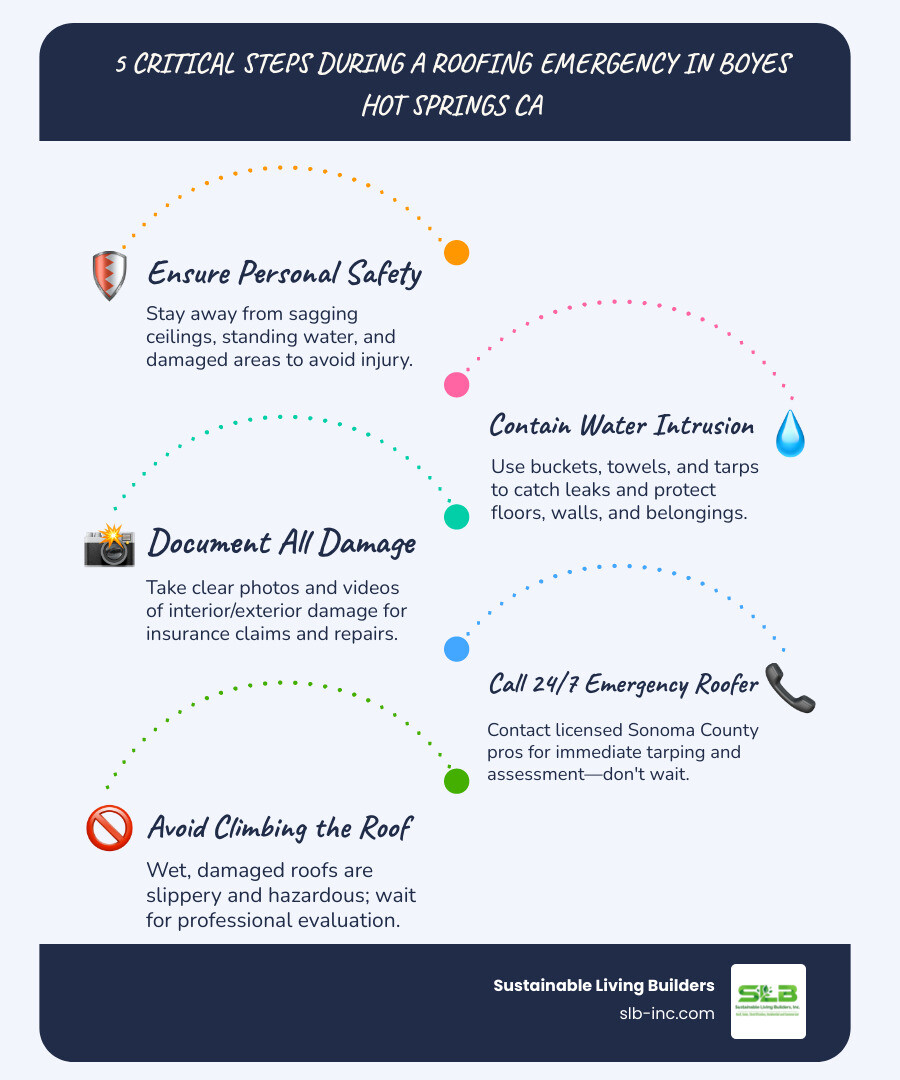
Here are the most important steps to take right now:
- Stay safe — Keep away from sagging areas and standing water indoors
- Contain the water — Place buckets and lay down towels to protect floors and belongings
- Document everything — Take photos and video of all visible damage for your insurance claim
- Call a licensed emergency roofer — Look for contractors offering 24/7 response in Sonoma County
- Do not attempt to climb the roof — Wet surfaces are extremely dangerous, especially at night
Boyes Hot Springs sits in a part of Sonoma County that sees its share of heavy winter rains, high winds, and — critically — wildfire risk. Many homes here fall within Wildland Urban Interface (WUI) zones, which means roof damage can go from bad to catastrophic quickly. Whether it’s a fallen tree branch, a wind-lifted shingle, or fire embers landing on an aging roof, the window to act is short.
Waiting until morning is rarely the right call. Water intrusion can begin damaging your insulation, drywall, and structural framing within hours.
I’m Karlo Jarina, marketing lead at Sustainable Living Builders, where I work to help homeowners understand roofing and solar solutions — including the urgency of emergency roofing repair in Boyes Hot Springs CA before small problems turn into costly disasters. My work sits at the intersection of sustainable home improvement and practical homeowner education, so you can count on clear, honest guidance throughout this guide.
Identifying an Emergency Roofing Repair in Boyes Hot Springs CA
Not every missing shingle is an “emergency,” but in Boyes Hot Springs, the line between a minor fix and a crisis is often drawn by the weather forecast. An emergency is generally defined as any situation where the structural integrity of your home is threatened or where water is actively entering the living space.
If you notice a large branch has pierced the decking or if a section of the ceiling is visibly bowing under the weight of trapped water, you are in the middle of a roofing emergency. Structural sagging is a particularly high-priority red flag; it suggests that the rafters or trusses may be compromised, posing a collapse risk. For more subtle indicators, you might want to review signs your roof needs a replacement to see if your current issues are symptoms of long-term wear or sudden trauma.
Furthermore, understanding 4 common residential roofing problems and how to fix them can help you communicate more effectively with a contractor when they arrive on-site. In our experience, being able to describe whether the leak is near a chimney, a valley, or a vent pipe helps the response team prepare the right materials before they even leave the shop.
Common Causes of Urgent Roof Damage
In Sonoma County, our Mediterranean climate brings specific challenges. While we enjoy beautiful summers, the winter “Pineapple Express” storms can drop inches of rain in hours, accompanied by high winds that peel back older asphalt shingles like orange rinds.
- High Winds: These can create a “lift” effect, especially on homes near open ridges in the Sonoma Valley, tearing away shingles or tiles.
- Tree Falls: Boyes Hot Springs is known for its beautiful canopy, but aging oaks and eucalyptus trees can become liabilities during saturated soil conditions, leading to massive structural punctures.
- Wildfire Aftermath: Even if a fire doesn’t reach your home, the intense heat can “bake” shingles, making them brittle and prone to failure during the next rain.
- Debris Accumulation: Pine needles and leaves from the local foliage often clog gutters, causing water to back up under the eaves—a leading cause of emergency roof repair in Sebastopol CA and nearby Boyes Hot Springs.
Why WUI Zones Require Immediate Emergency Roofing Repair in Boyes Hot Springs CA
A significant portion of Boyes Hot Springs residents live within the Wildland Urban Interface (WUI). This isn’t just a fancy geographical term; it’s a regulatory zone that dictates how your roof must perform. In these areas, your roof is your primary defense against wind-blown embers.
If a storm damages your roof in a WUI zone, you aren’t just dealing with a water leak; you are dealing with a hole in your fire armor. Local building codes in Sonoma County are strict about ignition-resistant materials. Any emergency roofing repair in Boyes Hot Springs CA must eventually align with Class A fire-rating standards to ensure your home remains compliant and safe. This is why we prioritize emergency roofing disaster response that considers both immediate weatherproofing and long-term fire safety.
Immediate Steps to Mitigate Damage and Ensure Safety
When the drip starts, your first instinct might be to grab a ladder. We strongly advise against this. Roofs are treacherous when wet, and at night, the danger triples. Instead, focus on interior “triage.”
Safety protocols should always come first. If water is leaking near electrical outlets or light fixtures, shut off the power to those circuits at the breaker box. Once the area is safe, clear out furniture and valuables. Use a small nail to poke a hole in the center of a bulging ceiling; this sounds counterintuitive, but it allows the water to drain into a bucket in a controlled way rather than causing the entire sheetrock panel to collapse.
Documentation is your best friend when it comes to insurance. Before the repair crew arrives, take clear photos of the damage from inside the house. If it is safe to do so from the ground, take photos of the exterior as well. This evidence is crucial for storm damage roofing repair claims. If you are worried about the financial impact, looking into affordable roof repair in Sebastopol CA can give you a baseline for what to expect in the North Bay area.
Temporary Measures for Emergency Roofing Repair in Boyes Hot Springs CA
The primary goal of an emergency visit is “stabilization.” A professional team will typically perform “tarping,” which involves using heavy-duty, UV-resistant reinforced plastic covers secured with wooden strips (battens). This isn’t just throwing a sheet over a hole; it requires strategic placement to ensure water flows over the tarp and off the roof, rather than underneath it.
Specialized sealants and moisture barriers may also be used for smaller punctures or around compromised flashing. These temporary fixes stop the immediate intrusion, preventing mold growth and further rot in your attic. For a deeper look at how these temporary fixes bridge the gap to permanent solutions, check out our roof repair Sebastopol CA guide.
Navigating Local Regulations and Insurance Claims
Sonoma County has some of the most robust building regulations in California, particularly regarding energy efficiency and fire safety. Most people don’t realize that even some “repairs” may eventually require a permit if they exceed a certain percentage of the roof area.
When we assist with emergency roofing repair in Boyes Hot Springs CA, we often help homeowners navigate the documentation required by the Sonoma County Permit and Resource Management Department (Permit Sonoma). This includes ensuring that any permanent fix meets current codes, which might be different from when your house was originally built. For those seeking the best roof repair in Sebastopol CA or Boyes Hot Springs, choosing a contractor who understands these local nuances is vital.
Understanding Sonoma County Reroofing Requirements
If the emergency repair reveals that your entire roof is at the end of its life, you’ll need to understand the reroofing process. Sonoma County requires inspections at various stages:
- Pre-roofing inspection: To check the condition of the plywood or “decking.”
- In-progress inspection: To verify the underlayment and flashing are installed correctly.
- Final inspection: To ensure the finished product meets all safety and fire codes.
Furthermore, California’s Title 24 standards require “cool roofs” in many instances—roofs that reflect more sunlight and absorb less heat. Avoiding common roof replacement mistakes, like skipping permits or using non-rated materials, will save you a massive headache during the resale of your home.
Choosing Durable Materials for Long-Term Protection
After the emergency is over, the conversation shifts to how to prevent it from happening again. In Boyes Hot Springs, the choice of material is about more than just “curb appeal”—it’s about survival and efficiency.
| Material | Fire Rating | Pros | Cons |
|---|---|---|---|
| Standing Seam Metal | Class A | Highest fire resistance; 50+ year lifespan; great for solar. | Higher initial investment. |
| Composition Shingle | Class A (High-end) | Cost-effective; many styles; easy to repair. | Shorter lifespan (20-30 years). |
| Clay/Concrete Tile | Class A | Beautiful Mediterranean look; very durable. | Very heavy; requires strong framing. |
| Spray Foam (SPF) | Class A (with coating) | Incredible insulation; seamless (no leaks). | Requires specialized installers. |
Maintaining these materials is just as important as the installation. We recommend following top roof maintenance tips such as annual inspections and gutter cleanings to ensure your Class A rating actually protects you when it counts.
Sustainable Solutions for Boyes Hot Springs Homes
At Sustainable Living Builders, we believe an emergency is an opportunity to upgrade. If you have to replace a section of your roof, why not make it work for you?
- Solar Integration: Modern systems can be installed with “roof-compatible” mounts that actually protect the shingles underneath.
- Reflective Coatings: These can be applied to flat roofs or metal roofs to drastically reduce your cooling bills during those hot Sonoma Valley summers.
- Energy-Efficient Insulation: While the roof is open, it’s the perfect time to upgrade your attic insulation, reducing your carbon footprint and increasing home comfort.
Frequently Asked Questions about Emergency Roofing
How quickly can a repair team respond to a major leak?
In the Boyes Hot Springs area, a 24/7 emergency team can typically be on-site within 2 to 4 hours, depending on the severity of the ongoing storm. The goal of this initial visit is to stop the water, not necessarily to finish the permanent repair.
Does homeowners insurance typically cover tree damage to a roof?
Generally, yes. If a healthy tree falls on your roof due to a “peril” like high winds or lightning, insurance usually covers the removal and the repair. However, if the tree was dead or rotting and you neglected to remove it, the claim could be denied. Always keep records of your tree maintenance!
What defines a Class A fire-rated roof in Sonoma County?
A Class A rating means the roofing assembly has passed the most stringent testing for fire spread and penetration. This is the gold standard in WUI zones. It usually involves a combination of the outer material (like metal or specialized shingles) and a fire-resistant underlayment.
Conclusion
Facing a roofing crisis in the middle of the night is stressful, but you don’t have to navigate it alone. From the initial 2 AM tarping to the final inspection of a new, energy-efficient system, having a partner who understands the unique climate and regulations of Sonoma County makes all the difference.
At Sustainable Living Builders, we specialize in more than just “fixing holes.” We provide holistic, sustainable solutions that protect your home from the elements while reducing your energy costs. Whether you are dealing with emergency roofing repair in Boyes Hot Springs CA or looking to upgrade to a smart, solar-ready roof, our team is here to provide expert guidance every step of the way.
If you are worried about the state of your roof or need a professional assessment after a storm, don’t wait for the next leak. Contact our roofing experts today and let’s build a safer, more sustainable future for your home.