I’m wondering how old my roof can be for solar panels. Who in Santa Rosa provides expert assessments?
How old can your roof be for solar panels is one of the most important questions you can ask before committing to a solar investment — and the answer depends on your roof’s material, current condition, and how many years of life it has left. Here’s a quick-reference guide:
| Roof Age | What It Means for Solar |
|---|---|
| Less than 5 years old | Good to go — you likely have 20+ years of life remaining |
| 5 to 15 years old | Evaluate condition carefully; proceed if 10+ years remain |
| 15 to 20 years old | Professional inspection strongly recommended before installation |
| More than 20 years old | Replace your roof first in most cases |
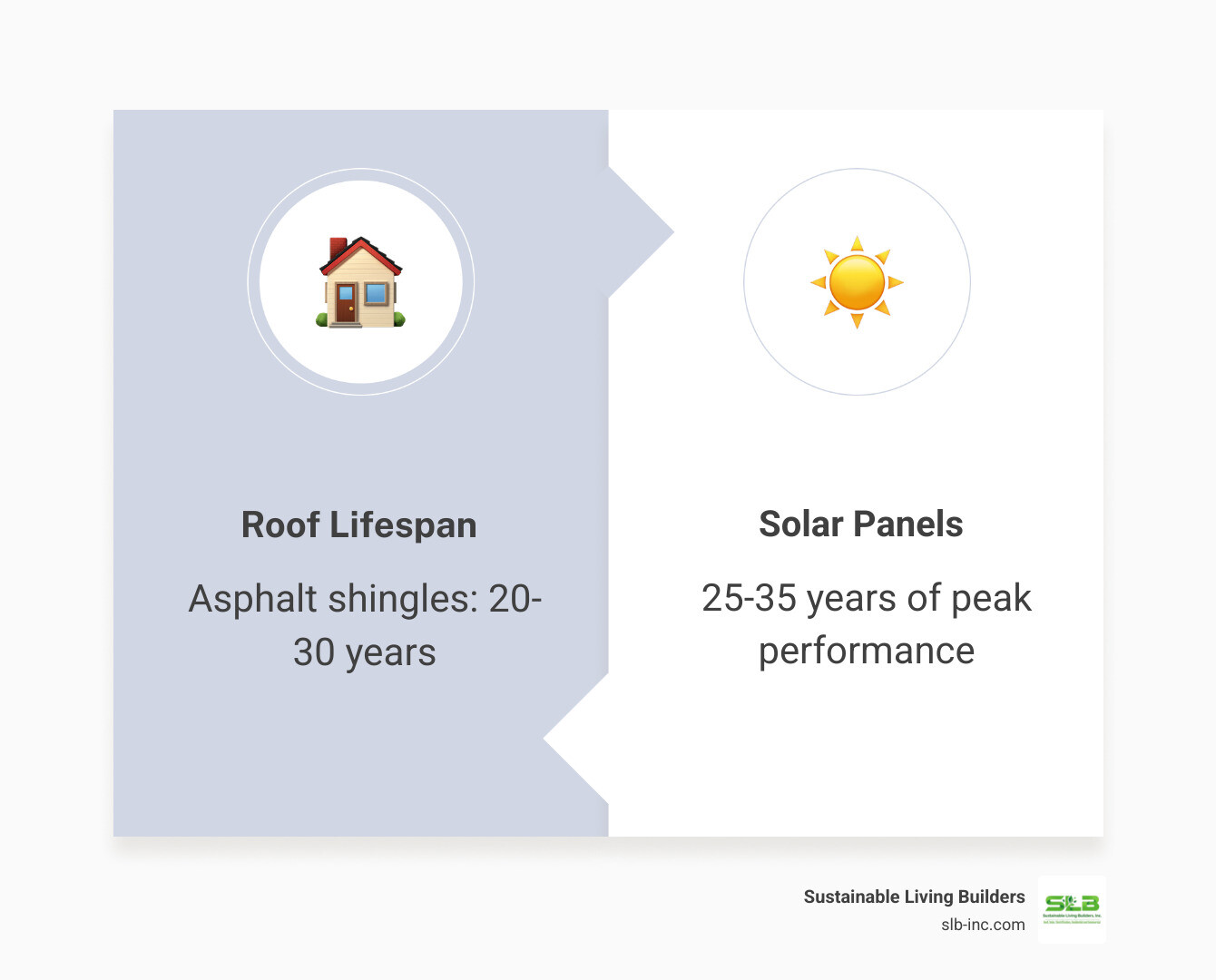
Solar panels are built to last 25 to 35 years. If your roof can’t keep pace, you’ll end up having to remove and reinstall the entire system just to replace worn-out shingles underneath — a setback that can easily erase years of energy benefits. The timing simply doesn’t work in your favor when your roof and your panels are on mismatched timelines.
The good news? With the right information, this is a very solvable problem. Knowing your roof’s age and condition before you go solar is the single most powerful step you can take to protect your investment.
I’m Sunny at Sustainable Living Builders, and I’ve spent years helping homeowners navigate decisions exactly like this one — including the critical question of how old can your roof be for solar panels before it becomes a liability rather than a launchpad. In the sections below, I’ll walk you through everything you need to evaluate your roof’s readiness for solar, so you can move forward with confidence.
Determining How Old Can Your Roof Be for Solar Panels
When we visit homes in Santa Rosa or Napa County, the first thing we look at isn’t the sun—it’s the shingles. The “15-year rule” is a standard benchmark in our industry. If your asphalt shingle roof is older than 15 years, it has likely already lived through two-thirds of its functional life. Since solar panels are a 25-to-30-year commitment, putting them on a 15-year-old roof is like putting a brand-new engine into a car with 200,000 miles on it.

To accurately determine how old can your roof be for solar panels, we have to look at the remaining lifespan rather than just the chronological age. A well-maintained 12-year-old roof in a shaded part of Sebastopol might be in better shape than an 8-year-old roof baked by the constant sun in Sonoma. However, as a rule of thumb, if your roof is over 10 years old, we recommend a deep-dive assessment.
There are specific Signs Your Roof Needs a Replacement that you can spot yourself. Look for curling edges, “balding” shingles where granules have washed away, or dark streaks which indicate organic growth. Our Shingle Roof Lifespan Guide explains that while most asphalt roofs are rated for 20–30 years, real-world conditions often shorten that window.
Interestingly, solar panels actually provide a form of weather protection and UV shielding. They act as a “parasol” for your home, absorbing the harsh rays that typically dry out and crack shingles. In fact, studies have shown that the roof area directly under solar panels can stay significantly cooler, which can technically extend the life of the materials underneath—but only if those materials are healthy to begin with!
Comparing Roofing Materials and Solar Longevity
Not all roofs are created equal. When asking how old can your roof be for solar panels, the material is often more important than the birthday. For example, a 20-year-old metal roof is still in its “youth,” while a 20-year-old asphalt roof is nearing retirement.
| Material | Average Lifespan | Ideal Age for Solar Install |
|---|---|---|
| Asphalt Shingles | 20–30 Years | Under 10–12 Years |
| Wood Shingles | 25–30 Years | Under 5–10 Years |
| Metal Roofing | 40–70 Years | Under 30–40 Years |
| Clay/Concrete Tile | 50–100 Years | Under 25–30 Years |
| Natural Slate | 75–125 Years | Under 50 Years |
Metal roofing is arguably the gold standard for solar compatibility. If you have a standing seam metal roof, we can often use specialized clamps that grip the seams, meaning we don’t have to drill a single hole in your roof. You can learn more about this durability in our guide on How Long Do Metal Roofs Last. Even if you have a corrugated or Tin Roof, the longevity of the metal usually aligns perfectly with the 30-year life of Solar Panels.
Clay and concrete tiles are also excellent, though they require a more delicate touch. Often, we remove specific tiles and replace them with special “tile-replacement” mounts that include built-in flashing. This ensures the structural integrity remains intact while giving the panels a rock-solid foundation.
Structural Requirements and Professional Assessments
Beyond age and material, your roof must be physically strong enough to carry the load. A standard solar panel weighs about 40 pounds. When you multiply that by 20 or 30 panels, plus the racking system, you’re adding significant weight to your home’s skeleton.
In about 95% of cases, modern homes in Marin or Sonoma County are built with enough “reserve capacity” to handle this weight. However, a professional assessment is non-negotiable. We look at the load-bearing capacity of your rafters and trusses. If your roof is older, we check for dry rot or structural sagging that might be hidden under the shingles.
When you invest in Solar Energy Systems, an engineer often has to certify that the roof can handle the “dead load” (the panels) and the “live load” (wind and snow). We use high-quality mounting hardware designed to distribute weight evenly across the strongest points of your roof.
Before we ever climb a ladder, we suggest checking What to Expect During a Roof Inspection. This checklist helps you understand how we evaluate Solar Energy System Common Types against your specific architecture. We’re looking for a marriage between structural integrity and energy potential.
Benefits of Simultaneous Roof and Solar Installation
If your roof is in that “maybe” zone—say, 15 years old—we often suggest a “bundled” approach. Replacing your roof and installing solar at the same time is one of the smartest long-term moves a homeowner can make.
First, it streamlines the process. You deal with one team, one timeline, and one set of permits. This is much more efficient than Installing Solar Panels in Your Home only to have to take them down five years later for a roof leak. Solar Energy Made Simple is all about removing friction, and doing both jobs at once is the ultimate “friction-remover.”
Second, it protects your warranties. When we install a “Smart Roof” system, the roofing warranty and the solar workmanship warranty are aligned. You don’t have to worry about a roofer blaming a solar installer (or vice versa) if a leak develops ten years down the line.
For those who want a truly seamless look, we can even discuss options like integrated solar roofing. Unlike traditional panels, these are integrated directly into the roof structure. If you’re debating Solar Shingles vs Solar Panels, the best time to make that choice is when your current roof is ready to be retired. A simultaneous install maximizes your home value and ensures your energy efficiency is “baked in” from day one.
Frequently Asked Questions about Roof Age and Solar
How old can your roof be for solar panels if it is made of metal?
Because of metal’s incredible durability, you have much more flexibility. A metal roof can often be 30 or even 40 years old and still be a viable candidate for Solar, provided there is no significant rust or structural damage. The use of non-penetrative clamps on standing seam roofs means we aren’t creating new weak points, which is why metal is the preferred choice for long-term solar investments.
Does installing solar panels on an older roof cause damage?
It can. As asphalt shingles age, they become brittle. Walking on them or drilling into them to install mounts can cause “shingle shattering” or cracks that lead to moisture traps. If the flashing isn’t perfectly integrated with an old, crumbling roof, you’re essentially inviting leaks. This is why we are very conservative when evaluating roofs older than 15–20 years; we want to ensure your solar system solves problems rather than creating them.
How old can your roof be for solar panels before it voids the manufacturer warranty?
Most roofing manufacturers have specific clauses about “alterations.” If your roof is already 15 years old, the manufacturer’s warranty may already be reduced in coverage or near expiration. However, for newer roofs, it’s vital to use certified installers who follow specific standards to maintain your warranty. We prioritize workmanship guarantees and ensure our installation meets or exceeds manufacturer requirements to keep your protections intact.
Conclusion
At Sustainable Living Builders, we believe your home should work for you, not the other way around. Deciding how old can your roof be for solar panels isn’t just about a number—it’s about ensuring your home’s foundation is as sustainable as the energy it produces.
Our fictional expert, Sunny, always says: “A solar panel is only as good as the shingles it sits on.” Whether you are in Santa Rosa, Sebastopol, or anywhere in Sonoma, Marin, and Napa Counties, we are here to help you make a holistic decision. We don’t just want to sell you panels; we want to provide an energy-efficient home that stands the test of time.
Don’t guess the health of your roof. Schedule your professional roof and solar assessment today and let us help you build a brighter, more sustainable future for your family.