Why More Sonoma County Homeowners Are Going All-Electric in 2026
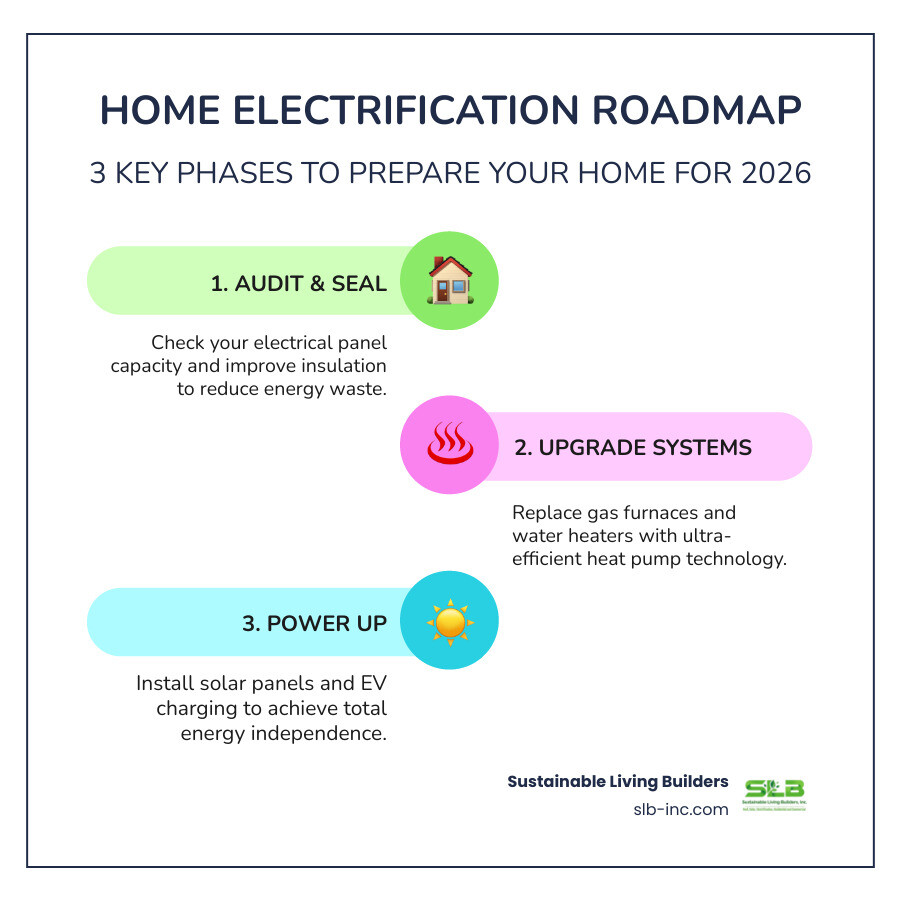
Knowing how to prepare your home for all electric living is one of the smartest moves you can make right now. Energy bills are climbing. Gas appliances are getting older. And the push toward cleaner, more resilient homes in Northern California has never been stronger.
Here is a quick overview of the key steps to get your home ready:
- Audit your electrical panel – Check your main breaker size and count available slots
- Assess your appliances – Identify which gas appliances are due for replacement
- Weatherize first – Air-seal and insulate before upgrading heating or cooling systems
- Upgrade key appliances – Start with the biggest energy users: space heating, water heating, and cooking
- Prepare for EV charging – Determine whether Level 1 or Level 2 charging fits your needs
- Explore incentives – Federal tax credits and rebates can significantly offset your costs
- Add solar last – Size your solar system after electrifying so it matches your actual usage
The good news? You do not have to do everything at once. More than a quarter of U.S. households already use all-electric major appliances, and the technology has never been more capable or affordable. Heat pumps now deliver two to three times more heating energy than the electricity they consume. Induction stoves heat faster and cleaner than gas. And for many homes in Sonoma County, a full transition is more achievable than most homeowners expect.
There is also a health case that is hard to ignore. Gas stoves have been linked to a 42 percent higher risk of asthma symptoms in children. Natural gas appliances release pollutants indoors even when they are not running. Switching to electric is not just about saving money — it is about making your home safer for the people living in it.
This guide walks you through every step, from checking your breaker box to choosing the right EV charger, so you can move forward with confidence.
What Does All-Electric Living Mean for My Santa Rosa Home?
For many of our neighbors in Santa Rosa, “all-electric living” sounds like a futuristic concept, but it is actually a return to simplicity and independence. At its core, Home Electrification means replacing every appliance that burns fossil fuels—gas, propane, or oil—with high-efficiency electric versions.
In May 2026, the reasons to make this switch are clearer than ever. By removing gas lines, you eliminate the risk of methane leaks and carbon monoxide poisoning. You also stop contributing to the indoor air pollution that can linger in your kitchen long after dinner is served. California has set ambitious goals for carbon neutrality by 2045, and our homes in Sonoma County are a huge part of that puzzle. Residential buildings contribute significantly to climate change through on-site combustion; switching to electric allows your home to get “cleaner” every year as PG&E and other providers integrate more wind and solar into the grid.
Beyond the environment, there is the factor of energy independence. When you pair an all-electric home with a solar-integrated roof, you are essentially running your life on sunshine. No more volatile gas prices or monthly “minimum delivery charges” just for having a meter attached to your house.
How to Prepare Your Home for All Electric Living: The Electrical Panel Audit
The heart of your home’s electric revolution is the electrical panel. Think of it as the brain of your house—if it isn’t strong enough to handle the new “muscles” (like heat pumps and EV chargers), you’ll run into trouble.
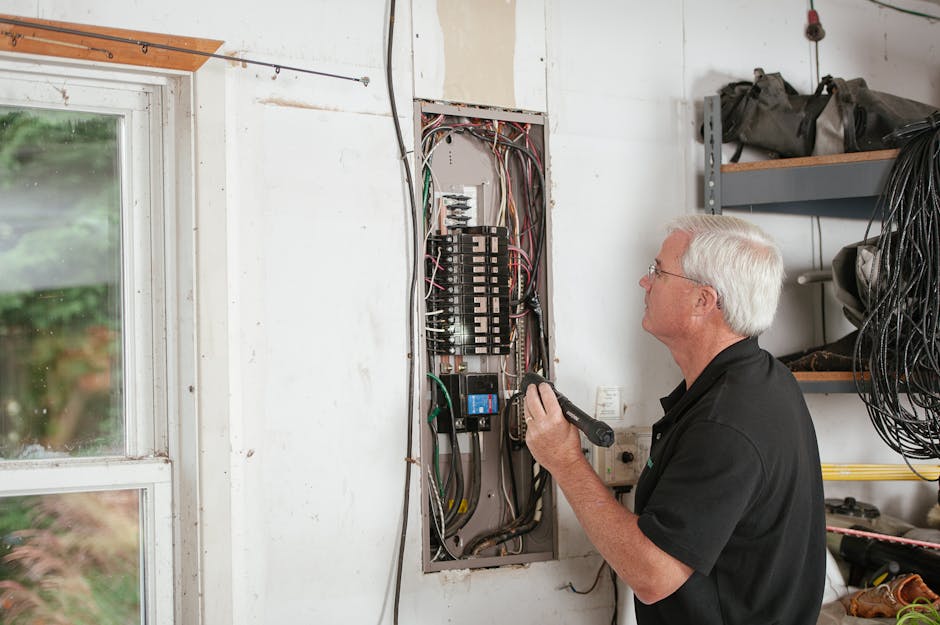
Most newer homes built in the last decade come standard with a 200A breaker box, which is usually plenty of capacity for a full electric transition. However, many of the beautiful, older homes in Marin and Napa counties still run on 100A or even 60A service.
To start your audit, consult our House Electrical Panel Complete Guide. You can check your own capacity by locating your main breaker (usually at the top or bottom of your panel) and looking for the number stamped on the switch. If it says 100 or 125, you might need to plan for some upgrades.
Assessing Capacity: How to Prepare Your Home for All Electric Living Appliances
When we look at how to prepare your home for all electric living, we have to do some “breaker math.” Each new electric appliance—the heat pump, the induction range, the water heater—requires its own dedicated circuit and physical space (slots) in the panel.
- Amperage: Does your total service (e.g., 100A) cover the peak load?
- Breaker Slots: Do you have empty spaces to click in new breakers?
- Load Calculation: This is a technical assessment an electrician performs to see how much power your home actually draws at once.
If your panel is full or underpowered, you may need to Upgrade House Electrical Panel or Install New Electrical Panel entirely. In some cases, an electrician can “double up” underused circuits to free up physical space, but the total amperage of the home remains the limiting factor.
Smart Solutions: How to Prepare Your Home for All Electric Living Without a Full Service Upgrade
Wait! Before you worry about the cost of a massive utility-side service upgrade, there is a modern shortcut. We often recommend a “Watt Diet.” This involves using smart technology to manage your power so you can stay on a 100A or 150A panel while still going all-electric.
A Span Panel is a game-changer here. Unlike a “dumb” metal box, a smart panel allows you to prioritize which appliances get power. If you’re charging your EV and the water heater kicks on, the panel can momentarily throttle the car charger to prevent a trip. Understanding How Can A Span Panel Help Monitor Electricity Usage shows you exactly where your energy goes, helping you avoid expensive infrastructure changes. Load-sharing devices or circuit optimizers can also allow two high-draw appliances (like a dryer and an EV charger) to share a single 240V outlet safely.
Essential Steps for Transitioning Key Home Appliances
Transitioning your appliances is usually a “marathon, not a sprint.” Most homeowners choose the “electrify as they die” method. When your old gas furnace or water heater starts acting up, that’s your signal to switch.
The biggest impact comes from your HVAC system. We recommend following A Step By Step Guide To Transitioning From Gas To Electric Heating Systems to ensure a smooth swap. Modern air-source heat pumps are incredible; they don’t just “create” heat, they move it. This makes them 300% to 400% efficient. When you Replace Ac With Heat Pump, you get a two-for-one deal: high-efficiency heating in the winter and crisp cooling in the summer. A professional Ac Heat Pump Installation ensures the unit is sized correctly for our specific Northern California climate.
Upgrading Your Water Heating and Laundry
Water heating is typically the second-largest energy expense in your home. Switching to a heat pump water heater is a “no-brainer” for most households. These units are at least twice as efficient as traditional electric tanks.
In some setups, you might consider a Batch Hot Water Heater or specialized Backup Hot Water Heater solutions to ensure you never run out of steam during a busy morning. We’ve even seen cases where a Backup Hot Water Heater 2 provides extra resilience for larger families. For laundry, look into heat pump dryers. They are unvented (meaning no hole in your wall!) and use about half the electricity of conventional models while being much gentler on your clothes.
Preparing for Electric Vehicle Charging in Petaluma
If you live in Petaluma or Sebastopol, you’ve likely noticed the explosion of EVs on the road. Preparing your home for a car means looking at your charging levels:
- Level 1: Uses a standard 120V outlet. It’s slow (3-5 miles of range per hour) but works for plug-in hybrids.
- Level 2: Requires a 240V circuit (like a dryer outlet). This is “future-proof” charging, providing 10-30 miles of range per hour.
Many homeowners ask, Can An Ev Charger Be Installed Inside A Garage? The answer is yes, and it’s often the best place for it. If you don’t have a garage, we can look at NEMA 14-50 outdoor-rated outlets or hard-wired pedestals for your driveway.
Maximizing Efficiency Through Insulation and Solar Integration
Before you buy the biggest heat pump on the market, you must look at your home’s “envelope.” If your house is “leaky,” you’ll end up buying a larger, more expensive HVAC system than you actually need.
| Insulation Type | Typical R-Value (per inch) | Best Use Case |
|---|---|---|
| Spray Foam | R-6.0 to R-7.0 | Attics, flat roofs (Eichler homes) |
| Blown-In Cellulose | R-3.2 to R-3.8 | Attic floors, wall cavities |
| Fiberglass Batts | R-2.2 to R-2.9 | Standard between-stud walls |
| Rigid Foam Board | R-4.0 to R-5.0 | Exterior sheathing, basements |
We always suggest starting with Energy Audit Services. A professional audit with a blower door test will find the hidden drafts in your home. By air-sealing and insulating first, you Increase Home Energy Efficiency, which allows you to “downsize” your new electric appliances, saving you money on the equipment and the monthly bill.
The Role of Sustainable Roofing and Solar Panels
At Sustainable Living Builders, we believe the roof is the most important real estate you own. It is the platform for your energy independence. When considering different insulations, we often look at the attic first. Proper Insulation Installation In Santa Rosa Ca can reduce your heating and cooling loads by up to 30%.
We emphasize the Importance Of Sustainable Insulation because it lasts longer and performs better in our variable North Bay weather. Finding the Best Attic Insulation for your specific home style—whether it’s a Victorian in Napa or a mid-century modern in Marin—is key. We also handle the technical details, like Installing Attic Baffles From Outside, to ensure your roof stays ventilated and healthy while keeping the heat inside.
Once your home is insulated and your appliances are electric, then it’s time for solar. By waiting until the end, we can use your new utility data to size a solar system (or solar shingles) that perfectly offsets your actual usage, rather than guessing.
Frequently Asked Questions about Home Electrification
What are the health and safety benefits of removing gas?
Beyond the asthma risks mentioned earlier, removing gas lines significantly reduces fire risks. Gas stoves are also notorious for releasing methane—a potent greenhouse gas—even when they are turned off. By going all-electric, you eliminate the risk of slow, undetected leaks that can degrade indoor air quality over years.
What incentives and tax credits are available in 2026?
The Inflation Reduction Act (IRA) remains a powerhouse for homeowners. You can typically claim a federal tax credit of 30% of the project cost, up to $600, specifically for electrical panel upgrades that support energy efficiency. There are also HEAR and HOMES rebates that can provide thousands of dollars in point-of-sale discounts for heat pumps and wiring, depending on your household income.
What is the best order to electrify my home?
- Energy Audit: Find the leaks.
- Building Envelope: Seal and insulate.
- Electrical Panel: Ensure you have the “brain power” ready.
- Appliance Replacement: Swap the furnace and water heater (the big ones).
- Solar Installation: Cap it all off with renewable power.
Finding a Reliable Electrification Partner in Sonoma County
Transitioning to an all-electric lifestyle is a big project, but you don’t have to navigate it alone. It requires a partner who understands how roofing, solar, and electrical systems all work together as one ecosystem.
When you’re looking for How To Pick The Best Home Electrification Company In Santa Rosa Ca, look for licensed contractors who prioritize a holistic approach. We pride ourselves on being Rohnert Park Home Electrification Experts, helping families sequence their projects so they don’t overspend on equipment they don’t need.
Whether you need a quick panel check or you’re ready to Dont Stay In The Dark With Same Day Petaluma Electrification, our team is here to help. Sunny and the rest of our experts are dedicated to making Sonoma, Marin, and Napa counties the leaders in sustainable living.
Ready to start your journey? Home Electrification is the path to a cleaner, safer, and more affordable future. Let’s build it together.
Visit Sustainable Living Builders to start your home electrification plan today!