Why the Early Signs Your Roof Needs Repair or Replacement Are Easy to Miss
The signs your roof needs repair or replacement are often hiding in plain sight — on your shingles, in your gutters, and even on your ceiling. Most homeowners don’t notice a problem until water is already dripping through or energy bills start climbing without explanation. By then, what could have been a minor fix has often grown into a much bigger issue.
Quick answer: Common signs your roof needs repair or replacement
| Sign | What It Means |
|---|---|
| Curling, cracking, or missing shingles | Shingle failure — repair or replace depending on extent |
| Granules collecting in gutters | Shingles losing UV protection, nearing end of life |
| Water stains on ceilings or walls | Active or past leak — inspect immediately |
| Daylight visible in the attic | Structural gap in the roof deck — serious red flag |
| Sagging roofline | Possible structural damage — professional inspection needed |
| Moss, algae, or dark streaks | Trapped moisture — can accelerate shingle wear |
| Damaged or rusted flashing | Common entry point for water — often repairable if caught early |
| Rising energy bills | Poor ventilation or air leaks through a deteriorating roof |
| Roof age over 20 years | Near or past expected lifespan for most asphalt shingles |
Your roof protects everything underneath it — your insulation, your framing, your walls, and your family. According to industry data, roughly one in three homeowners ends up replacing their roof specifically because of leaking. That’s a lot of water damage that could have been avoided with earlier action.
The tricky part is that roofing materials often deteriorate from the inside out. A roof can look acceptable from the street while its protective layers are already failing. That’s why knowing what to look for — both outside and inside your home — makes a real difference.
This guide walks you through every major warning sign, what it means, and how to decide whether a repair or a full replacement is the right move.
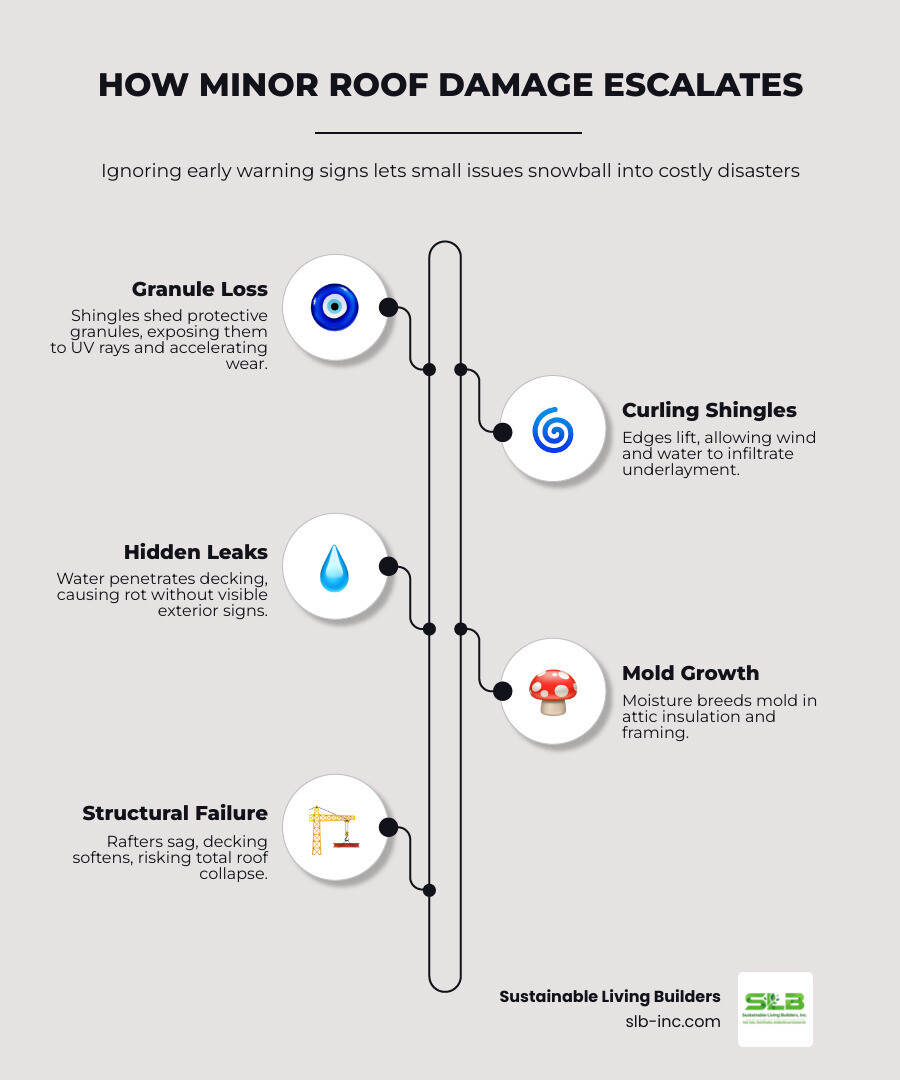
Signs Your Roof Needs Repair or Replacement: What to Look for Outside
A lot of roof trouble can be spotted without ever climbing a ladder. In fact, we recommend staying safely on the ground and using binoculars or your phone zoom to check for obvious damage. In Santa Rosa, Sebastopol, Sonoma County, Marin County, and Napa County, it is especially smart to do a visual review after wind, heavy rain, or stormy winter weather.
Look at your roof from across the street if possible. Uneven lines, patchy areas, and visible wear are often easier to spot from a distance.

Damaged, curling, cupping, cracking, or missing shingles
Shingles should lie flat and form a consistent protective surface. When they start curling at the edges, cupping in the middle, cracking, or blowing off, that usually means the roofing system is aging or has been stressed by sun, wind, moisture, or poor ventilation.
Here is what those signs usually mean:
- Curling shingles often indicate age-related wear or heat damage.
- Cupped shingles can suggest moisture problems or ventilation issues.
- Cracked shingles may result from weathering or impact damage.
- Missing shingles leave the underlayment and roof deck more exposed to water.
One missing shingle after a wind event may be a repair. Widespread shingle distortion across many roof sections is a much bigger warning. If you are seeing several of these issues at once, your roof may be moving from repair territory into replacement territory.
For a deeper look at common roof trouble, see 4 common residential roofing problems and how to fix them.
Granule loss, bald spots, and debris in gutters
If you have an asphalt shingle roof, the sand-like grit in your gutters matters more than most homeowners realize. Those granules help protect shingles from UV rays and weather exposure. When they start washing away, the shingles age faster.
Signs to watch for include:
- Heavy granule buildup in gutters or downspouts
- Bald-looking shingle patches
- Dark asphalt showing through
- Uneven roof color where protective granules are gone
A small amount of granule shedding can happen on newer roofs, but significant loss on an older roof is a red flag. Once shingles lose that outer layer, they become more vulnerable to sun damage, cracking, and leaks.
You can learn more in Signs your roof needs a replacement.
Moss, algae, dark streaks, and plant growth
Dark streaks on a roof are often algae. Moss is different, and usually more concerning. Moss holds moisture against the roof surface, which can speed up shingle deterioration and encourage rot over time. In shaded or damp areas, especially where debris sits too long, moss and even small plant growth can take hold.
That matters because trapped moisture is rarely your roof’s idea of a good time.
Watch for:
- Green patches of moss between shingles
- Black or dark streaks spreading down the roof
- Areas that stay damp longer than the rest of the roof
- Debris collecting in valleys where growth begins
Algae is often cosmetic at first, but moss is more than a curb-appeal issue. It can lift shingles, trap water, and worsen wear during wet weather cycles.
Damaged flashing, rust, and exposed fasteners around roof penetrations
Some of the most leak-prone roof areas are not the field shingles. They are the details around chimneys, vents, skylights, valleys, and wall intersections. Flashing is the material that seals these joints, and when it fails, water finds a way in.
Warning signs include:
- Rusted metal flashing
- Cracked sealant around penetrations
- Lifted flashing edges
- Exposed or popped fasteners
- Damaged vent boots
Flashing problems are sometimes repairable if caught early. But if flashing failure has already allowed moisture into the decking or underlayment, the needed fix can become more extensive.
For more on this key roof component, read What is flashing on a roof.
Signs Your Roof Needs Repair or Replacement Inside the House
Not all roof problems announce themselves from outside. Some of the clearest warnings show up indoors first, especially in the attic, upper-floor ceilings, and exterior walls.
Water stains, active leaks, peeling paint, and musty odors
Brown, yellow, or copper-colored stains on ceilings and walls often point to water intrusion. Even if the stain looks dry, it should not be ignored. Roof leaks can travel along framing before they show themselves, which means the source may be far from the spot you actually see.
Other interior signs include:
- Dripping during or after rain
- Bubbling or peeling paint
- Damp insulation
- Musty smells in the attic or upper rooms
- Mold-like odor near ceilings or closet corners
Leaks are one of the top reasons homeowners replace roofs, and for good reason. Water intrusion can damage insulation, drywall, framing, and indoor air quality. If you see interior moisture signs after a storm, it is wise to act quickly.
Related reading: Storm damage roofing repair
Daylight in the attic, soft spots, and structural red flags
A little sunlight through a window is charming. Sunlight through your attic roof boards is not.
If you go into the attic on a bright day and see pinpoints or streaks of daylight, that means there are openings in the roofing system. That can signal damaged decking, failed underlayment, missing shingles, or gaps around penetrations.
Other serious red flags include:
- Soft or spongy areas in roof decking
- Wet rafters or sheathing
- Sagging wood members
- Visible rot
- A roofline that dips or looks wavy from outside
A sagging roof should always be taken seriously. It may point to trapped moisture, long-term rot, or structural weakening. This is one of the strongest signs that a roof may need more than a simple repair.
Rising energy bills and poor ventilation as roof clues
Sometimes the roof tells on itself through your utility bills.
If your home suddenly becomes harder to keep comfortable, the roofing system may be part of the problem. A failing roof can allow air leaks, moisture buildup, and poor attic ventilation. That forces your HVAC system to work harder and can contribute to hot upstairs rooms in summer and heat loss in winter.
Roof-related efficiency clues include:
- Unexplained energy bill increases
- Overheated attic spaces
- Uneven indoor temperatures
- Damp insulation that no longer performs well
- Excess condensation in the attic
This matters even more for homeowners focused on energy efficiency. At Sustainable Living Builders, we think of the roof as part of the whole home system, not just the thing that keeps the rain out.
You can learn more about ventilation in Roof ridge vent benefits.
How Roof Age and Material Tell You When the System Is Near the End
Even if your roof does not look terrible from the street, age alone can be a major clue. Roofing materials have expected service lives, and once a roof approaches that range, small issues often become signs of broader decline.
| Roofing material | Typical lifespan |
|---|---|
| Asphalt shingles | 15-25 years, sometimes 20-30 with favorable conditions |
| Metal roofing | 40-70 years |
| Tile | 50-100 years |
| Slate | 50-100 years or more |
| Flat or low-slope roofing | 10-20 years |
Typical lifespan by material and why climate shortens it
Those lifespan ranges are not guarantees. Local conditions matter. In Sonoma County, Marin County, Napa County, Santa Rosa, and Sebastopol, roofs can take a beating from sun exposure, seasonal rain, wind, debris, and occasional storm damage. Poor ventilation and deferred maintenance can shorten lifespan even more.
Asphalt shingles are still the most common residential roof material, but they are also more likely to show visible aging sooner than metal, tile, or slate. Flat and low-slope roofs often need closer monitoring because hidden drainage problems can develop before visible warning signs appear.
How to verify roof age and judge wear beyond appearance
If you do not know how old your roof is, try checking:
- Home purchase records
- Permit records
- Inspection reports
- Warranty paperwork
- Seller disclosures from when you bought the home
You can also look for clues such as:
- Layers of shingles from an old overlay
- Many visible patches
- Neighboring homes of the same age all getting reroofed
- Repeated repairs in the same area
Age matters because a roof can look “fine enough” from the ground while its protective layers are already wearing out.
When an older roof points to replacement instead of another repair
In general, a repair makes more sense when damage is isolated and the roof still has meaningful life left. But if an asphalt shingle roof is around 20 years old or older and showing multiple symptoms, replacement is often the smarter long-term call.
Common signs an older roof may be near the end include:
- Recurring leaks
- Widespread granule loss
- Multiple cracked or curled shingles
- Repeated patching
- Moisture issues in several areas
- Failing flashing in more than one penetration
Before moving forward, it also helps to understand common roof replacement mistakes.
Repair or Full Replacement? How to Make the Right Call
This is the question most homeowners really want answered: can we fix this, or is it time to replace the whole thing?
When a repair usually makes sense
A repair is often appropriate when:
- The roof is relatively new
- Damage is limited to one area
- A few shingles are missing after a storm
- Flashing around one vent or chimney has failed
- The leak source is clear and localized
- The rest of the roof is in good condition
In these cases, prompt repair can extend roof life and prevent a small problem from spreading.
When replacement is the smarter move
Replacement is usually the better option when damage is widespread, recurring, or tied to overall age and wear. If you keep paying for patch jobs and the roof keeps finding new ways to complain, that is your hint.
Common replacement triggers include:
- Sagging roofline
- Daylight through attic boards
- Repeated leaks in different areas
- Large sections of curling or missing shingles
- Significant granule loss across the roof
- Structural rot or soft decking
- Storm damage affecting multiple roof sections
- An aging roof near or beyond its expected lifespan
If several of these are happening at once, continued repairs may only delay a larger problem.
Why a professional inspection matters after storms or hidden leaks
Some roof damage is obvious. Some is sneaky.
Wind can lift shingles without tearing them off. Hail can bruise shingles in ways that are hard to see from the ground. Valleys, flashing, and low-slope areas can hide damage until leaks show up inside. That is why a professional inspection matters after major storms or when interior symptoms appear without a clear exterior cause.
A thorough inspection should evaluate:
- Shingle condition
- Flashing and penetrations
- Valleys and ridges
- Attic moisture and ventilation
- Decking condition
- Signs of hidden storm damage
For a homeowner-friendly overview, visit What to expect during a roof inspection a homeowners checklist.
How to Prevent Premature Roof Failure With Smart Maintenance
The best roof repair is the one you never need because you caught the problem early. Routine maintenance is one of the simplest ways to extend roof life and avoid surprise leaks.
How often to inspect your roof and when to call a professional
A good rule of thumb is to inspect your roof twice a year and after major storms. Many roofing experts recommend a spring and fall check, plus a post-winter review to catch damage from wet weather and debris.
Safe homeowner checks include:
- Looking from the ground with binoculars
- Checking gutters for granules and debris
- Watching for stains on ceilings and walls
- Inspecting the attic for daylight, dampness, or odors
Call a professional if you notice any of the following:
- New leaks or stains
- Missing shingles
- Sagging or soft spots
- Rusted flashing
- Heavy moss growth
- Storm-related damage
A seasonal checklist can help: The essential post-winter roof damage checklist
Maintenance habits that help extend roof life
Simple habits go a long way:
- Keep gutters and downspouts clear
- Remove leaves and debris from valleys
- Trim branches that scrape or overhang the roof
- Address moss growth carefully and early
- Make sure attic ventilation is balanced
- Fix small issues before they spread
Regular maintenance is especially important in our local service areas, where winter moisture and shaded roof sections can create long-term wear if ignored.
Helpful reads:
Upgrades that support durability and efficiency
If your roof needs significant work, it may be the right time to think beyond basic replacement. Better ventilation, energy-efficient materials, and future-ready planning can all improve performance.
Smart upgrade ideas include:
- Improved attic ventilation
- Energy-efficient roofing systems
- Roofing choices that support solar planning
- Full-system replacement instead of layering over old shingles
Because we focus on sustainable home upgrades, we often help homeowners think about how roofing, insulation, ventilation, and solar work together to reduce energy waste and improve comfort.
More ideas here:
- 4 best ways to ensure that your roofing lasts longer
- Best ways to ensure that your roofing lasts longer
Conclusion: Don’t wait for small roof problems to become major damage
The biggest mistake homeowners make is waiting for a dramatic leak before taking roof issues seriously. By then, the damage may already extend beyond the shingles to the decking, insulation, and interior finishes.
If you have noticed even a few of the signs your roof needs repair or replacement – curling shingles, granules in gutters, water stains, attic daylight, sagging, or rising energy bills – it is time for a closer look.
At Sustainable Living Builders, we believe the best roofing decisions are proactive, not panicked. Whether your roof needs a focused repair or a full replacement, the goal is the same: protect your home, improve efficiency, and avoid preventable damage.
For next steps and roofing support in Santa Rosa, Sebastopol, Sonoma County, Marin County, and Napa County, explore roofing services.