Introduction: A New Era for Rooftops
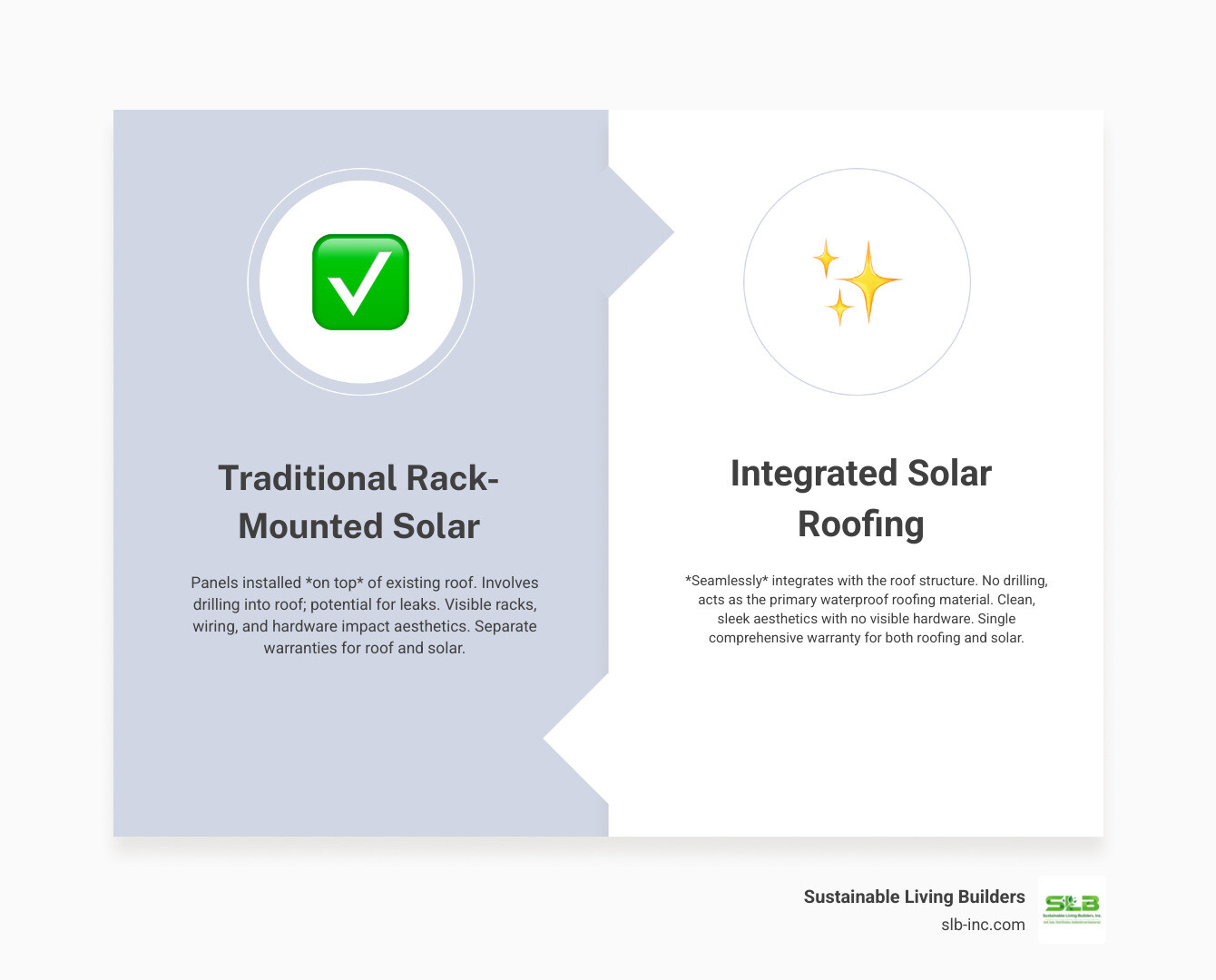
Integrated solar roofing combines your roof and solar panels into one seamless system. Unlike traditional solar panels that sit on top of your existing roof, integrated solutions like solar shingles or tiles serve as both the protective roofing material and the energy generator. This approach eliminates bulky racks, visible wiring, and the aesthetic compromises that come with conventional solar installations.
What makes integrated solar roofing different:
- Function: Acts as both weatherproof roofing and a solar energy system.
- Appearance: Blends with your home’s design—no raised panels or mounting hardware.
- Installation: Replaces your roof entirely rather than adding equipment on top.
- Warranty: Offers single comprehensive coverage for both roofing and solar components.
- Durability: Built to withstand extreme weather, including high winds and hail.
If you’re facing a roof replacement and want to reduce your energy bills while maintaining your home’s curb appeal, integrated solar roofing offers a two-in-one solution. As solar energy becomes more prevalent, this technology lets you participate in the shift without compromising your home’s appearance.
For homeowners in Northern California, understanding your solar options is the first step, and Sustainable Living Builders can help you explore whether an integrated solar roof fits your home and budget.
Traditional rack-mounted solar installations require drilling dozens of holes into your roof membrane, which can void warranties and create leak risks. Integrated systems avoid this entirely because the solar technology is built into the roofing material itself. You get water-shedding protection, wind resistance, and energy generation from a single product that looks like a premium roof. Homeowners are increasingly choosing solutions that address both immediate needs (like replacing an aging roof) and long-term goals (like energy independence and lower carbon footprints).
The Core Advantages of an Integrated Solar Roofing System
When you choose integrated solar roofing, you’re making a decision that reaches far beyond energy production. This is a complete home upgrade that improves your property’s appearance, strengthens its resilience, and moves you toward energy independence. At Sustainable Living Builders, we see these systems as investments in your home’s future—combining beauty, durability, and sustainability in one solution.
Best Aesthetics and Design Flexibility
Traditional solar panels can be an eyesore with their bulky racks and exposed wiring that clash with a home’s architectural character. Integrated solar roofing solves this problem completely.
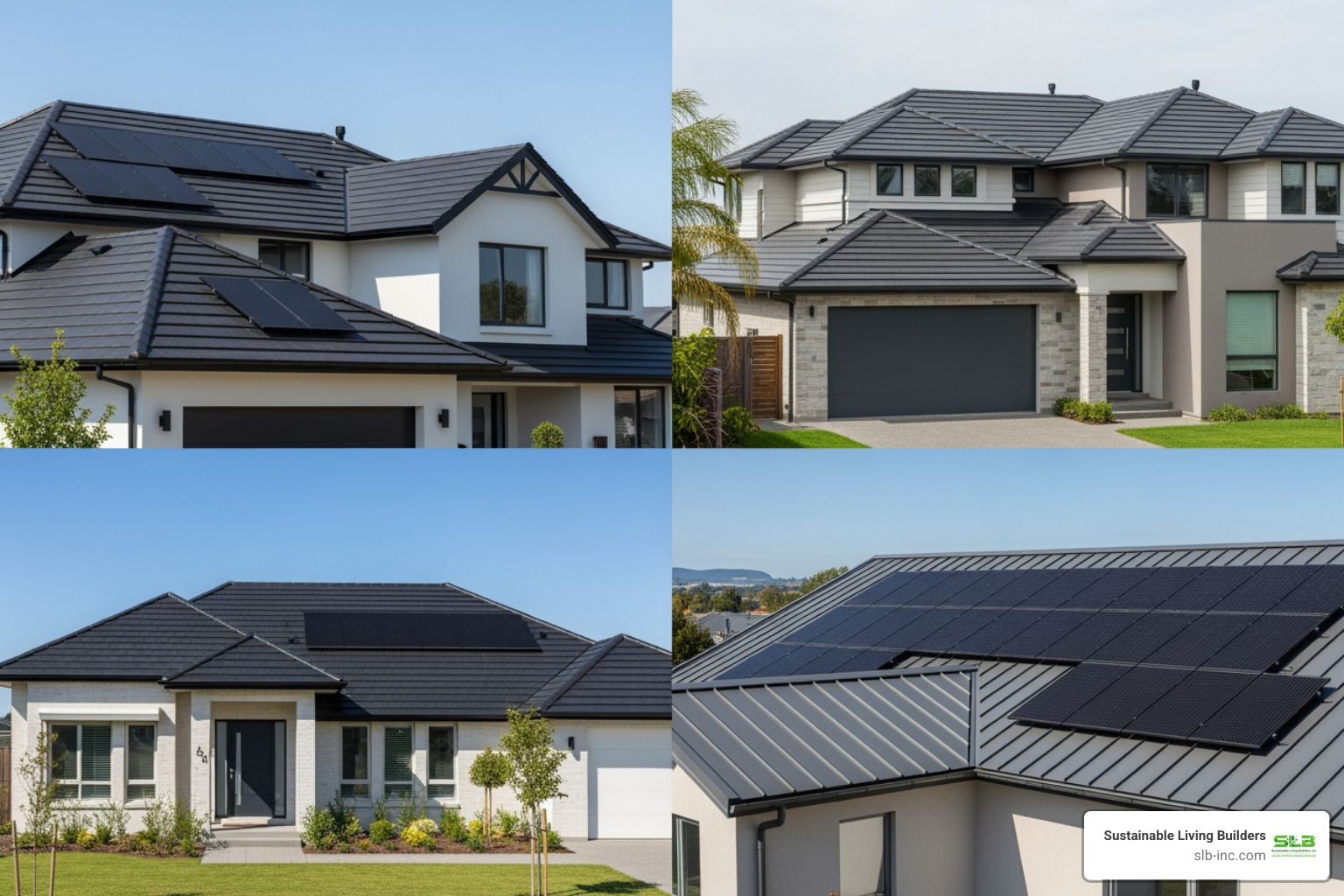
Picture a roof that looks like premium architectural shingles or neat black tiles but is quietly generating clean electricity. The solar elements sit flush with your roofline, creating clean lines and preserving your home’s natural styling. There’s no visible mounting hardware, no conduits snaking across your roof, and no compromise on curb appeal.
This seamless architectural integration means your home maintains its visual harmony. Whether you have a modern design or traditional architecture, integrated solar solutions adapt to complement your style, enhancing your property value without announcing themselves to the neighborhood.
Built for Durability and All-Weather Performance
Your roof’s primary job is protection, and integrated solar roofing delivers exceptional durability. This is a critical consideration for Northern California homes facing diverse weather challenges.
These systems are engineered to withstand serious punishment, with wind resistance ratings up to 130 mph. Many integrated solar tiles carry a Class 4 hail rating (the highest available) and a Class A fire rating, providing maximum protection against impact and fire hazards.
The water-shedding design addresses a key weakness of traditional rack-mounted systems: roof penetrations. By drilling holes to mount conventional panels, installers create potential leak points. Integrated solar roofing eliminates this risk because the solar technology is built directly into the roofing material, creating a unified, leak-proof barrier.
Some integrated solar shingles are rated to exceed Category 5 hurricane conditions and test three times stronger than traditional tiles, providing genuine storm resilience and peace of mind.
Long-Term Value and Energy Independence
An integrated solar roofing system is a smart financial decision. The most immediate benefit is dramatically reduced electricity bills, with some homeowners even earning credits by sending excess power back to the grid. Understanding the benefits of home solar helps you appreciate the long-term savings potential.
After an initial payback period, you’re essentially generating clean energy for the remaining lifespan of your system, which often extends 25 years or more. When you look at decades of reduced energy costs, the value becomes clear. Are solar panels worth it?
Beyond your finances, you’re making a meaningful environmental impact. Solar energy avoids the harmful pollutants released by traditional fossil fuel power plants, such as sulfur dioxide, nitrogen oxides, carbon monoxide, and mercury. Most solar systems produce the energy needed to manufacture them within one to four years, after which they generate completely clean electricity.
Homeowners throughout Napa and Sonoma Counties are turning to solar roofing not just to save money, but to reduce their carbon footprint and increase their energy independence. With an integrated system, you’re investing in your home’s value, your family’s financial future, and a cleaner environment.
Understanding the Technology: What Makes Up a Solar Roof?
When you choose integrated solar roofing, you’re investing in sophisticated photovoltaic technology that quietly powers your home. Understanding the components and options helps you make the best choice.
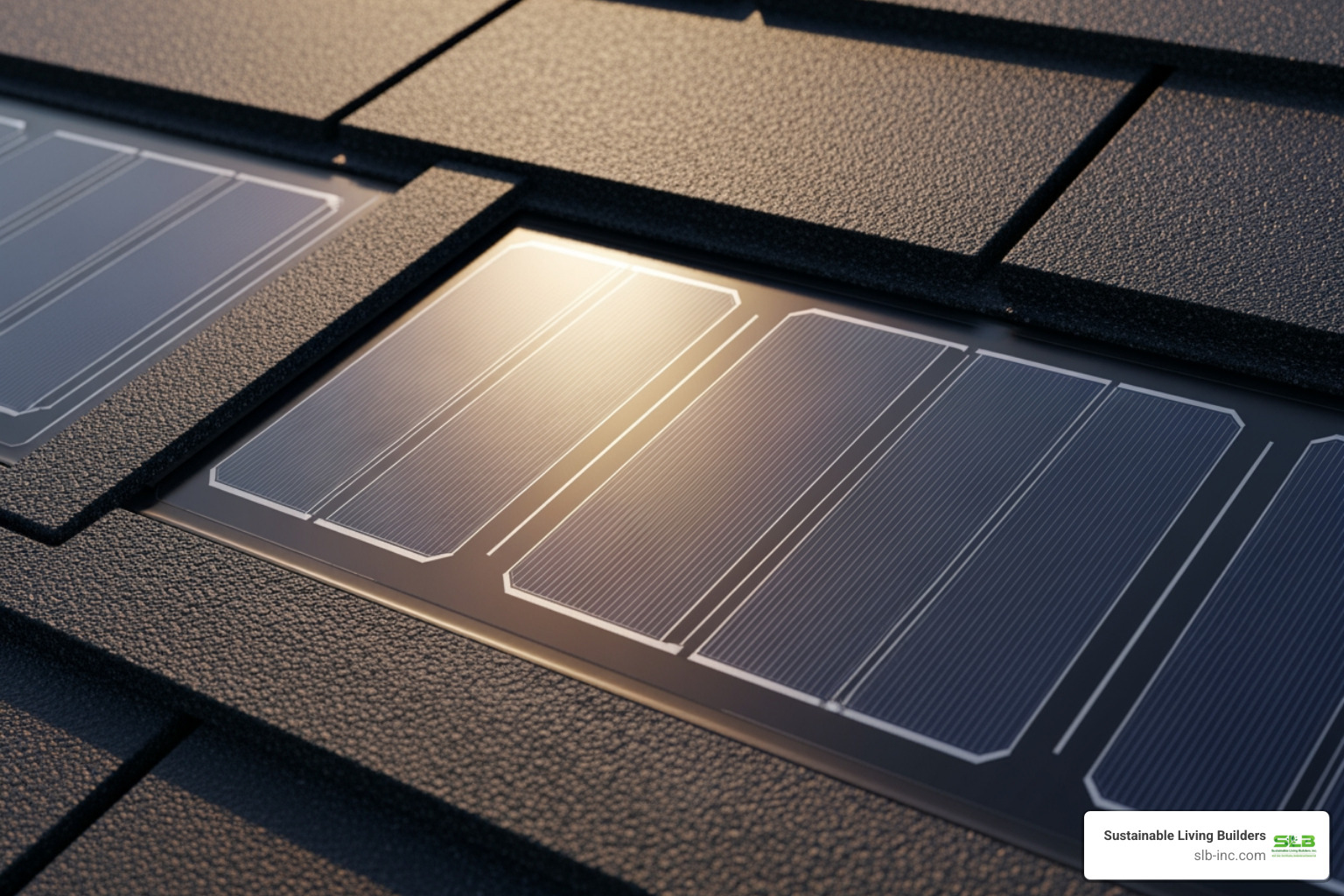
At the core of most systems are PERC monocrystalline photovoltaic cells, the same advanced technology used in high-performance solar installations. These cells convert sunlight into electricity with efficiency ratings typically ranging from 17% to 20%. Some systems are even 20% more efficient than the market average, meaning you get more power from every square foot of roof.
Each shingle or tile generates its own power, usually measured in watts peak (Wp). A single solar shingle might produce 100 to 110 Wp, while solar tiles can range from 72 Wp to 110 Wp. Multiplied across your roof, this can dramatically reduce or eliminate your electricity bills.
Types of Integrated Solar Roofing Solutions
Not all integrated solar roofing looks the same. Your solar roof should complement your home’s unique architectural style. We offer different types of integrated solutions to match various aesthetic preferences.
Solar shingles are designed to blend seamlessly with traditional asphalt roofing. They are nailable and install much like conventional shingles, creating a familiar architectural appearance.
Solar tiles offer a more premium aesthetic. Made from durable materials like glass or specialized composites, they can replicate the look of clay tiles, natural slate, or sleek modern designs. These tiles are known for exceptional durability, often carrying the highest ratings for wind, hail, and fire resistance.
Integrated metal solar roofs combine the longevity of metal roofing with built-in solar technology. These systems often feature Nordic-inspired or standing seam profiles for a distinctive, contemporary look. They are incredibly robust against harsh weather and can last for decades.
Each type protects your home while generating clean energy. When deciding between traditional roofing and solar roofing, understanding these options helps clarify which solution fits your vision. We encourage you to get to know our solar products in more detail.
Key Specifications and Warranties to Look For
When shopping for integrated solar roofing, look beyond appearance. Technical specifications and warranties determine performance and protect your investment.
Power output and efficiency directly affect how much electricity your roof generates. Look for systems with high efficiency ratings (typically 17% to 20%) and solid power output per shingle or tile.
Wind, hail, and fire ratings are crucial. Quality integrated solar roofs are rated for winds of 110 to 130 mph. Look for Class 4 hail ratings (highest impact resistance) and Class A fire ratings (best fire protection).
Warranties are straightforward with integrated systems. Most offer a 25-year power warranty guaranteeing output, along with product and weather warranties. A key advantage is the single comprehensive warranty covering both roofing and solar components, which simplifies things compared to traditional installations with multiple separate warranties.
Finally, check for UL 7103 certification, which indicates the product has undergone rigorous independent testing for safety and performance.
| Feature | Solar Shingles | Solar Tiles | Integrated Metal Roofs |
|---|---|---|---|
| Material | Asphalt, polymer composites | Glass, ceramic, specialized composites | Steel, aluminum |
| Typical Efficiency | 17-20% (some 20% more efficient than market average) | 17-20% (72Wp-110Wp per tile) | Varies, often high-efficiency monocrystalline cells |
| Wind Rating | Up to 110-130 mph, Class F | Up to 130 mph, Class F (highest) | Varies, designed for extreme weather |
| Aesthetics | Blends with traditional asphalt shingles | Sleek, modern, traditional tile/slate look | Nordic design, standing seam, architectural |
| Warranty | 25-year power, 25-year product/weather | 25-year power, 25-year product/weather | 25-year power, 10-year product (typical) |
The Role of Home Energy Storage
Your integrated solar roofing generates electricity when the sun shines, but what happens at night or during a power outage? This is where home energy storage transforms a great system into an exceptional one.
Home battery systems capture excess solar energy produced during sunny hours and store it for later use. Instead of sending surplus electricity back to the grid, you bank it for yourself. When evening comes, your home seamlessly draws from the battery rather than the utility company.
This setup provides 24/7 power access and genuine energy independence. You maximize self-consumption of every kilowatt-hour your roof generates. During peak electricity rate periods, you’re using your own stored power instead of paying premium utility rates.
Perhaps the most valuable benefit is outage protection. When the grid goes down, your home doesn’t skip a beat. The battery system automatically kicks in, keeping your lights on, your refrigerator running, and your family comfortable. For homeowners in areas prone to Public Safety Power Shutoffs, this resilience is priceless.
By pairing your integrated solar roof with energy storage, you create a complete energy ecosystem for your home, delivering true energy security and independence.
From Installation to Lifespan: What to Expect
Making the switch to integrated solar roofing is a significant decision, and knowing what lies ahead can make the process feel less daunting. From the first consultation to decades of low-maintenance energy production, here’s what to expect.
The Installation Process for an Integrated Solar Roof
Installing an integrated solar roofing system is different from bolting traditional solar panels onto an existing roof. Because the solar technology is built into the roofing material, you get a complete roof replacement and a solar energy system in a single project.
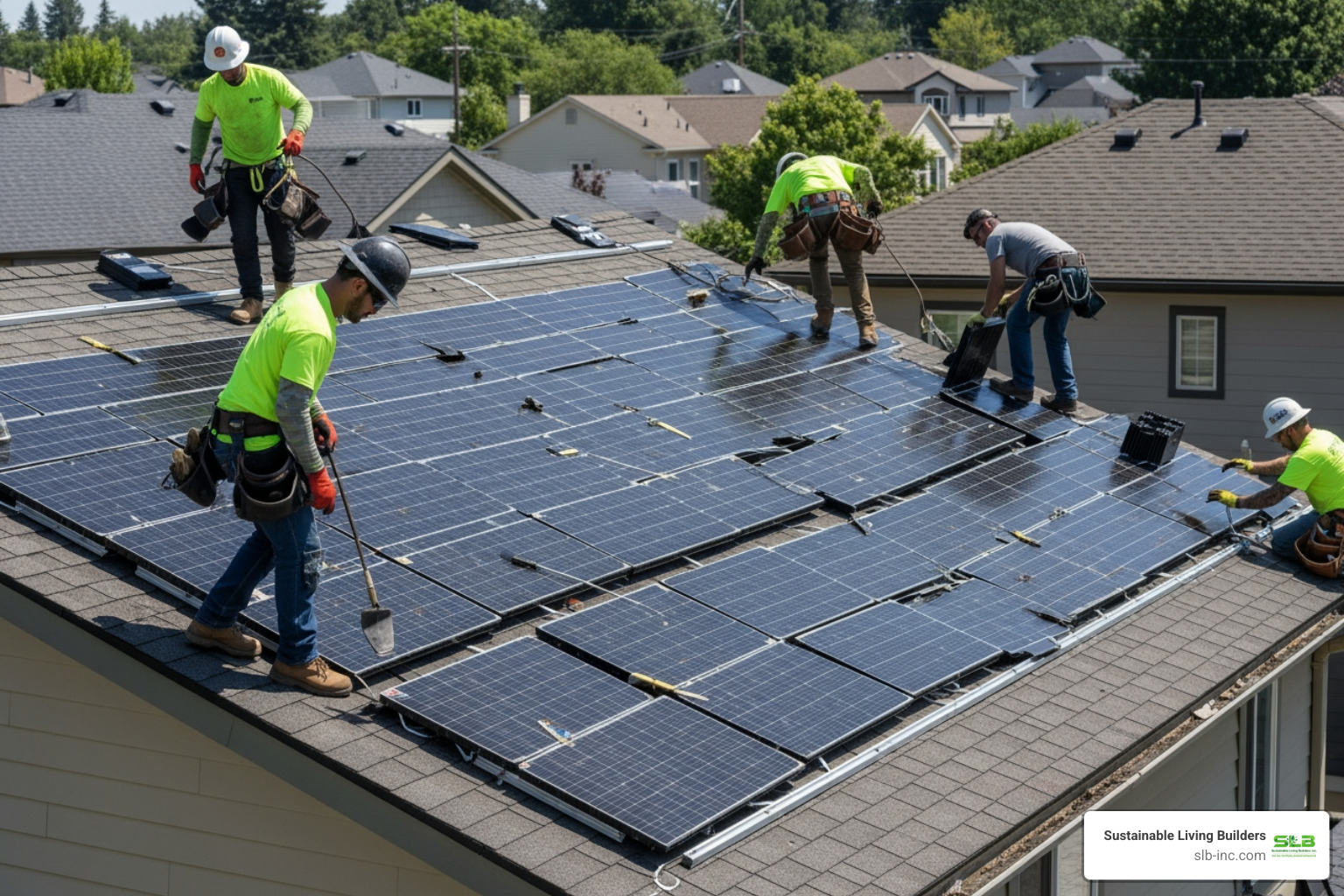
The beauty of this approach is that there’s no drilling into your roof deck. Traditional systems require dozens of penetrations that can create leak points. With integrated systems, the solar shingles or tiles are installed like premium roofing materials, creating a seamless, watertight seal from the start.
Modern integrated systems feature modular designs that can significantly speed up installation, though the exact timeline depends on your roof’s size and complexity.
Choosing the right team matters. Integrated solar roofing requires expertise in both roofing and solar installation. At Sustainable Living Builders, we’re licensed in both disciplines, so your project is managed by a single team. This eliminates coordination headaches and provides one point of contact, one timeline, and one comprehensive warranty.
If you’re wondering what the entire process looks like, understanding the solar energy installation process can give you a clear roadmap. These tips for finding the right contractor will also help ensure your project goes smoothly.
Maintenance and Longevity of an Integrated Solar Roof
Integrated solar roofing systems are remarkably low-maintenance. The flush design eliminates gaps where debris or pests can accumulate, and there’s no exposed mounting hardware to corrode or loosen. The system is designed to be self-cleaning, as rain naturally washes away dust and pollen.
If you live in an area with little rainfall, a simple rinse with a garden hose is all that’s needed. The longevity is equally impressive. Most products come with 25-year performance warranties and are built to last much longer. The materials are engineered to withstand decades of exposure to the elements.
A practical feature is the modular, replaceable design. If a single shingle or tile is damaged, it can be replaced individually without affecting the rest of the roof. This straightforward repair process keeps your solar roof functioning perfectly for the long haul.
Navigating Challenges and Financial Incentives
Choosing integrated solar roofing represents a significant upfront investment, as it involves a full roof replacement. However, the full financial picture makes it an attractive option.
Federal solar tax credits can substantially reduce your out-of-pocket costs. The Investment Tax Credit (ITC) allows you to deduct a percentage of your solar installation costs from your federal taxes. For a comprehensive look at available programs, this list of federal solar tax credits provides detailed information. California homeowners may also qualify for additional state and local rebates.
Beyond incentives, the long-term payback through electricity bill savings makes integrated solar roofing financially attractive, protecting you from rising utility rates. When you factor in getting a premium roof and a solar energy system in one project, with one warranty and one installation team, the value proposition becomes even clearer. You’re making a long-term investment in your home’s value, energy independence, and a more sustainable future.
Frequently Asked Questions about Integrated Solar Roofs
Homeowners considering integrated solar roofing often have similar questions. Understanding these common concerns helps you make the best decision for your home.
How does an integrated solar roof compare to a new roof plus separate solar panels?
The choice between an integrated solar roof and a traditional roof with separate panels comes down to a few key differences.
Aesthetics is where integrated systems stand out. The solar technology blends seamlessly into your home’s design with clean lines and no visible hardware. Traditional panels sit raised above the roofline, creating a look some homeowners find less appealing.
With warranties, integrated systems simplify everything. You get one comprehensive warranty covering both your roof and your solar system from a single company. With separate systems, you juggle multiple warranties from different contractors.
The installation process is also more streamlined. It’s one project, one team, and one timeline, typically completed during your roof replacement. Separate systems require two distinct installations, meaning more disruption.
Durability is another important consideration. Many integrated solar systems are engineered to exceed the strength of traditional roofing materials, with superior wind, hail, and fire ratings. They’re designed to be your home’s primary protective layer, not just an add-on.
Can individual solar shingles or tiles be replaced if they get damaged?
Yes, and this is one of the smartest features of integrated solar roofing systems. The modular design means that if a single shingle or tile gets damaged, we can replace just that one module without disturbing the rest of your roof.
This serviceability is built into the system. Our certified technicians can access and replace the damaged component without affecting your home’s protection or energy production. It’s a straightforward process that maintains the integrity and performance of your solar roof for decades.
How do integrated solar roofs perform in different weather conditions?
Integrated solar roofs are built to handle whatever Mother Nature throws at them, making them well-suited for the varied climate of Northern California.
For snow load capacity, these systems are robust. Some can handle snow loads up to 5400 Pa (roughly 551 kg per square meter). Integrated metal solar roofs are popular in colder climates as they withstand rapid temperature swings.
Heat performance is also important. While extreme heat can slightly reduce any solar panel’s efficiency, integrated systems are engineered for thermal management. They operate effectively across a wide temperature range (typically from -40°C to +85°C), so your energy production stays consistent.
Regarding wind and hail resistance, integrated systems often outperform traditional roofing. With wind ratings up to 130 mph and Class 4 hail ratings (the highest available), your roof is built to withstand severe storms. Finally, their water-shedding capabilities are built-in, as the entire system acts as a unified, watertight barrier without the leak risks from drilling mounting holes.
Conclusion: Powering Your Home’s Sustainable Future
Your roof does more than protect your home from the elements—it can power your future. Integrated solar roofing brings together everything we’ve explored: stunning curb appeal that improves rather than detracts from your home’s architecture, exceptional durability that stands up to Northern California’s varied weather, and meaningful long-term savings that put money back in your pocket while reducing your environmental impact.
This isn’t just about installing solar panels. It’s about reimagining what your roof can be. When you choose integrated solar roofing, you’re investing in a complete solution that serves as both premium roofing material and clean energy generator. You’re eliminating the need for bulky equipment on top of your roof, avoiding the drilling and potential leak points that come with traditional installations, and gaining the peace of mind that comes with a single comprehensive warranty.
For homeowners throughout Santa Rosa, Sebastopol, Sonoma County, Marin County, and Napa County, the shift to solar represents more than a home improvement project—it’s a commitment to sustainable living. Every kilowatt-hour your roof generates is energy you’re not pulling from the grid, reducing demand for fossil fuels and their associated pollutants. It’s a tangible way to lower your carbon footprint while enjoying the practical benefits of reduced electricity bills and greater energy independence.
At Sustainable Living Builders, we understand that this decision represents a significant investment in your home. That’s why we take a holistic approach, considering your home’s unique architecture, your energy needs, and your long-term goals. Our expertise in both roofing and solar technology means you’re working with a single trusted partner who can guide you through the entire process, from initial consultation to installation and beyond.
Your home deserves a roof that works as hard as you do—protecting your family, generating clean energy, and looking beautiful for decades to come. Integrated solar roofing delivers on all three fronts, turning your largest home surface into a valuable asset.
Ready to explore how a solar roof can transform your home? Learn more about our solar solutions and find the possibilities for your sustainable future.