The Smart Switch: Why More Homeowners Are Choosing Heat Pumps
If you’re looking to replace AC with heat pump, you’re considering one of the smartest home energy upgrades available today. Heat pumps deliver efficient cooling like traditional air conditioners, but they also provide heating—making them a versatile, year-round climate control solution. With rising energy costs and growing environmental concerns, heat pumps offer three-to-four times the efficiency of conventional systems while qualifying for substantial federal tax credits and state rebates.
Key Reasons to Replace Your AC with a Heat Pump:
- Dual functionality – One system handles both heating and cooling
- Energy efficiency – 3-4x more efficient than conventional HVAC systems
- Lower bills – Save nearly $600 over the product’s life on cooling costs alone
- Climate action – Reduce heating emissions by over 45% compared to gas systems
- Financial incentives – Up to $2,000 federal tax credit (30% of cost through 2025)
- Future-proof – California bans gas furnace sales after 2030
Your aging air conditioner might be keeping you cool today, but it’s missing half the picture. Heat pumps work by moving heat rather than generating it—pushing warmth outside in summer and pulling it inside during winter. This simple reversal makes them remarkably efficient in both directions. When your AC eventually fails (typically after 10-15 years), replacing it with a heat pump costs only slightly more upfront while delivering immediate heating capability and long-term energy savings.
For homeowners in Santa Rosa, Sebastopol, Sonoma County, Marin County, and Napa County, sustainable home improvements like heat pumps align perfectly with California’s clean energy goals. Ready to explore your options? Contact Sustainable Living Builders to discuss a customized heat pump solution for your home.
Understanding the All-in-One Advantage: Heat Pump vs. AC
Here’s something that surprises most homeowners: if you peek outside at your neighbor’s heat pump and then look at your own air conditioner, they’ll look almost identical. Both have that familiar outdoor unit humming away beside the house. And when it comes to keeping your home cool in summer, they work in virtually the same way.
An air conditioner’s job is straightforward—it pulls heat from inside your home and dumps it outside, using refrigerant to transfer that warmth. The process also removes moisture from the air, which is why your home feels so much more comfortable on humid days. It’s a reliable system that’s been cooling homes for decades.
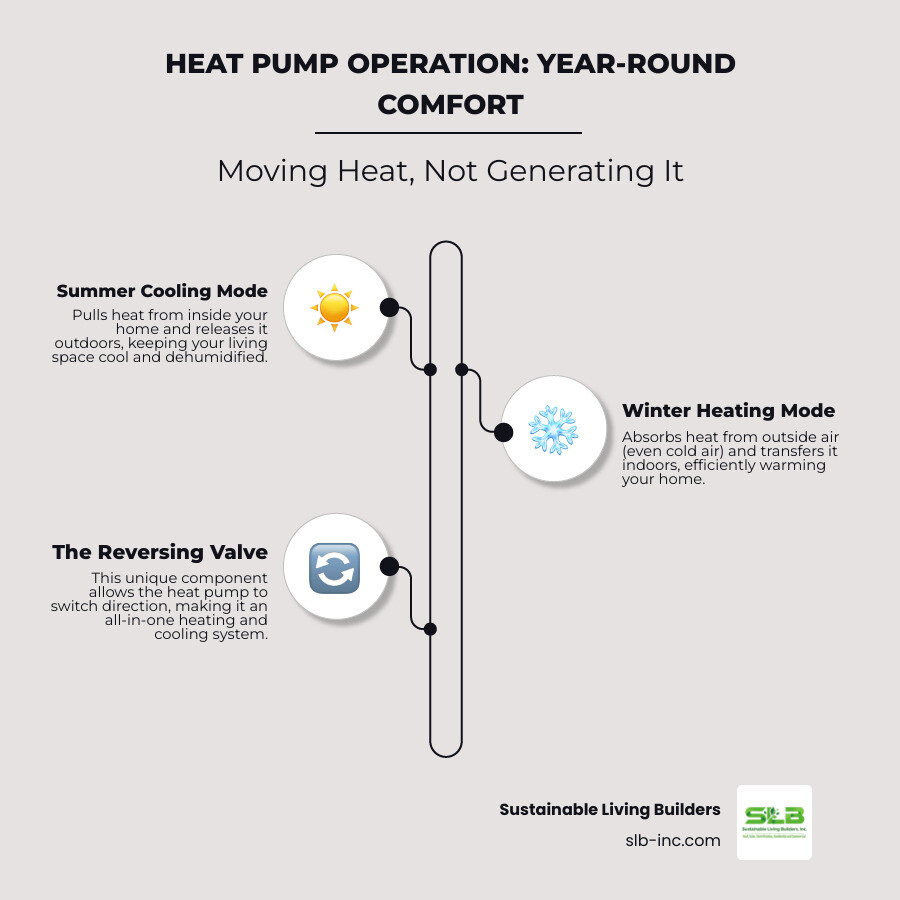
A heat pump does everything an air conditioner does, but with one game-changing difference: it can run in reverse. Think of it as a two-way street instead of a one-way route. This versatility comes from a component called a reversing valve, which lets the system switch directions depending on what your home needs.
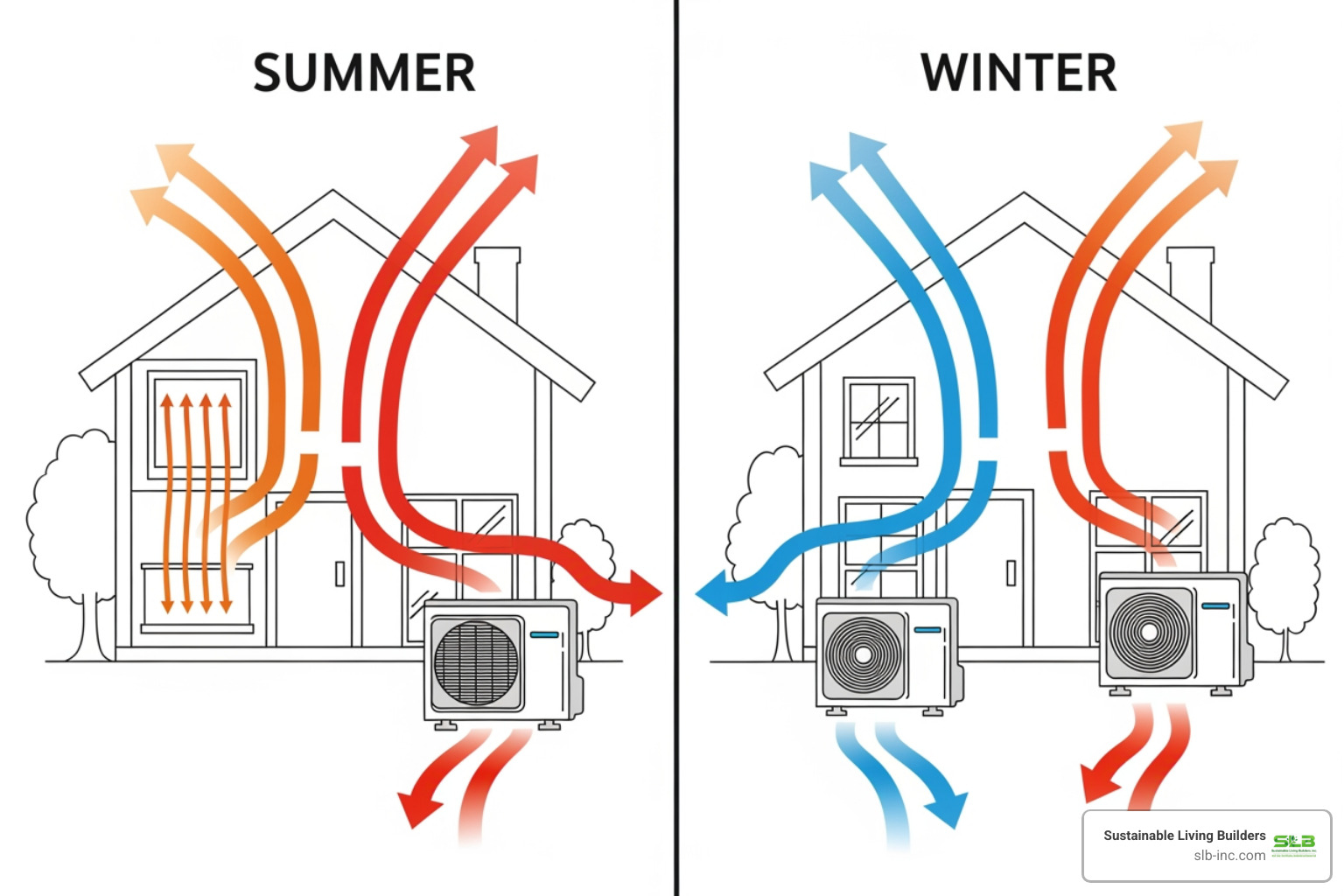
During summer, your heat pump operates exactly like an AC—extracting indoor heat and releasing it outdoors. But when temperatures drop and you need warmth, the reversing valve flips the script. The heat pump starts pulling heat from the outdoor air (and yes, even cold air contains usable heat energy), compresses it to increase the temperature, and then circulates that warmth throughout your home.
This is where heat pumps truly shine: they transfer heat rather than generate it. Traditional furnaces burn fuel to create warmth, and electric resistance heaters convert electricity directly into heat—both methods that consume significant energy. Heat pumps simply move existing heat from one place to another, making them remarkably efficient at both heating and cooling.
When you replace AC with heat pump, you’re essentially upgrading from a single-season appliance to an all-year solution. One electrically powered system handles both jobs, delivering superior energy performance while simplifying your home’s climate control.
Want to see exactly how this clever technology works? This video breaks it down beautifully: Understanding How Heat Pumps Work.
Why You Should Replace AC with Heat Pump: Key Benefits
When you replace AC with heat pump, you’re not just swapping out equipment—you’re making a smart choice that ripples through every aspect of your home life. Let’s explore what makes this upgrade so worthwhile for homeowners throughout Santa Rosa, Sebastopol, and the surrounding counties.
Superior Energy Efficiency and Year-Round Comfort
Here’s something that might surprise you: heat pumps don’t actually generate heat. They move it around. And that simple difference makes them three to four times more efficient than systems that burn fuel or use electric resistance heating.
Think about it this way. Your old furnace is like a person frantically rubbing sticks together to make fire. A heat pump? It’s more like someone who knows where the warm blankets are already stored and just brings them over. Much less work, much better results.
This efficiency isn’t just impressive on paper—it shows up in your monthly utility bills. When you replace your AC with a heat pump, you’re getting a single system that handles all seasons. No more coordinating between separate heating and cooling units. No more switching between thermostats. Just consistent, comfortable temperatures whether it’s a foggy February morning or a sweltering August afternoon.
And there’s another bonus you might not expect: better dehumidification than standard central air conditioners. That means your home feels more comfortable at the same temperature, because you’re not dealing with that sticky, clammy feeling that excess humidity brings.
The numbers back this up. An ENERGY STAR certified heat pump can slash your cooling costs and provide heating for roughly one-third the cost of traditional electric heating systems. Over the lifetime of the equipment, those savings really add up.
Want to dive deeper into the efficiency story? Check out this resource: Switch to an ENERGY STAR Heat Pump. And if you’re curious about how heat pumps fit into a broader energy strategy for your home, explore our Home Electrification services.
A Greener Home and a Lighter Environmental Footprint
Let’s talk about something bigger than just your home—though it starts right there in your backyard.
When you replace your AC with a heat pump, you’re eliminating the need to burn fossil fuels for heating. Heat pumps run entirely on electricity, which means zero on-site carbon emissions from combustion. No natural gas. No propane. Just clean, efficient heat transfer powered by electricity that’s increasingly coming from renewable sources.
The environmental impact is genuinely significant. Studies show that swapping out a gas furnace and gas water heater for electric heat pumps reduces heating emissions by more than 45 percent over the next decade. That’s like cutting a gas-powered car’s pollution by more than half—except this reduction happens automatically, every single day, just by keeping your home comfortable.
California gets it. The state has set an ambitious goal of six million heat pumps installed by 2030, nearly doubling the current adoption rate. This isn’t just policy for policy’s sake—it’s recognition that heat pumps are essential tools in meeting our climate commitments. By making the switch now, you’re joining a movement that’s reshaping how we heat and cool our homes across the state.
You’re also future-proofing your home. California will ban gas furnace sales after 2030, so transitioning to a heat pump now means you’re ahead of the curve rather than scrambling to comply later.
For more perspective on the environmental benefits, read Why Replace Air Conditioners with Heat Pumps? from the Sierra Club. And at Sustainable Living Builders, we see heat pumps as part of a holistic approach to sustainable living—learn more in our Guide to Sustainable Building Practices, Strategies & Trends.
Financial Incentives That Make the Switch Even Smarter
Here’s where things get really interesting. The upfront investment to replace your AC with a heat pump is higher than simply swapping in another air conditioner—but right now, there’s an unprecedented stack of incentives that dramatically reduce what you’ll actually pay.
The Inflation Reduction Act changed the game for homeowners considering heat pumps. Through December 31, 2025, you can claim a federal tax credit worth 30% of your qualifying heat pump installation, up to $2,000. That’s not a rebate you wait months to receive—it’s a tax credit you claim when you file your return.
But wait, there’s more. (Sorry, couldn’t resist.) If your home needs an electrical panel upgrade to support your new heat pump—and many older homes do—there’s an additional tax credit of up to $600 specifically for that electrical work when it’s connected to a qualified heat pump installation.
Beyond the federal programs, California residents often have access to state and utility rebates that stack on top of these federal incentives. These programs vary by location and utility provider, but they’re specifically designed to make efficient technologies like heat pumps more accessible.
The combination of these incentives, plus the ongoing energy savings, means the financial case for heat pumps has never been stronger. You’re not just buying a new HVAC system—you’re making an investment that pays dividends through lower utility bills, increased home value, and protection against future energy price increases.
To explore what incentives are available in your area, visit the DSIRE: State Incentives Database. For detailed information about federal tax credits, check the IRS: Home Energy Tax Credits (25C) page.
Practical Guide to Replacing Your AC with a Heat Pump
Making the decision to replace AC with heat pump is a significant step towards a more comfortable and sustainable home. Let’s walk through the key considerations that will help ensure your transition is smooth and successful.
When to replace AC with heat pump: The Optimal Timing
If you’re wondering whether now is the right time to make the switch, your current air conditioner probably holds the answer. Most AC units have a lifespan of about 10 to 15 years. Once your system crosses that threshold, it’s living on borrowed time—and likely costing you more in energy bills and repairs than you realize.
Are you calling for repairs more frequently? Has your monthly energy bill been creeping upward despite similar usage? These are telltale signs that your AC is losing efficiency and approaching the end of its useful life. Rather than pouring money into an aging system, this is your strategic upgrade opportunity.
Here’s the thing: while a heat pump might cost slightly more upfront than simply replacing your AC with another AC, you’re getting an entirely different value proposition. You gain immediate heating capabilities, often eliminating the need for a separate furnace altogether. This means you’re making one smart investment instead of facing two separate replacements down the road—one for cooling, another for heating.
And there’s another compelling reason to act sooner rather than later. California is leading the charge toward cleaner energy, with regulations effectively banning the sale of new gas furnaces starting in 2030. By choosing to replace AC with heat pump now, you’re future-proofing your home. You’ll be ahead of the regulatory curve and ready for California’s clean energy future.
What to consider when you replace AC with heat pump
Once you’ve decided the timing is right, several important factors will guide your heat pump selection and installation. Understanding these considerations upfront will help you make the best choice for your home.
Climate performance is often the first question homeowners ask. The good news? Modern heat pumps are engineered to excel in both hot summers and cold winters. They’re incredibly efficient at cooling when temperatures soar, and today’s cold-climate models maintain excellent heating performance even when the mercury drops well below freezing—some models work reliably down to -20° Fahrenheit. Whether you’re in coastal Marin County or the warmer valleys of Napa, there’s a heat pump designed for your climate.
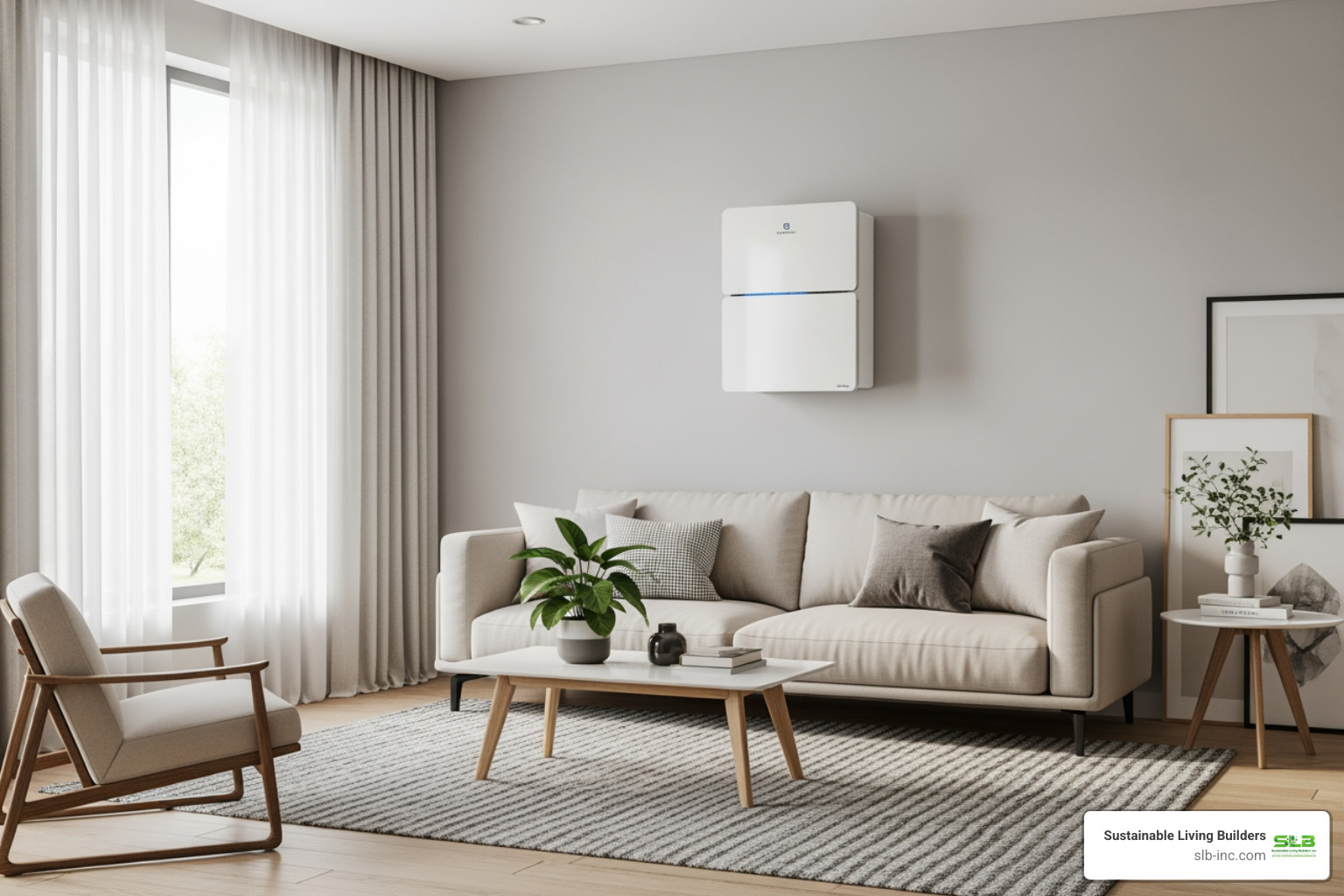
The type of heat pump you choose depends largely on your home’s current setup and your specific needs. Air-source heat pumps are the most common and typically the easiest to install if you already have ductwork. They’re versatile, efficient, and proven performers. If your home lacks ductwork, or if you’re looking to add climate control to a specific room or addition, ductless mini-split systems offer tremendous flexibility—you can see one mounted beautifully in the image above. For homeowners willing to make a larger upfront investment in exchange for exceptional long-term efficiency, geothermal heat pumps tap into the earth’s stable underground temperatures.
Your existing ductwork condition deserves careful attention. If you have ducts, they need to be properly sealed and correctly sized. Even the most advanced heat pump can’t perform at its best if your ducts are leaking conditioned air into your attic or crawlspace. A professional inspection can identify issues that, when corrected, will dramatically improve your system’s efficiency and your comfort.
Don’t overlook your home’s electrical panel capacity. Heat pumps run on electricity, and your existing electrical system needs adequate capacity to handle the new equipment. Some homes may need a panel upgrade, but remember—federal tax credits may help offset this investment, making it more affordable than you might expect.
Finally, consider your home insulation. This might seem unrelated, but it’s actually one of the most important factors in your heat pump’s performance. A well-insulated home with proper air sealing requires less heating and cooling, which means your heat pump works less and saves you more. Better insulation can sometimes even allow for a smaller, less costly system. We specialize in helping homeowners optimize their home’s thermal envelope—learn more about the Importance of Sustainable Insulation services.
Taking time to evaluate these factors will ensure your heat pump installation delivers maximum comfort, efficiency, and value for years to come.
Frequently Asked Questions About the AC-to-Heat Pump Swap
Making the decision to replace AC with heat pump is exciting, but we know it also brings up some important questions. Let’s address the most common concerns we hear from homeowners in Santa Rosa, Sebastopol, and throughout Sonoma County, Marin County, and Napa County.
Can a heat pump completely replace my AC and furnace?
Here’s the wonderful news: yes, a heat pump can absolutely be your all-in-one solution for both heating and cooling. Think of it as the Swiss Army knife of home comfort systems. It cools your home just as effectively as your old air conditioner during those warm California summers, and then seamlessly switches to provide cozy warmth when temperatures drop in winter.
Modern cold-climate heat pump models are particularly impressive. These systems are engineered to maintain strong heating performance even when outdoor temperatures plunge, making them a reliable primary heating source throughout California’s diverse climate zones. They work by extracting heat from outdoor air—even cold air contains heat energy—and transferring it indoors to keep you comfortable.
That said, flexibility is always an option. If your existing gas furnace is still in good working condition, you might consider a dual-fuel or hybrid system. This clever setup pairs your new heat pump with your current furnace, allowing the heat pump to handle the majority of your heating and all of your cooling needs. The gas furnace only activates on the coldest days when it makes sense from an efficiency standpoint. It’s like having a backup dancer ready to step in when needed.
Some heat pump systems also include backup electric heat strips that provide supplemental warmth during extreme cold snaps or defrost cycles, ensuring your home stays consistently comfortable no matter what Mother Nature throws your way.
How long do heat pumps last compared to air conditioners?
When you invest in a heat pump, you’re making a commitment to long-term comfort. With proper care and regular maintenance, heat pumps typically last between 12 to 15 years, and many quality systems continue running efficiently for up to 20 years. This lifespan matches or often exceeds that of traditional air conditioners and furnaces, making it a sound investment for your home.
The secret to maximizing your heat pump’s longevity? Regular maintenance. Just like your car needs oil changes, your heat pump benefits from annual professional inspections, consistent filter changes, and keeping the outdoor unit clear of leaves, debris, and snow. These simple steps ensure your system runs at peak efficiency year after year.
Most manufacturers stand behind their products with 10-year warranties on parts, and many professional installers offer additional labor warranties for added peace of mind. When you choose a quality installation from experienced professionals and commit to routine maintenance, you’re setting yourself up for many years of reliable, efficient heating and cooling.
Do heat pumps work well in very cold or very hot climates?
This is one of the most common questions we hear, and the answer might surprise you: modern heat pumps are absolute champions in both extreme cold and blazing heat.
Let’s talk about cold weather performance first. Today’s heat pumps, especially those designated as “cold-climate heat pumps,” are engineering marvels. They can reliably deliver warmth even when outdoor temperatures drop well below freezing—some advanced models work efficiently down to -20° Fahrenheit. You might wonder how they extract heat from frigid air, but remember, even cold air contains heat energy. These systems compress and concentrate that heat, then transfer it indoors to keep you toasty. It’s a bit like magic, but it’s actually just really smart physics.
When it comes to hot weather cooling, heat pumps shine just as brightly. They cool your home with the same effectiveness as traditional air conditioners, efficiently moving heat out of your living space and releasing it outdoors. During those scorching California summers we know so well, your heat pump works tirelessly to maintain a comfortable indoor environment. While efficiency can dip slightly during extreme heat waves, these systems remain highly effective at keeping you cool when you need it most.
The beauty of a heat pump lies in its year-round versatility. Whether you’re bundling up on a chilly Sebastopol morning or seeking refuge from a Napa Valley heat wave, your heat pump adapts seamlessly to provide exactly what you need.
For more detailed guidance on upgrading your home’s heating and cooling system, including specific considerations for different climates, you can refer to How to Upgrade to a Heat Pump System.
Your Next Step Towards a Sustainable Home
Deciding to replace AC with heat pump represents a genuine shift in how you think about home comfort and energy use. You’re not just swapping out equipment—you’re embracing a smarter way to heat and cool your home that pays dividends for years to come. The benefits are clear: superior energy efficiency that can cut your utility bills significantly, year-round comfort from a single integrated system, and a meaningful reduction in your carbon footprint that aligns with California’s clean energy future.
The financial case is equally compelling. With federal tax credits up to $2,000 and various state and utility rebates available, the initial investment becomes far more manageable. When you factor in the long-term energy savings and the fact that you’re getting both heating and cooling in one system, the value proposition becomes undeniable.
At Sustainable Living Builders, we understand that your home is more than just walls and a roof—it’s where your life unfolds. That’s why we take a holistic approach to home energy solutions. Whether it’s energy-efficient roofing that works in harmony with your new heat pump, solar installations that power your all-electric home with clean energy, or smart home systems that optimize your comfort while minimizing waste, we see the bigger picture. We’re here to guide you through every decision, ensuring each improvement works together to create a truly sustainable living space.
For homeowners in Santa Rosa, Sebastopol, Sonoma County, Marin County, and Napa County, this is your moment to future-proof your home. Imagine lower energy bills, consistent comfort in every season, and the satisfaction of knowing you’re contributing to a cleaner, healthier environment. That vision isn’t just possible—it’s waiting for you to take the first step.

Ready to explore home electrification? Learn more about our services.