Is a Metal Roof Worth It Compared to Shingles? Here’s What Homeowners Need to Know
Is a metal roof worth it compared to shingles? For most homeowners planning to stay in their home long-term, the answer is yes — but it depends on your priorities, budget, and how long you plan to stay put.
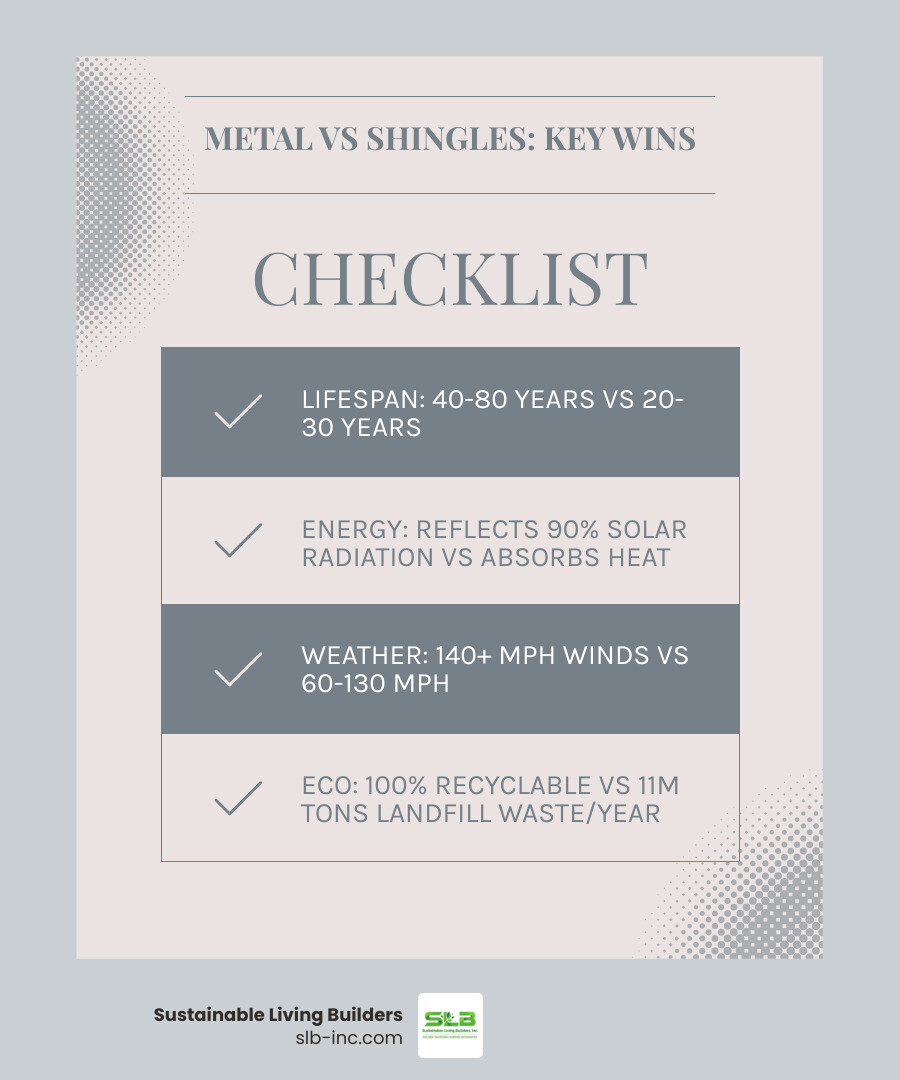
Here’s a quick breakdown:
| Factor | Metal Roof | Asphalt Shingles |
|---|---|---|
| Lifespan | 40-80 years | 20-30 years |
| Energy efficiency | Reflects up to 90% of solar radiation | Absorbs and radiates heat |
| Weather resistance | Up to 140+ mph winds, Class A fire rated | 60-130 mph winds, Class A available |
| Environmental impact | 100% recyclable, 25%+ recycled content | 11 million tons of landfill waste per year |
| Maintenance | Minimal — inspections every few years | Regular upkeep, granule loss, moss risk |
| Best for | Long-term owners, energy-conscious homeowners, fire-prone areas | Budget-focused buyers, shorter ownership timelines |
The roofing decision isn’t just about what’s overhead — it’s about what makes sense for your home, your energy bills, and the planet. Asphalt shingles have dominated North American rooftops for nearly a century, and for good reason: they’re affordable and widely available. But as more homeowners weigh long-term costs, sustainability, and climate resilience, metal roofing is earning serious attention.
One insurance adjuster who had processed thousands of roofing claims noted that metal roofs show dramatically less storm damage than shingles — a real-world data point that speaks volumes. And for homeowners in wildfire-prone regions like Northern California, the stakes around roof material choice go well beyond energy savings.
This guide walks you through everything you need to make a confident, informed decision.
Evaluating Long-Term Performance: Is a Metal Roof Worth It Compared to Shingles?

When we look at the raw data of roofing performance, the gap between traditional materials and modern alternatives is striking. To determine is a metal roof worth it compared to shingles, we have to look past the day of installation and into the decades that follow.
Standard asphalt shingles are made of a fiberglass or felt base saturated with petroleum-based asphalt and topped with ceramic granules. While they serve their purpose, they begin to degrade the moment they are exposed to the sun and rain. In contrast, metal panels—whether steel, aluminum, or copper—are engineered to withstand the elements without the same level of physical breakdown.
The Metal Roof Vs Shingles comparison often comes down to the “replacement cycle.” If you install a shingle roof today, you may find yourself doing it all over again in 15 to 25 years. Meanwhile, those who ask How Long Do Metal Roofs Last are often surprised to find that 50 to 80 years is the standard expectation.
| Feature | Metal Roofing | Asphalt Shingles |
|---|---|---|
| Average Lifespan | 40–80 Years | 15–30 Years |
| Wind Resistance | 140+ MPH | 60–130 MPH |
| Fire Rating | Class A (Non-combustible) | Class A (Composition dependent) |
| Impact Rating | Class 4 (Highest) | Class 1–4 (Varies) |
Why durability matters for California homeowners
In places like Santa Rosa, Napa, and Sonoma, durability isn’t just a buzzword—it’s a safety requirement. Our region faces specific challenges that make The Most Durable Roofing Materials For Californias Climate a top priority.
First, there is the threat of wildfires. Metal is naturally non-combustible. When paired with the right underlayment, it provides a formidable barrier against wind-blown embers. Second, we live in a seismically active area. You might assume metal is heavy, but it is actually one of the lightest materials available, weighing significantly less than clay tile or even some premium shingle brands. This reduced “top-heavy” weight can be an advantage for structural integrity during a tremor. For those seeking the ultimate in strength, Steel Roof Panels Benefits Costs Installation offer a high strength-to-weight ratio that is hard to beat.
Maintenance requirements over the decades
Every roof needs a little love, but the type of care differs greatly. Shingle homeowners must keep a close eye on granule loss—those tiny rocks you find in your gutters. Once those granules are gone, the asphalt is exposed to UV rays and will crack. There is also the issue of organic growth; in the humid pockets of Marin County, moss and algae can take root in the porous surface of a shingle, leading to moisture retention and rot.
A Shingle Roof Lifespan Guide will tell you that regular cleaning and chemical treatments are necessary to reach that 25-year mark. Metal, however, is non-porous. It naturally resists moss and algae. Maintenance usually involves nothing more than a quick annual inspection of the sealants around vents and chimneys and a hose-down to remove debris. Even older styles, as noted in this Tin Roof Lifespan Guide, proved that with minimal care, metal can easily outlast the person who installed it.
Energy Efficiency and Environmental Sustainability
One of the strongest arguments for why is a metal roof worth it compared to shingles lies in your monthly utility bill. Traditional shingles act like a thermal sponge. They absorb the intense California sun all day long and continue to radiate that heat into your attic well after the sun has gone down. This forces your air conditioner to work overtime.
Metal roofs are “cool roofs” by design. They have high solar reflectance, meaning they bounce a majority of the sun’s rays back into the atmosphere. They also have high thermal emittance, which is a fancy way of saying they quickly release any heat they do happen to absorb. Some homeowners report saving up to 40% on summer cooling costs after switching.
For those looking to go even greener, Recycled Metal Roofing is a fantastic option. Most metal roofs contain at least 25% recycled content, and unlike shingles, they are 100% recyclable at the end of their long life. If you live near the coast in Marin or Sonoma, an Aluminum Metal Roofing Guide might suggest aluminum for its natural resistance to salt-air corrosion, ensuring your efficiency doesn’t rust away.
Reducing your home’s carbon footprint
The environmental impact of roofing is staggering. Asphalt shingles contribute roughly 11 million tons of waste to landfills every year in the U.S. alone. Because they are petroleum-based, their production and disposal are heavily tied to fossil fuels.
When you look for Metal Roofing Near Me Sustainable Benefits, you’ll find that metal offers a much cleaner lifecycle. It can even be used for rainwater harvesting, as the surface doesn’t leach the same chemicals that shingles might. While there are some Benefits Of Shingle Roofing in terms of initial production energy, they simply cannot compete with the decades of waste-free performance a metal system provides.
Impact on utility bills and indoor comfort
Beyond the numbers, there is the “comfort factor.” A house that doesn’t hold onto heat feels better. Modern metal systems often use a batten system or specialized underlayment that creates an air gap, acting as a thermal break between the roof deck and the metal panels.
While some Weatherwood Shingles Benefits include a classic aesthetic that many love, they don’t offer the same reflective properties. When we evaluate the Best Residential Roofing Materials, we consistently see metal at the top of the list for homeowners who want to stabilize their indoor temperatures year-round.
Understanding Material Options and Installation Methods
Not all metal roofs look like they belong on a barn. In fact, modern engineering has given us a variety of styles that can mimic almost any traditional look.
The gold standard for residential use is the Standing Seam Metal Roof. These systems use interlocking panels with concealed fasteners. Because the screws are hidden under the metal, they aren’t exposed to the weather, which virtually eliminates the risk of leaks at the fastener points. If you are curious about the technical side, our How To Install Metal Roofing Guide explains how these panels allow for thermal expansion and contraction—a critical feature in the North Bay where temperatures can swing 40 degrees in a single day.
Choosing the right aesthetic for your architecture
If you love the look of shingles but want the performance of metal, stone-coated steel is your answer. These are metal panels coated with stone granules to look exactly like architectural shingles, wood shakes, or clay tiles. It’s the perfect way to get a Standing Seam Metal Roof For Your Home performance with a traditional neighborhood look.
When we look at Roofing Materials Explained Pros Cons Uses, it’s clear that aesthetic choice is no longer a limitation for metal. You can choose from a rainbow of colors, many of which use Kynar 500 coatings to ensure the color stays vibrant for 30 years or more.
The possibility of roof-over installations
A common question in the North Bay is whether you can install metal directly over existing shingles. In many cases, the answer is yes. This is often called a “roof-over.”
By skipping the tear-off of old Shingle Roofs, you can save on labor and disposal fees. It also keeps those old shingles out of the landfill. However, this requires a flat, sturdy existing surface and approval from local building codes. If your current roof is in decent structural shape, Metal Roofing For Your Home becomes an even more attractive proposition when you factor in these installation efficiencies.
Frequently Asked Questions about Roofing Value
Is a metal roof worth it compared to shingles for resale value?
Absolutely. While the initial investment is higher, a metal roof is considered a “premium upgrade” by appraisers and buyers alike. In a competitive market like Napa or Marin, having a roof that a buyer knows they won’t have to replace for the next 50 years is a massive selling point. Furthermore, many insurance companies offer significant premium discounts for homes with Class 4 impact-resistant metal roofs, as they are much less likely to suffer damage during a storm.
Is a metal roof worth it compared to shingles in rainy or snowy climates?
In the rainy winters of Northern California, metal roofs excel. They are slick, allowing water to shed much faster than the rough surface of a shingle. For those in higher elevations who see occasional snow, metal is a lifesaver. Snow “skates” off the roof rather than piling up, which prevents ice dams—the leading cause of winter roof leaks. When installed over solid sheathing, these roofs are incredibly quiet and secure.
How does the sound of rain compare between the two materials?
This is the most common myth we hear! People imagine a loud “drumming” sound like they’re inside a shed. However, modern residential metal roofs are installed over solid wood decking and thick underlayment, which act as sound absorbers. In decibel tests, a properly installed metal roof is only about 6 decibels louder than shingles—a difference most people can’t even hear. Some homeowners actually find the faint, soft pitter-patter quite soothing!
Conclusion
At Sustainable Living Builders, we believe your home should be a sanctuary that protects both your family and the environment. Choosing between metal and shingles is a big decision, but when you look at the 50-year horizon, the value of metal becomes clear. Whether you’re in Santa Rosa, Sebastopol, or anywhere in the North Bay, we’re here to help you navigate these choices with our holistic approach to home improvement.
By utilizing our Smart Roof technology and the expert guidance of our team—including Sunny, who is always ready to answer your questions—you can ensure your next roof is your last roof. If you’re ready to see how Metal Roofing For Your Home can transform your energy efficiency and peace of mind, let’s start the conversation today.