Why Spring Is the Most Important Time to Clean and Maintain Your Solar Panels
Spring solar panel cleaning and maintenance is the single most impactful seasonal task you can do to protect your solar investment and maximize energy production heading into the high-output summer months. Here is a quick overview of what it involves:
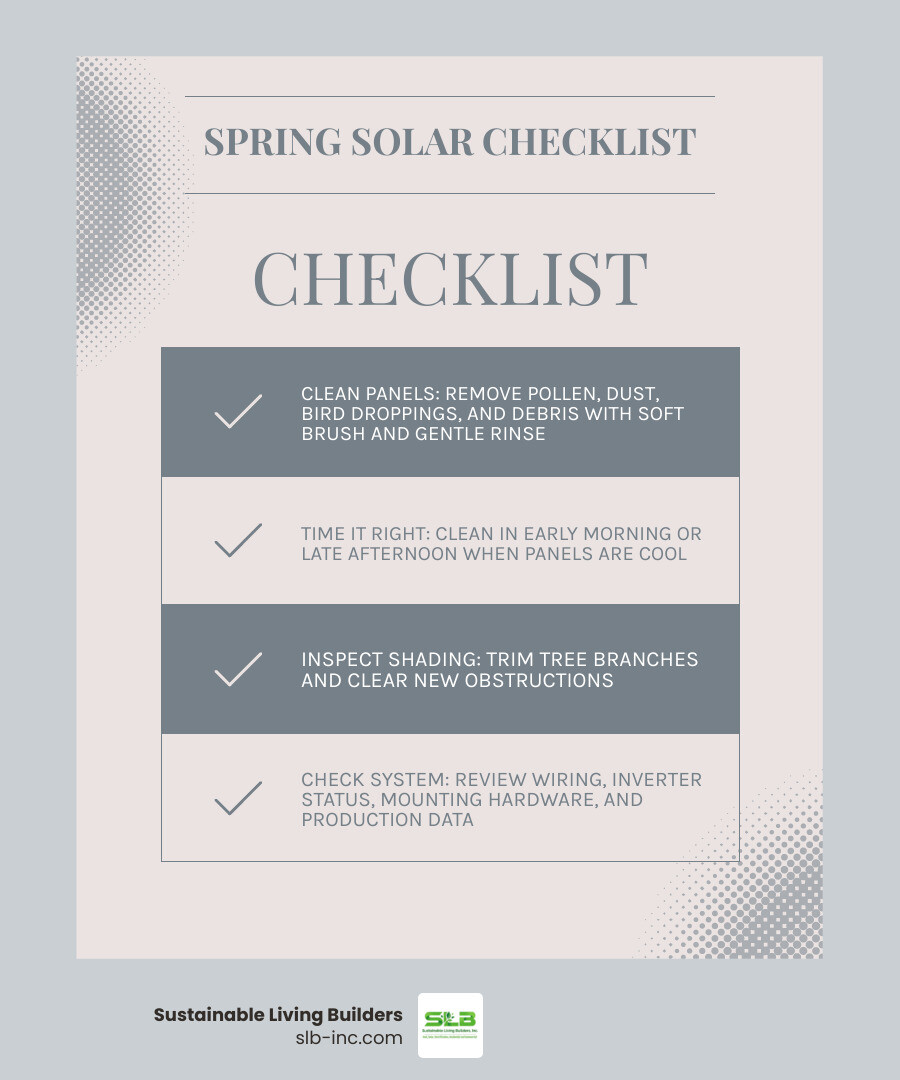
Quick Answer: Spring Solar Panel Maintenance Checklist
- Clean panels – Remove pollen, dust, bird droppings, and debris with a soft brush and gentle rinse
- Choose the right time – Clean in early morning or late afternoon when panels are cool
- Inspect for shading – Trim tree branches and clear any new obstructions
- Check your system – Look over wiring, inverter status lights, and mounting hardware
- Review production data – Use your monitoring app to spot any unexplained output drops
- Check for pests – Inspect for animal nests or chewed wiring under or around panels
- Verify battery health – Check charge levels and any error alerts if you have battery storage
Most solar systems are sold as low-maintenance technology — and that is mostly true. There are no moving parts, no oil changes, no engine belts. But “low-maintenance” is not the same as “zero-maintenance.” After months of winter weather, a layer of dust, pollen, road grime, and organic debris quietly builds up on your panels. That thin, almost invisible film blocks sunlight from reaching your photovoltaic cells, and every day it sits there, it costs you energy you paid to generate.
The stakes are real. A soiling loss of just 20% can translate to roughly $400 in lost annual savings on a system that normally cuts your utility bill by $2,000 per year. That is not a number worth ignoring — especially when the fix is straightforward.
Spring is the ideal window to act. It positions your system for peak performance right before the long, sunny days of summer when your panels do their heaviest lifting.
I’m Karlo Jarina, marketing lead at Sustainable Living Builders, and my work sits at the intersection of solar education and homeowner advocacy — including helping homeowners understand the seasonal rhythms of spring solar panel cleaning and maintenance that protect both their systems and their savings. In the sections ahead, we’ll walk you through exactly what to do, when to do it, and when to call in a professional.
Why Santa Rosa Homeowners Need a Spring Solar Strategy
As we embrace April 2026, the rolling hills of Sonoma County and the vineyards of Napa are bursting with life. But for those of us with Solar Panels on our roofs, that beautiful green growth comes with a yellow price tag: pollen. In our region, spring is a double-edged sword. We get the sunshine we need for power, but we also deal with a unique mix of environmental factors that can stifle our systems.
Our fictional homeowner, Sunny, recently noticed that while the days were getting longer and brighter, their energy bill wasn’t dropping as much as expected. A quick look at the roof revealed the culprit—a thick, sticky coating of oak and pine pollen mixed with fine dust from local agricultural activity.
Why Santa Rosa homeowners prioritize spring solar panel cleaning and maintenance
In Sonoma, Marin, and Napa Counties, we don’t just deal with standard “dirt.” We have specific regional challenges:
- Pollen Spikes: Oak, pine, and local grasses release massive amounts of pollen in the spring. This isn’t just dust; it’s sticky. It clings to the glass and creates a stubborn film that rain often can’t wash away.
- Arid Dust: Our Mediterranean climate means that once the winter rains stop, things dry out quickly. Dust from nearby vineyards or construction projects in Santa Rosa and Sebastopol settles on your panels, creating a barrier.
- Post-Winter Debris: Winter storms often leave behind more than just water. Small twigs, leaf fragments, and even roof grit from aging shingles can collect in the corners of your solar array.
When you are Installing Solar Panels In Your Home, you are planning for long-term ROI. Neglecting this spring cleanup can lead to a noticeable efficiency loss. Industry data suggests that a soiling loss rate of 20% is common for neglected panels, which actively drains your wallet while the sun is shining its brightest.
How Dirt and Pollen Impact Your Energy Production
It helps to think of your solar panels like a window. If the window is covered in mud, very little light gets into the room. Solar panels work similarly; they rely on photons from sunlight hitting the photovoltaic cells. When a layer of pollen or bird droppings sits on top of the glass, it reflects or absorbs that light before it ever reaches the “engine” of your system.
The impact isn’t just a minor dip. Even a thin layer of “invisible” film can reduce production by 5% to 10%. When you add in heavier obstructions like bird droppings or clumps of leaves, that number climbs.
| Panel Condition | Estimated Efficiency Loss | Annual Financial Impact (on $2k savings) |
|---|---|---|
| Clean Panels | 0% | $0 (Full Savings) |
| Light Dust/Pollen | 5% – 7% | $100 – $140 Loss |
| Heavy Soiling (Post-Winter) | 15% – 25% | $300 – $500 Loss |
| Localized Shading (Droppings/Leaves) | 30%+ | $600+ Loss |
Beyond just blocking light, grime can cause “hot spots.” If one part of a panel is covered in a thick bird dropping while the rest is in full sun, the covered cells can’t produce energy. This forces the surrounding cells to work harder, which can lead to localized overheating and, eventually, permanent damage to the panel. This is one reason why we emphasize The Impact Of Rain On Solar Panels And How To Protect Them; while rain helps, it often leaves behind mineral spots or “mud” streaks that can be just as problematic as the original dirt.
Step-by-Step Guide to spring solar panel cleaning and maintenance
Ready to get your system back to 100%? If your panels are easily accessible and you feel comfortable with the task, DIY cleaning can be a rewarding Saturday morning project. Here is how we recommend doing it safely and effectively.
Step 1: Safety First – Shut Down the System Before you touch anything, turn off your solar system. Use the AC disconnect switch. While the panels are sealed, you’re working with water around electrical equipment. Better safe than sorry!
Step 2: The Visual Inspection Before you start spraying, look for large debris. Use a soft-foam roof rake or a dry, soft brush to gently remove leaves, twigs, or nests. If your panels are on a high roof, we highly recommend using binoculars from the ground instead of climbing up.
Step 3: The Gentle Rinse Use a standard garden hose to give the panels a preliminary rinse. Avoid high-pressure washers! The intense pressure can damage the seals around the glass or force water into the junction boxes. Think of it as a gentle rain shower, not a power wash.
Step 4: Soft Agitation For stubborn pollen or bird droppings, use a soft-bristle brush or a microfiber cloth attached to an extendable pole. We suggest a mixture of mild dish soap and water. Avoid harsh chemicals, bleach, or abrasive sponges that could scratch the anti-reflective coating on the glass.
Step 5: The Final Rinse (Deionized Water is Best) If you live in an area with hard water (common in parts of Sonoma and Napa), standard tap water can leave mineral deposits behind. If possible, use a deionized water filter on your hose for the final rinse to ensure a spot-free finish.
Step 6: Air Dry Let the panels air dry. Don’t use a squeegee unless you are certain it is perfectly clean, as any trapped grit could scratch the glass.
For more detailed tips on keeping your array in top shape, check out Dare To Shine Brighter A Guide To Maintaining Your Solar Panels.
Best times of day for cleaning
Timing is everything. If you spray cold water onto panels that have been baking in the Santa Rosa sun all afternoon, you risk “thermal shock.” This can cause the glass to crack instantly.
- Early Morning: This is the gold standard. The panels are cool from the night, and the water won’t evaporate too quickly, which prevents streaking.
- Late Afternoon/Evening: Once the sun has started to set and the panels have cooled down, this is your second-best window.
- Overcast Days: A cloudy day is actually a solar cleaner’s best friend. You can take your time without the sun drying the soap into spots.
Understanding the timing helps you Get To Know Our Solar Products and how they react to the environment.
Protecting your warranty through spring solar panel cleaning and maintenance
Many homeowners don’t realize that their 25-year manufacturer warranty often comes with “strings” attached. Specifically, most manufacturers require proof of regular maintenance. If a panel fails due to a “hot spot” caused by years of accumulated bird droppings, the manufacturer might deny your claim, citing homeowner negligence.
Keep a simple log of your spring solar panel cleaning and maintenance. Note the date, what you did, and any observations. This documentation is your insurance policy. Also, always follow the specific manufacturer guidelines for your brand of panels. Some forbid any soap at all, while others are more flexible. Knowing How Often To Clean Solar Panels according to your specific warranty can save you thousands in the long run.
Essential Maintenance Checks Beyond Cleaning
Cleaning the glass is only half the battle. Spring is the time to look at the “health” of the entire system.
Shading Analysis Trees grow fast in the spring. That oak tree that was perfectly fine last October might have sprouted new branches that now cast a shadow over your panels at 2:00 PM. Even a small amount of shade on one corner of an array can significantly drag down the production of the entire string. Take a walk around your property and look for new obstructions. If you see overhanging branches, it’s time to trim.
The “Critter” Check Birds and squirrels love the space between your solar panels and your roof. It’s warm, dry, and protected. Unfortunately, squirrels are notorious for chewing on wiring, which is a major fire hazard and a system killer. Use your phone’s camera zoom or binoculars to look under the panels for nests, loose wires, or “chew marks.” If you see evidence of residents, call a professional for pest abatement.
Visual Hardware Inspection Check the mounting hardware. Are there any loose bolts? Does the racking look secure? Look at your inverter—is the “status” light green? If you see a red or orange light, or an error code on the display, it’s time to call us. We want to ensure your Solar Energy Systems are running perfectly before the summer heat hits.
Monitoring your production data
Your smartphone is one of your best maintenance tools. Most modern systems come with a monitoring app that shows your daily production.
Sunny, our Santa Rosa homeowner, noticed a 15% dip in production compared to the same week last year, despite the weather being similar. Because they checked their app, they were able to identify a dirty panel array and a minor shading issue from a growing willow tree before it cost them a whole season of savings.
If you don’t have access to your monitoring platform, reach out to your Santa Rosa Solar Installers. They can usually help you get reconnected so you can keep a close eye on your system’s heartbeat.
Frequently Asked Questions about Solar Upkeep
When should I hire a professional instead of DIY?
If your panels are on a second-story roof, have a steep pitch (above 15° to 30°), or if you simply don’t have the right tools, hire a professional. Safety is paramount. Thousands of injuries occur every year from ladder falls. Additionally, professionals use deionized water systems and specialized carbon fiber poles that reach difficult spots without needing to walk on your roof, which protects your shingles and your panels.
Does rain clean my solar panels effectively?
Rain is like a quick rinse for your car—it gets the loose dust off, but it doesn’t remove the “road film,” pollen, or bird droppings. In fact, light rain can sometimes make things worse by turning dust into mud that dries into a thick crust. Manual cleaning at least once or twice a year is necessary for peak performance.
How often should I perform maintenance in dry climates?
In dry, dusty regions like parts of Napa or inland Sonoma County, we recommend a more frequent schedule. While a standard suburban home might get away with once a year, homes in high-dust or agricultural areas should aim for every 3 to 4 months during the dry season to prevent severe efficiency drops.
Conclusion
At Sustainable Living Builders, we believe that a sustainable home is a well-maintained home. Taking the time for spring solar panel cleaning and maintenance isn’t just about aesthetics; it’s about protecting your ROI and ensuring your carbon footprint stays as small as possible. By clearing away the winter grime and checking your system’s health, you’re setting yourself up for a summer of maximum energy savings and peace of mind.
Whether you’re in Santa Rosa, Sebastopol, or anywhere across Marin and Napa, we’re here to help you shine. Don’t let a layer of pollen stand between you and the sun. Request a professional roof and solar assessment today, and let’s make sure your system is ready for its best season yet!