Powering Your Home: The Electrical Panel Upgrade Essentials
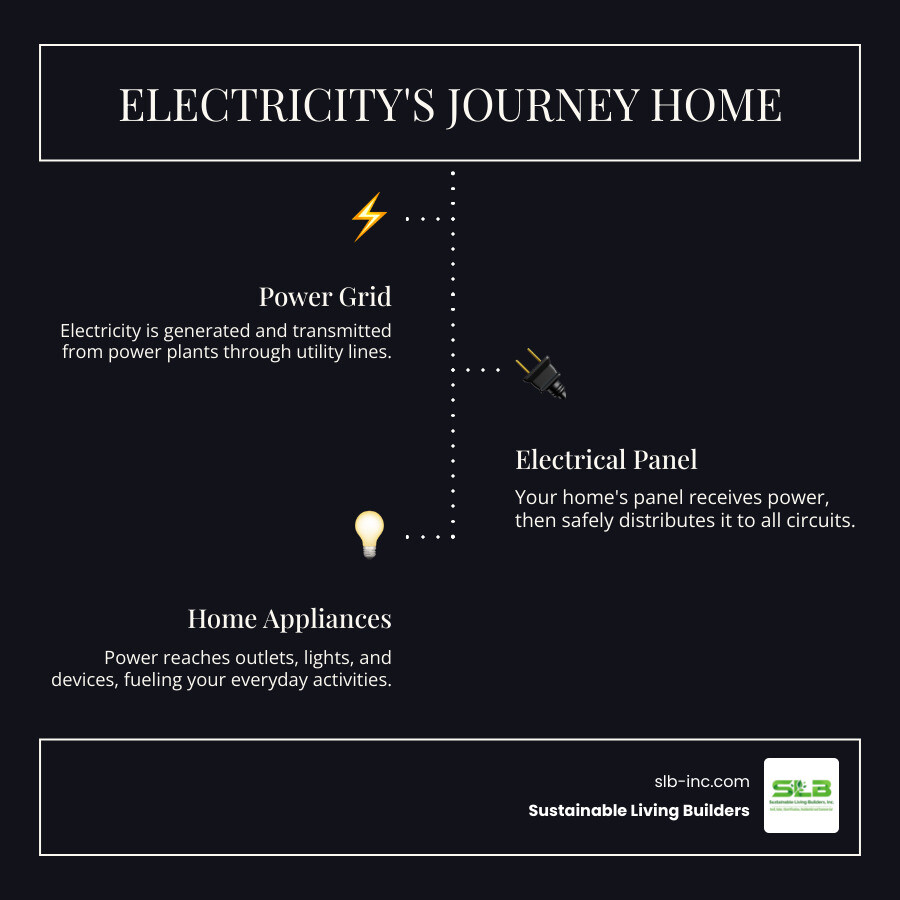
For homeowners eager to lower energy bills and accept a greener, more efficient lifestyle, understanding when to upgrade house electrical panel is crucial. Your electrical panel acts as the heart of your home’s power system, safely distributing electricity to every light, appliance, and device. However, an aging or undersized panel can limit your ability to adopt modern, energy-saving technologies. It can even pose safety risks, hindering your goal of a truly sustainable and worry-free home. This guide will walk you through everything you need to know about this essential home improvement.
Here’s a quick overview of why and how to upgrade your electrical panel:
- Signs You Need an Upgrade: Look for frequent circuit breaker trips, dimming lights, an electrical panel older than 25-40 years, physical damage, or a burning smell.
- Key Benefits: An upgrade boosts your home’s electrical capacity, improves safety, improves reliability, and prepares your home for future needs like electric vehicles (EVs) or solar panels.
- What It Involves: Typically, a licensed electrician assesses your current system, determines the right panel size, obtains necessary permits, and replaces your old panel with a new, more robust one.
Step 1: Recognizing the Red Flags – When to Upgrade Your Panel
With modern gadgets, smart devices, and energy-efficient appliances, homes consume more power than ever. If your electrical panel—the heart of your home’s electrical system—is outdated, it can struggle to keep up. An undersized panel, especially in homes across Santa Rosa and Sonoma County, will often show clear warning signs.
A classic sign is frequent circuit breaker trips. A circuit breaker protects your home by cutting power to prevent overloads and fires. But if breakers trip constantly when you use multiple appliances, your panel is overloaded. This is a key indicator that it’s time to upgrade house electrical panel.
Dimming or flickering lights are another tell-tale sign. If lights dim when an appliance like a refrigerator kicks on, or you see random flickering lights, your electrical system is struggling to deliver consistent power.
Consider the age of your electrical panel. Most have a lifespan of 25 to 40 years. If your panel is older, especially in properties in Marin or Napa County, it needs a closer look. Many older homes have outdated fuse boxes that weren’t built for modern energy needs.
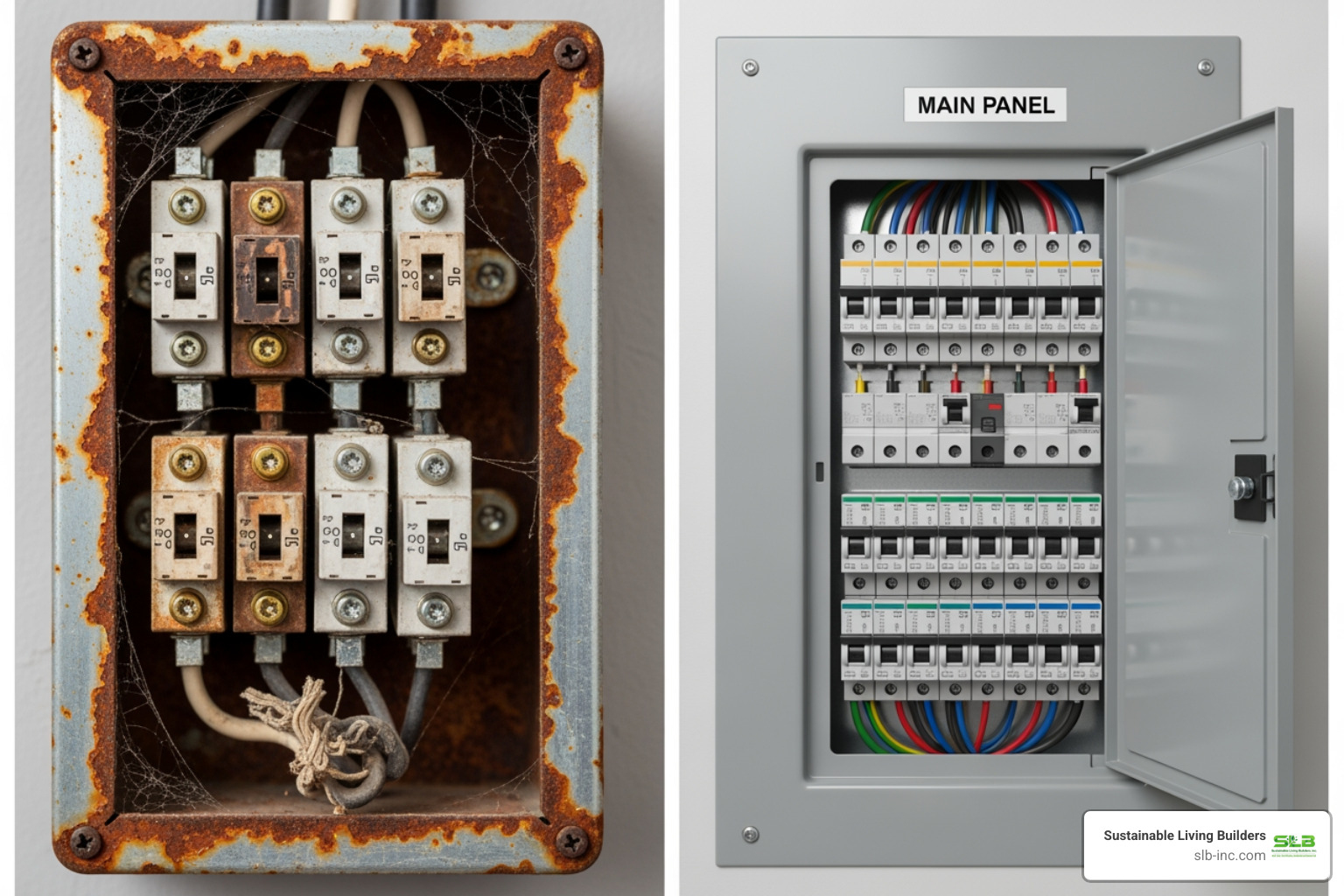
Look for direct warnings from the panel itself. Physical damage like rust, corrosion, or discoloration indicates wear or moisture. More urgently, a burning smell, buzzing or crackling sounds, or a panel that feels warm or hot to the touch are serious indicators of a problem. These signs require immediate attention from a professional electrician. Malfunctioning appliances can also point to an insufficient power supply.
What are the safety risks of an outdated electrical panel?
Ignoring these red flags compromises safety. The biggest risk is overheating, which is a serious fire hazard. An overloaded panel can melt wires and create the risk of an electrical fire. Inconsistent power can also damage your electronics and appliances. Many older panels don’t meet today’s electrical codes. Certain brands like Federal Pacific Electric (FPE) and Zinsco have known safety flaws and should be replaced immediately. For the safety of your home in Santa Rosa and beyond, addressing these issues is critical.
For more information on ensuring your electrical system is safe and up-to-date, you can Learn More about electrical system safety. Prioritizing the safety of your home in Santa Rosa or the surrounding areas is always our top concern.
Step 2: Planning Your Upgrade – Sizing, Scope, and Professional Help
Once you’ve spotted the signs, the next step is to plan your upgrade house electrical panel. This task requires a licensed professional. We start by assessing your current and future electricity usage to ensure your new panel will fit your needs.
It’s helpful to know the difference between an electrical panel upgrade and a replacement. An upgrade boosts your home’s electrical capacity, which is necessary for adding large appliances, an EV charger, or for home electrification. A replacement involves swapping an old or unsafe panel with a new one of the same capacity.
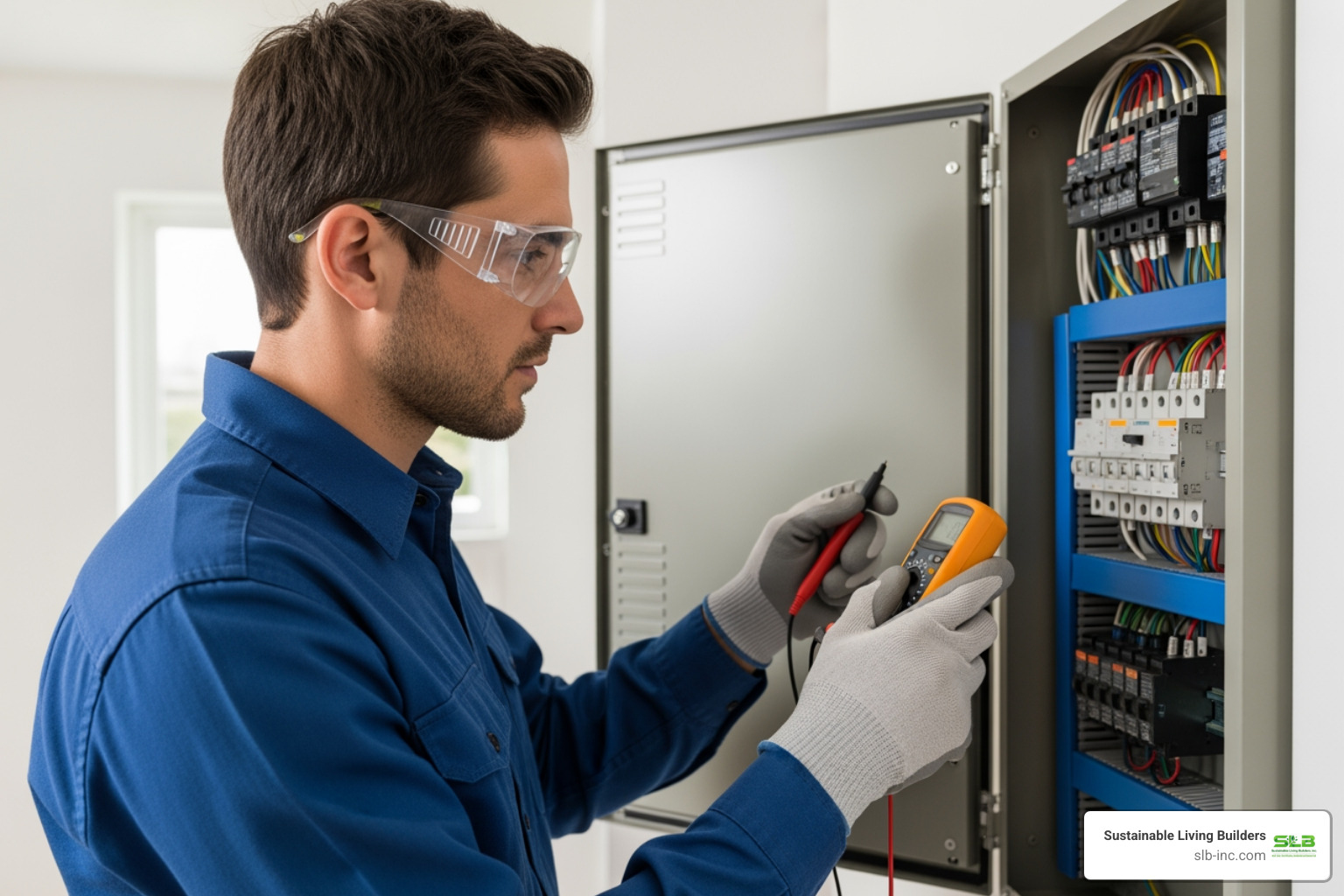
The role of a licensed electrician is crucial. Our experts ensure the entire process is safe and compliant with all codes. We also handle the necessary permits and inspections required in Santa Rosa, Sebastopol, or anywhere in Sonoma, Marin, and Napa Counties, which is mandatory for ensuring a safe and legal installation.
Want to really dig into your home’s energy use? We offer Energy Audit Services to give you a full picture. And if you’re curious about how this all works with your utility company, especially here in California, you can check out A roadmap to your electrical panel upgrade.
How to determine the right size when you upgrade house electrical panel
Choosing the right panel size is critical. Panel power is measured in amperage (amps), which dictates how much electricity can flow into your home. Many older homes have 60-amp or 100-amp panels. While a 100-amp panel can sometimes suffice, it’s often at its limit. Today, a 200-amp electrical panel is the standard, providing ample power for modern appliances, HVAC systems, and future additions like an EV charger or solar panels. If you have 100-amp service or less, upgrading to a 200-amp system prepares your home for future electrical needs.
You can often find your panel’s size on the main breaker (e.g., “100A” or “200A”) or a sticker inside the panel door. However, a professional assessment is the best way to determine your true needs. We evaluate your current appliances and future plans—like adding a heat pump or EV charger—to recommend the right size panel without wasted capacity. For more general details on panel upgrades, you can visit Upgrading Your Panel.
Step 3: The Upgrade Process – What to Expect on Installation Day
With planning complete and permits secured, the next step is the actual upgrade house electrical panel installation. At Sustainable Living Builders, we strive to make this process as smooth and clear as possible for our clients in Santa Rosa, Sonoma County, and all our service areas.

A typical electrical panel upgrade can often be completed in about one day, though this can vary. For safety, the power disconnection is a crucial step. Your home’s electricity will be temporarily turned off while our licensed electricians work, so we recommend charging your devices beforehand.
Coordination with your utility company, like PG&E here in California, is also a key part of our service. They are responsible for the power reconnection once your new panel is installed and inspected. After our work is done and passes a municipal inspection, we’ll coordinate with PG&E to restore power. That final inspection process is vital—it confirms the installation meets all local electrical codes and safety standards, giving you complete peace of mind.
To dive deeper into how we specifically handle these installations, explore our page dedicated to how we Install New Electrical Panel. We truly believe in providing a comprehensive, hassle-free service, so you can trust us to Complete Your Electrical Panel Upgrade with the Pros!.
Key steps to upgrade house electrical panel
We follow a systematic approach to ensure quality, safety, and efficiency. Here are the key steps involved in an electrical panel upgrade:
- Initial Assessment: We evaluate your current system, its condition, and your energy needs to recommend the best solution.
- Obtaining Permits: As a licensed contractor, we handle all necessary permits required by local authorities in Marin County, Napa County, and our other service areas.
- Scheduling the Work: We’ll work with you to find a convenient time for the installation, aiming to minimize disruption.
- Power Disconnection: Your home’s power is safely turned off in coordination with your utility provider.
- Panel Removal and Replacement: Our electricians carefully remove the old panel and install the new, higher-capacity unit, ensuring all wiring is connected correctly.
- Circuit Labeling and Testing: Each circuit is clearly labeled, and the entire system is tested to ensure it works perfectly and safely.
- Final Inspection and Power Reconnection: After passing municipal inspections, we coordinate with the utility company to restore power to your home.
- Final Walkthrough and Approval: We explain your new system, answer your questions, and ensure you are completely satisfied.
Our commitment to sustainable living means we’re doing more than just upgrading your panel; we’re truly empowering your home for a greener, more efficient future. For a deeper dive into all our electrical panel upgrade services, be sure to visit our dedicated page: Electrical Panel Upgrade | Sustainable Living Builders.
Step 4: Powering Your Future – The Benefits of an Upgraded Panel
When you upgrade house electrical panel, you’re making a smart investment in your home’s safety, convenience, and long-term value. It’s about more than fixing a problem; it’s about preparing for the future.
The most immediate benefit is increased electrical capacity. A modern, properly-sized panel can handle all your devices and appliances simultaneously without tripping breakers. You can run your air conditioning, do laundry, and cook dinner all at once, just as modern life demands.
An upgraded panel also delivers improved safety and reliability. Newer panels meet today’s rigorous safety standards, reducing the risk of electrical fires and power surges. A steady power supply also protects your expensive electronics and appliances from damage, providing valuable peace of mind.
An upgrade is key to future-proofing your home. As more homeowners move toward Home Electrification, swapping gas appliances for efficient electric alternatives, adequate electrical capacity is essential. Heat pumps, induction cooktops, and electric water heaters all rely on a robust electrical system.
And let’s talk about the big game-changers: EV chargers and solar panels. A robust electrical panel is essential for installing a Level 2 home charging station that can fully charge your car overnight. Similarly, if you’re ready to harness the sun’s power with Solar Panels, your electrical system needs to safely handle the energy your panels generate. An upgraded panel makes both of these sustainable choices practical.
To help you visualize the difference, here’s how a 100-amp panel stacks up against a modern 200-amp system:
| Appliance Category | 100-Amp Panel (Older Homes) | 200-Amp Panel (Modern Standard) |
|---|---|---|
| Basic Appliances | Lights, TV, Refrigerator, Washer/Dryer (basic models) | Lights, TV, Refrigerator, Washer/Dryer, Dishwasher, Microwave, Oven |
| Major Appliances | Limited capacity for one large appliance (e.g., A/C OR electric water heater) | Multiple large appliances (e.g., A/C AND electric water heater, induction stove) |
| HVAC Systems | Small central A/C or furnace; often insufficient for heat pumps | Central A/C, electric furnace, multiple heat pump units |
| EV Charging | Typically none or very slow Level 1 charging only | Level 2 EV charging capabilities |
| Solar Integration | Often requires an upgrade to integrate solar panels safely | Readily integrates solar panel systems |
| Future Electrification | Very limited capacity for new electric appliances | Ample capacity for full home electrification |
Incentives and Smart Technology
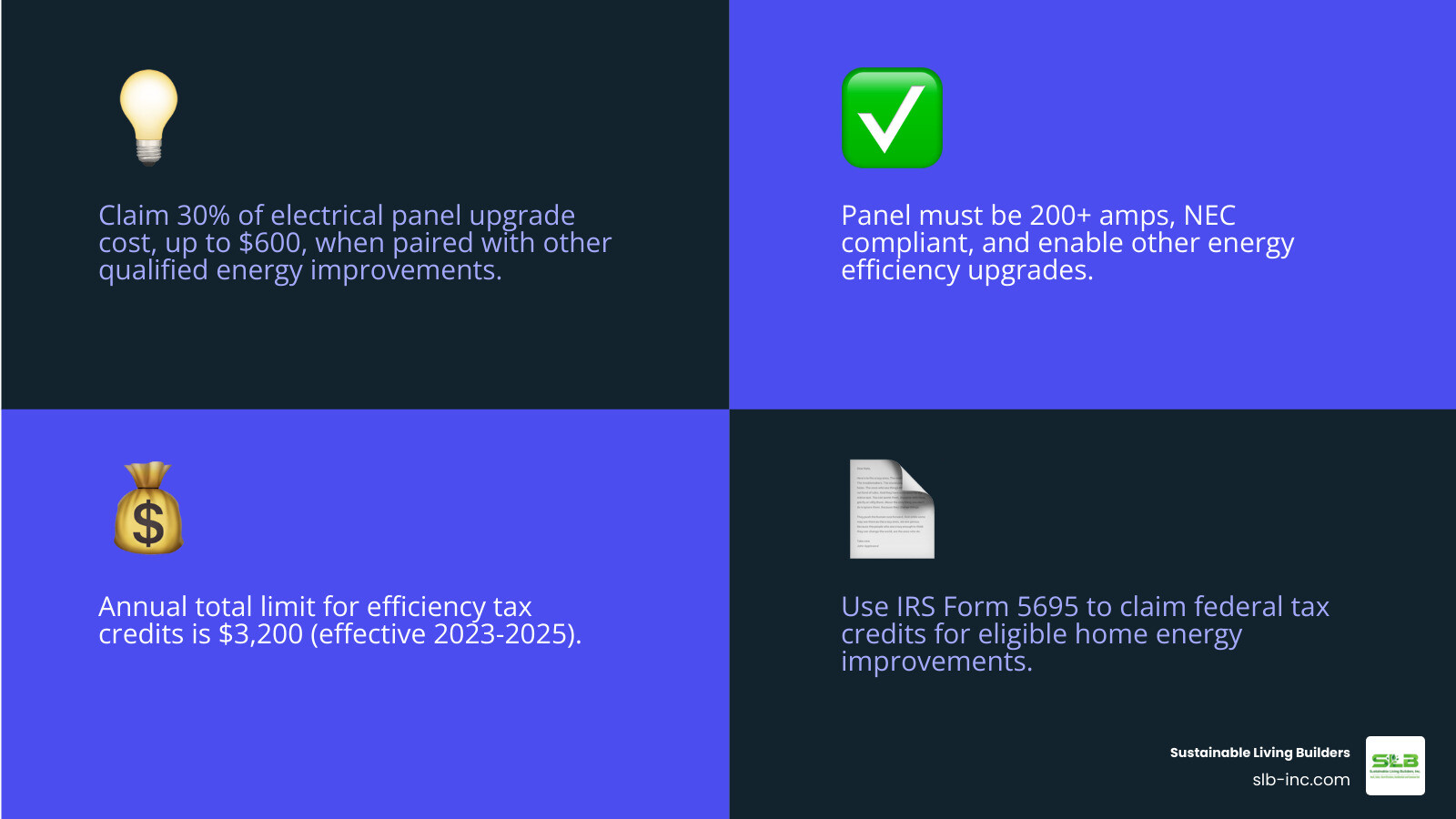
Federal incentives can help with the cost. Through the Energy Efficient Home Improvement Tax Credit, you may be able to claim 30% of your electrical panel upgrade cost, up to $600. To qualify, the upgrade must be part of a larger energy efficiency project, the new panel must be at least 200 amps, and it must be installed to code. This credit is part of a larger annual limit for home energy improvements. These credits apply to qualifying improvements installed between January 1, 2023, and December 31, 2025.
For the full details on how to take advantage of these savings, visit Learn More about federal tax credits. When tax season rolls around, you’ll claim your credit using IRS Form 5695.
You can also consider smart panel technology. A smart panel like the Span Panel offers advanced home energy management, giving you unprecedented control and visibility into your home’s electricity use. From your phone, you can monitor consumption in real-time and prioritize essential circuits during an outage. These systems integrate seamlessly with solar and battery storage, creating an intelligent energy ecosystem. It provides complete control over your home’s energy future. Curious to learn more? Find How Can a Span Panel Help Monitor Electricity Usage? and see if this technology is right for you.
Frequently Asked Questions about Electrical Panel Upgrades
We know that making decisions about your home’s electrical system can feel overwhelming. That’s why we’ve gathered some of the most common questions we hear from homeowners throughout Santa Rosa, Sebastopol, and all of Sonoma, Marin, and Napa Counties. Let’s clear up any confusion and help you feel confident about your next steps.
Can a home be fully electrified without upgrading the electrical panel?
Yes, many homes can be fully electrified without needing to upgrade house electrical panel. This is possible through strategic electrification—making thoughtful choices that work within your existing electrical capacity. Modern energy-efficient appliances, like heat pumps that are far more efficient than gas furnaces, are key. Additionally, load management technology such as smart panels, intelligent breakers, and circuit-sharing devices can optimize a 100-amp service. These systems intelligently distribute power, preventing overloads by prioritizing circuits. By combining efficient equipment with smart load management, it’s often possible to achieve electrification goals without a full panel upgrade. Working with a professional is key to assessing your specific situation.
For an excellent deep dive into this topic, especially for California homeowners, we recommend checking out Your home electrification project. It’s packed with practical strategies and real-world examples.
What is the difference between an electrical panel upgrade and a replacement?
An electrical panel upgrade increases your home’s power capacity (amperage), typically from 100 amps to 200 amps, to handle new, significant electrical loads like an EV charger or heat pump. A panel replacement, on the other hand, is a like-for-like swap of a panel that is damaged, outdated, or unsafe, without increasing its amperage. A replacement restores safety and reliability with a modern unit of the same capacity. An assessment of your current system and future plans will determine whether you need an upgrade house electrical panel, a replacement, or both.
For more detailed information on this topic, you can explore FAQS about Electrical Panel Upgrades.
How does upgrading an electrical panel impact the electrical grid?
When you upgrade house electrical panel, you increase your home’s capacity to draw power from the grid. When many homes do this, it creates increased demand on the community-wide infrastructure. This is a necessary step to support community-wide electrification and the transition to cleaner energy. This increased demand necessitates grid modernization, where utility companies upgrade transformers and power lines to handle higher loads. However, smart technology can help reduce strain on the grid. Smart panels and load management systems allow homeowners to shift energy use to off-peak times, such as charging an EV overnight. This intelligent energy management helps balance the load across the grid, making it more resilient. This collaborative approach between homeowners, utilities, and technology is vital for a sustainable energy future.
Conclusion
Deciding to upgrade house electrical panel is about more than fixing a problem—it’s about preparing for the future. We’ve covered the warning signs of a struggling panel, from flickering lights to more serious safety concerns. We’ve also demystified the upgrade process, which, with a licensed electrician, is a straightforward path to significant gains.
The benefits are clear: peace of mind from a safe and reliable system, increased capacity to run all your appliances without issue, and a future-ready home prepared for an EV, solar panels, or full home electrification.
At Sustainable Living Builders, we see electrical panel upgrades as more than just another service we provide to homeowners in Santa Rosa, Sebastopol, and throughout Sonoma, Marin, and Napa Counties. It’s truly a foundational step toward the kind of home we all want – one that’s efficient, sustainable, and ready for tomorrow’s energy landscape. We believe that Sustainable Living Starts at Home, and we’re genuinely excited to be part of your journey.
Ready to take the next step? Explore our comprehensive Home Electrification solutions, and let’s work together to create a fully-powered, energy-efficient home that reflects your values and supports your lifestyle. Your future home is calling – and it’s brighter than ever.