Why Proper Water Management Starts at Your Roofline
Vinyl gutter installation is a weekend-friendly project that protects your home from water damage while reducing long-term maintenance costs. Here are the key takeaways:
- Slope gutters 1/4 to 1/2 inch for every 10 feet toward the downspout.
- Space hangers every 16-24 inches.
- Install downspouts every 30-40 feet of gutter.
- Direct water at least 10 feet away from your foundation.
Water flowing off your roof might seem harmless, but without proper gutters, it erodes soil, seeps into your basement, and damages siding. A well-installed gutter system channels thousands of gallons away from your home each year, protecting your investment and preventing costly foundation repairs.
For other aesthetic options, explore copper look gutters. Ready to protect your home? Contact Sustainable Living Builders for professional gutter installation services.
Vinyl gutters offer unique advantages for DIY enthusiasts. They’re lightweight, won’t rust or dent like metal alternatives, and snap together with basic tools. The material won’t corrode in coastal climates, withstands temperature extremes, and never needs painting.
Why Choose Vinyl Gutters for Your Home?
Your gutters are unsung heroes, quietly protecting your home from water damage. Without them, rainwater can pool around your foundation, cause basement flooding, rot your siding, and erode landscaping. This is where vinyl gutters shine, especially for homeowners in Santa Rosa, Sebastopol, Sonoma County, Marin County, and Napa County who want effective protection without the headaches.
Vinyl gutter installation is exceptionally DIY-friendly. The sections are lightweight and easy to handle on a ladder. They snap together with basic tools, requiring no specialized equipment, welding, or riveting.
The rust-proof nature of vinyl is a game-changer in our coastal climate, as it never corrodes. Unlike aluminum, vinyl is also dent-resistant, bouncing back from impacts. Furthermore, vinyl gutters are UV protected to resist fading and cracking under the California sun, and they never need painting.
This combination of affordability and durability makes vinyl an appealing choice for effective water management. For other aesthetic choices, you might explore copper look gutters or learn about seamless gutters installation and maintenance. Choosing vinyl is a smart, sustainable solution that protects your investment for decades.
Planning Your Project: Tools, Materials, and Measurements
Proper planning is the key to a successful vinyl gutter installation. Before you start, inspect your fascia board—the vertical board along your roofline—for any rot or damage, as it must be solid to support the gutters. Repair it if necessary. Also, check for damaged shingles that could cause water to overshoot the gutters. Our gutter roof flashing guide can help with these details.
Next, sketch your roofline and mark locations for downspouts, planning one for every 30 to 40 feet of gutter. Decide where water will drain, ensuring it’s directed at least 10 feet from your foundation. With a partner, carefully measure each roof edge. For help with sizing, see our guide on how to measure gutter size.
Gather your tools and materials. You’ll need:
- Tools: A sturdy ladder, tape measure, chalk line, level, cordless drill, hacksaw or miter saw, and safety gear (gloves, eye protection).
- Materials: Vinyl gutter sections (buy 10-15% extra), gutter hangers (one every 16-24 inches), downspout outlets, end caps, connectors, corner pieces, downspouts, elbows, and brackets.
- Finishing Touches: PVC cement or gutter sealant, 1-1/4 inch deck screws, and splash blocks or downspout extensions.
Calculate your material needs based on your measurements and sketch. Buying everything at once ensures your project proceeds smoothly without extra trips to the store.
The Step-by-Step Guide to Vinyl Gutter Installation
With your plan ready, it’s time for your vinyl gutter installation. First, prioritize safety: use a stable ladder, work with a partner, and wear protective gear like gloves and safety glasses.
Establishing the Proper Gutter Slope
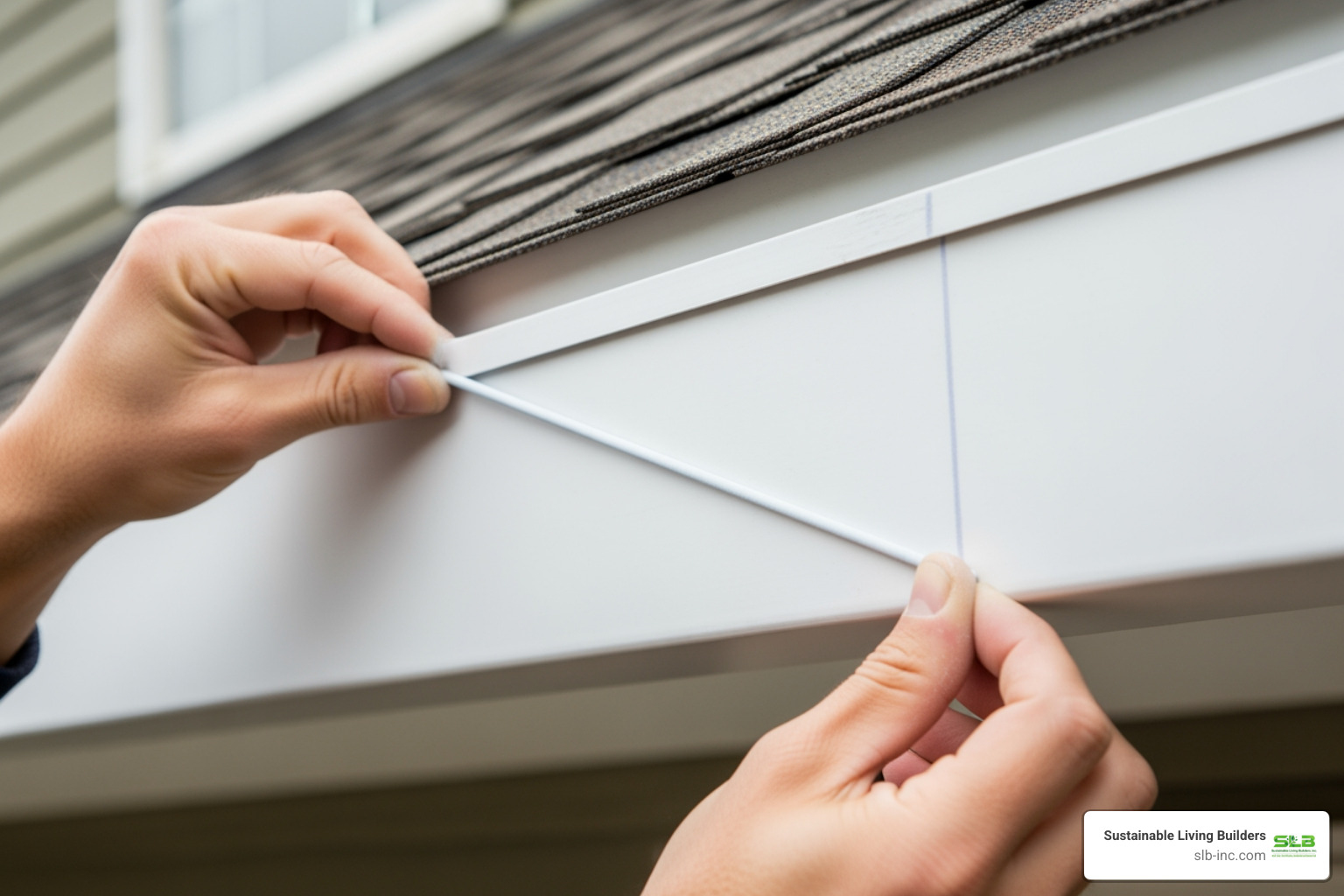
Proper drainage requires a slope of a 1/4 to 1/2 inch drop for every 10 feet of gutter toward the downspout. Use a chalk line to mark this slope accurately. At the high point, drive a nail into the fascia 1/2 inch below the roof edge. At the downspout location (the low point), calculate the total drop and drive a second nail. Snap a chalk line between the nails to create your guide.
For runs over 30 feet, consider placing the high point in the middle and sloping toward downspouts at each end. This helps ensure your roof drainage system stays ready for heavy rains.
Assembling and Hanging the Gutters
First, install downspout outlets and corner pieces along your chalk line with deck screws. Next, install gutter hangers every 16 to 24 inches, using closer spacing in snowy areas. Cut gutter sections to length with a hacksaw and sand any rough edges.
Join sections using slip-joint connectors or PVC cement for a permanent bond. Attach end caps and corner pieces as needed. For flashing guidance, see our gutter roof flashing guide.
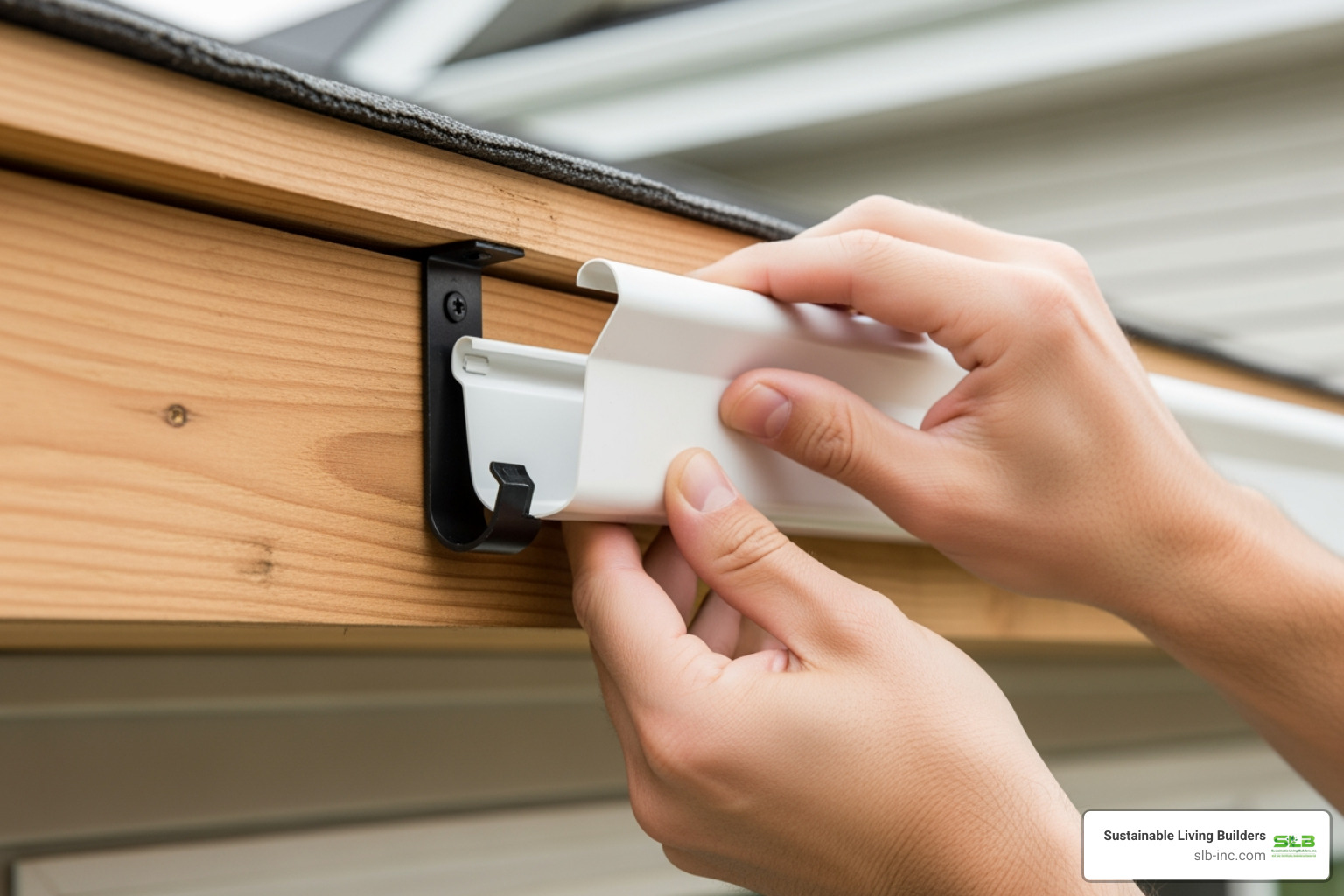
Lift each section and snap the back edge into the hangers, then push the front edge over the clip until it clicks into place. For runs longer than 25 feet, use an expansion connector to accommodate vinyl’s natural expansion and contraction.
Attaching Downspouts and Finalizing Your Vinyl Gutter Installation
Your downspouts carry water away from the foundation. Use two elbows to create an offset from the wall, connecting them with a small piece of downspout. Do not cement these connections; a friction fit allows for thermal expansion.
Cut your main downspout section to run from the lower elbow to about 6-12 inches above the ground. Secure it to the wall with downspout brackets every 3 feet. At the bottom, attach a final elbow and use splash blocks or downspout extensions to direct water at least 10 feet away. You can also direct water into rain barrels. Install strainers in the outlets to prevent clogs. Our elbows and gutters guide offers more detail on these components.
Post-Installation: Maintenance and Common Mistakes
Your vinyl gutter installation is complete, but regular maintenance is key to its longevity. With a little attention, your system will work beautifully for decades.
Maintaining Your Gutters After Vinyl Gutter Installation
- Regular Cleaning: Clean gutters at least twice a year, in spring and fall, to remove leaves and debris. This is especially important in areas with heavy tree cover like Sonoma and Napa County.
- Flush and Inspect: After cleaning, flush the gutters with a hose to check for proper flow and spot any leaks at joints or end caps. Minor leaks can be repaired with gutter sealant.
- Install Gutter Guards: To reduce cleaning, consider installing gutter guards to block debris.
- Check Downspouts: Ensure downspout strainers are clear to prevent clogs.
For more tips, consult our gutter maintenance guide and learn about the importance of gutter cleaning services.
Common Mistakes to Avoid
Avoid these common pitfalls to ensure your hard work pays off:
- Incorrect Slope: Gutters must slope 1/4 to 1/2 inch for every 10 feet. Without proper slope, water will pool.
- Insufficient Hangers: Space hangers no more than 16-24 inches apart to prevent sagging.
- Improper Sealing: Use quality sealant at all joints and end caps to prevent drips.
- Poor Downspout Placement: Space downspouts correctly (no more than 40 feet apart) and direct water at least 10 feet from your foundation.
- Ignoring Expansion: Use expansion connectors on long runs and avoid cementing downspout parts to allow for movement.
- Unsafe Practices: Always prioritize safety by using a stable ladder and proper gear.
- Ignoring Fascia Condition: Never attach gutters to rotten fascia boards; repair them first.
For information on other styles, check our half round gutters homeowner’s guide. Proper maintenance and avoiding these mistakes will ensure your vinyl gutter installation protects your home for years.
Frequently Asked Questions
Here are answers to common questions about vinyl gutter installation from homeowners in Santa Rosa, Sebastopol, Sonoma County, Marin County, and Napa County.
How do vinyl gutters compare to aluminum gutters?
Both are effective, but have different strengths:
- Vinyl Gutters: More affordable and DIY-friendly with snap-together assembly. They are rust-proof, dent-resistant, and never need painting. They typically last 10-20 years.
- Aluminum Gutters: Stronger and often installed as seamless systems by professionals, reducing leaks. They last 20-30 years and come in more colors, but they can dent.
The choice depends on your budget and priorities. For other material options, see our galvanized half round gutters guide.
How often should downspouts be placed?
The general rule is one downspout for every 30 to 40 feet of gutter. However, larger roofs or areas with heavy rainfall may require downspouts closer together to handle the water volume. Always locate downspouts at the lowest point of a gutter run.
When should I hire a professional instead of DIY?
While vinyl gutter installation is a great DIY project, consider hiring a professional if:
- Your home has a complex roofline with multiple gables or unusual angles.
- You are working on a two-story home or higher, which increases safety risks.
- You lack the confidence or tools to ensure proper installation, as mistakes can lead to costly water damage.
- You have limited time for the project.
For homeowners in Santa Rosa, CA, and surrounding areas, we can help with home gutters in Santa Rosa, CA. Professional installation ensures your home is protected correctly and efficiently.
Protect Your Home with a Flawless Gutter System
Completing your vinyl gutter installation is a significant accomplishment. You’ve added a crucial layer of protection that will channel water away from your foundation, preserve your siding, and protect your landscaping for years to come. It’s an investment in your home’s longevity and peace of mind.
A well-installed gutter system also improves your home’s curb appeal with clean, finished lines, reflecting a well-maintained home.
At Sustainable Living Builders, we believe a functional gutter system is part of a holistic, sustainable home. By protecting your home’s structure, you reduce the need for future repairs and support a more sustainable lifestyle. While we specialize in energy-efficient roofing and solar, we know every component of your home matters.
If a DIY project isn’t right for you due to a complex roofline, safety concerns, or time constraints, our team is here to help. We offer professional gutter installation and maintenance throughout Santa Rosa, Sebastopol, Sonoma County, Marin County, and Napa County. Whether you DIY or hire a pro, the goal is a protected, efficient, and sustainable home.