Why Attic Insulation Benefits for California Homes Are Bigger Than You Think
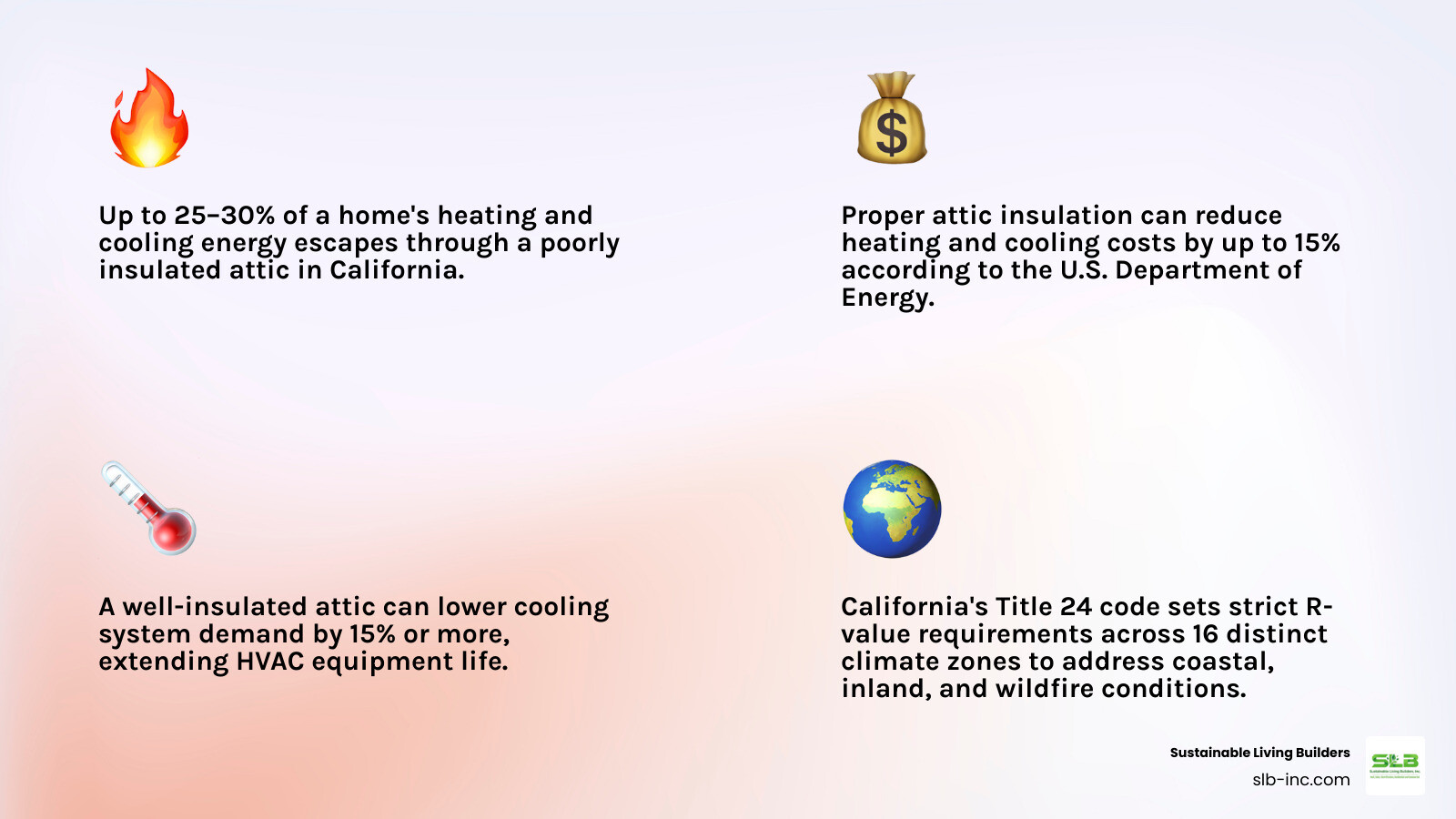
The attic insulation benefits for California homes are hard to overstate — especially when you’re watching your energy bills climb every summer and wondering where all that cooled air is actually going. In California, up to 25–30% of a home’s heating and cooling energy can escape through a poorly insulated attic. That’s a significant chunk of your utility bill disappearing right above your ceiling.
Here’s a quick look at the core benefits:
- Lower energy bills — Proper attic insulation can reduce heating and cooling costs by up to 15%, according to the U.S. Department of Energy
- Reduced HVAC strain — A well-insulated attic can lower cooling system demand by 15% or more, extending the life of your equipment
- More consistent indoor temperatures — No more hot upstairs rooms in July or cold drafts in December
- Better indoor air quality — Air sealing alongside insulation helps keep wildfire smoke, dust, and allergens out
- Moisture and mold protection — Proper insulation slows condensation buildup that can damage roof sheathing
- Higher property value — Energy-efficient homes have stronger resale appeal in California’s competitive market
- Environmental impact — Less energy use means a smaller carbon footprint
California’s unique mix of coastal fog, inland heat, desert conditions, and wildfire risk makes attic insulation a more nuanced topic here than in most other states. The state’s Title 24 energy code sets some of the strictest insulation standards in the country, with R-value requirements that vary across 16 distinct climate zones. Whether you’re in the Sacramento Valley, the Bay Area, or Southern California’s inland valleys, the right attic insulation strategy can make a real, measurable difference in your home’s comfort and efficiency.
Maximizing Comfort: Attic Insulation Benefits for California Homes
When we talk about upgrading a home, we often think of highly visible projects like a kitchen remodel or a new deck. However, we believe the most powerful comfort upgrade is the one you rarely see. Your attic is the primary thermal barrier between the extreme elements outside and the cozy living spaces inside. Without proper protection, heat flows freely through your ceiling joists, turning your home into an oven in the summer and a refrigerator in the winter.
By establishing a robust thermal barrier, proper attic insulation directly regulates indoor temperatures. During hot summer days, it blocks the intense radiant heat from your roof from penetrating into your bedrooms. In the winter, it keeps the warm air generated by your heating system from escaping into the sky.
This thermal regulation dramatically reduces the strain on your heating, ventilation, and air conditioning (HVAC) systems. When your home maintains its temperature naturally, your AC doesn’t have to run constantly to combat the downward pull of attic heat. This not only extends the lifespan of your expensive HVAC components—potentially preventing them from wearing out years ahead of schedule—but also helps you Increase Home Energy Efficiency across every season.

How Climate Zones Shape Attic Insulation Benefits for California Homes
Our service areas—including Santa Rosa, Sebastopol, Sonoma County, Marin County, and Napa County—are defined by unique microclimates. On any given day in the North Bay, you might experience cool, heavy coastal fog in the morning, followed by intense, dry inland heat by mid-afternoon.
These rapid temperature swings place a unique demand on local homes. In coastal areas of Marin and Sonoma, insulation prevents damp, chilly air from making your home feel drafty. Meanwhile, in the warmer inland valleys of Napa and Santa Rosa, insulation acts as a shield against scorching afternoon heat.
Because we experience these diverse microclimates, matching your insulation strategy to your specific local climate zone is essential. Taking advantage of regional support can help make these upgrades highly accessible. For instance, homeowners can often Save Big with Sonoma and PGE Energy Programs to offset the cost of upgrading their attic’s thermal defense.
Enhancing Indoor Comfort and Air Quality
For Northern California homeowners, indoor air quality is a top priority. Our region has faced significant wildfire challenges in recent years, making smoke infiltration a serious seasonal concern.
Many people don’t realize that an unsealed attic behaves like a chimney. Tiny gaps around recessed lights, plumbing stacks, and electrical wiring allow smoky, dusty air to be sucked from the attic down into your living spaces. By pairing high-quality insulation with professional air sealing, we can block these pathways.
Air sealing acts as insulation’s quiet partner, dramatically reducing dust, outdoor allergens, and wildfire smoke from entering your home. If you want to identify exactly where your home is losing air and taking in pollutants, scheduling professional Energy Audit Services is the best place to start.
Long-Term Financial and Environmental Attic Insulation Benefits for California Homes
Investing in your attic also pays off in long-term home equity and environmental preservation. California homebuyers are exceptionally energy-conscious. A home with documented high-performance insulation, lower utility bills, and green upgrades stands out in the real estate market, boosting your property’s resale value and long-term appeal.
On an environmental level, reducing your daily energy consumption is one of the most effective ways to lower your household’s carbon footprint. By choosing eco-friendly, durable materials, you contribute directly to local sustainability efforts. Understanding the Importance of Sustainable Insulation helps us make choices that protect both our immediate household comfort and the beautiful Northern California environment we call home.
Comparing the Best Attic Insulation Materials for California
Choosing the right material for your attic depends on your home’s age, architectural structure, and specific comfort goals. Different materials offer unique thermal properties, lifespan expectations, and installation requirements.
To help you visualize the differences, here is a quick comparison of the three most popular options:
| Insulation Type | R-Value per Inch | Best For | Key Advantage |
|---|---|---|---|
| Fiberglass (Loose-Fill/Blown-In) | ~2.2 – 2.9 | Standard vented attics, hard-to-reach joists | Naturally fire-resistant, lightweight, won’t settle heavily |
| Cellulose (Blown-In) | ~3.2 – 3.8 | Dense coverage, eco-friendly preferences | Excellent sound dampening, high density slows air movement |
| Spray Foam (Closed-Cell) | ~6.0 – 7.0 | Unvented attics, roof decks, structural sealing | Dual insulation and air barrier, maximum thermal resistance |
To dive deeper into these options and find the perfect fit for your home’s layout, check out our guide on the Best Attic Insulation.
Blown-In Fiberglass and Cellulose
Blown-in (or loose-fill) insulation is highly favored for traditional vented attics. Using specialized blowing machines, professional installers can distribute these materials evenly across the attic floor, filling deep cavities, covering ceiling joists, and fitting tightly around awkward obstructions.
- Blown-In Fiberglass: Made from spun glass, this lightweight option provides excellent coverage without adding excessive weight to your ceiling drywall. It is naturally non-combustible and maintains its thermal resistance over decades.
- Blown-In Cellulose: Composed primarily of recycled paper treated with fire-retardant borates, cellulose is a fantastic choice for eco-conscious homeowners. Its higher density makes it highly effective at blocking sound and reducing minor air currents within the attic space.
To ensure these loose-fill materials are installed at a uniform depth without leaving weak spots or blocking critical ventilation pathways, we recommend working with experts experienced in Insulation Installation in Santa Rosa CA.
Spray Foam and Radiant Barriers
For advanced attic designs, spray foam and radiant barriers offer high-performance alternatives to traditional loose-fill.
- Spray Foam Insulation: Typically applied directly to the underside of the roof deck, spray foam expands to fill every crack and gap. This creates a seamless thermal and air barrier in one step. It is the premier choice for creating sealed, unvented attic spaces, bringing your ductwork into a climate-controlled environment.
- Radiant Barriers: These reflective foil sheets are installed along the rafters to bounce radiant heat from the sun back out through the roof. While they do not have a traditional R-value, combining a radiant barrier with traditional attic floor insulation is incredibly effective at keeping attic temperatures down during hot summer spells.
California Title 24 Standards and R-Value Requirements
California’s Building Energy Efficiency Standards, known as Title 24, are designed to reduce energy consumption across the state. These regulations are updated regularly, establishing strict rules for attic insulation, ventilation, and fire safety that homeowners must meet during major remodels or new construction.
Fortunately, upgrading your home to meet or exceed these modern standards can make you eligible for valuable financial support. You can explore these opportunities in our California Homeowners Guide to Inflation Reduction Act Savings to see how federal and state programs can help cover your project.
Understanding R-Values and Climate Zones
An “R-value” measures a material’s resistance to heat flow. The higher the R-value, the better the insulation performs. Under Title 24, California is divided into 16 distinct climate zones, each with its own recommended R-value targets:
- Coastal North Bay (Zone 2 – Santa Rosa, San Rafael, Sonoma): Typically requires attic insulation levels ranging from R-38 to R-49 to manage morning dampness and warm afternoons.
- Inland and Mountainous Regions (Zones 12-16): Require higher R-values, often starting at R-49 to R-60, to combat freezing winter temperatures and intense summer heat.
To find out which incentives apply to your specific area’s climate requirements, read our guide on State and Federal Incentives for Your Electric Home Upgrade.
Wildfire-Urban Interface (WUI) and Fire Safety Standards
Because many communities in Sonoma, Marin, and Napa counties are located in Wildland-Urban Interface (WUI) zones, fire safety is a non-negotiable part of attic design.
All insulation materials installed in California must meet strict fire-safety ratings under ASTM E84, achieving a flame spread index of 25 or less and a smoke-developed index of 450 or less. Additionally, homes in WUI areas must feature “ember-resistant” attic vents. These specialized vents use fine mesh screens (1/8-inch or smaller) to prevent wind-driven embers from entering your attic during a wildfire while still allowing healthy airflow.
Sealed vs. Vented Attics in California Climates
When planning an upgrade, homeowners must choose between two primary attic design strategies: traditional vented attics or modern sealed (unvented) attics. This decision is especially critical if your heating and cooling equipment or ductwork is located in the attic space.
If you are considering broader energy upgrades, understanding how your attic type interacts with your HVAC system is a key step toward successful Home Electrification.
Moisture Risks and Hygrothermal Performance
Both attic styles handle moisture differently, which is an important consideration in our humid, foggy coastal climates:
- Vented Attics: Rely on natural airflow through soffit and ridge vents to sweep away moisture. If insulation blocks these vents, moisture can trap against the cold roof sheathing, leading to condensation, wood rot, and mold.
- Sealed Attics: Bring the attic inside the home’s thermal envelope by insulating the roof deck. However, because there is no natural ventilation, sealed attics must be carefully constructed using air-impermeable insulation (like closed-cell spray foam) or paired with dedicated air-handling systems to prevent moisture buildup and ensure healthy relative humidity levels.
Choosing the Right Attic Strategy for Your Home
If your home’s ductwork runs through the attic, a sealed attic design can yield impressive energy savings. Studies show that bringing ducts into a conditioned attic space can improve seasonal cooling distribution efficiency by 8% to 11% and heating efficiency by 6% to 7%.
However, if your ducts are located elsewhere, a traditional vented attic upgraded to R-38 or R-49 is often the most practical and cost-effective approach. To see how these choices fit into your overall home energy master plan, check out The Ultimate Guide to Home Electrification Benefits.
Signs Your California Home Needs an Insulation Upgrade
How do you know if your attic needs attention? Keep an eye out for these common warning signs around your home:
- Inconsistent Room Temperatures: If your upstairs bedrooms feel like a sauna while your downstairs living room is freezing, your attic is likely failing to block radiant heat.
- Skyrocketing Utility Bills: Unexplained spikes in your energy bills usually mean your HVAC system is working overtime to compensate for thermal loss.
- Drafts and Air Currents: Feeling unexpected drafts near ceiling fixtures or light switches points to air leaks in your attic floor.
- Visible Joists: If you peek into your attic and can easily see the tops of the wooden floor joists, your insulation level is too low (likely R-19 or less) and needs a top-off.
- Compressed or Damaged Material: Over time, older insulation can settle, flatten, or suffer damage from pests and moisture, greatly reducing its thermal effectiveness.
Frequently Asked Questions about California Attic Insulation
What is the recommended R-value for attics in Northern California?
Under California’s Title 24 standards, most homes in the North Bay (Climate Zone 2) should target an attic insulation level of R-38 to R-49. This range provides the ideal balance of thermal resistance to handle our coastal fog and warm summer afternoons efficiently.
How long does professional attic insulation installation take?
For a standard single-family home, a professional installation typically takes between 3 to 6 hours. The exact timeline depends on the overall size of your attic, the type of material being installed, and whether older, damaged insulation needs to be removed first.
What is the average lifespan of attic insulation materials?
High-quality attic insulation can last anywhere from 15 to 30 years or more. While fiberglass and professional spray foam can remain effective for decades, materials can degrade faster if subjected to heavy moisture, pest infestations, or physical compression.
Conclusion
Upgrading your attic insulation is one of the smartest, most impactful investments you can make for your California home. From lowering your monthly utility bills and extending the life of your HVAC system to protecting your family from wildfire smoke and seasonal drafts, the benefits are clear and long-lasting.
At Sustainable Living Builders, we specialize in providing holistic, eco-friendly home improvement solutions tailored to the unique microclimates of Santa Rosa, Sebastopol, Sonoma, Marin, and Napa counties. Our expert team is here to help you navigate local energy programs, select the perfect sustainable materials, and ensure your home meets the highest standards of safety and efficiency.
Ready to transform your home’s comfort? Try our Smart Roof Calculator to estimate your home’s potential, or reach out to us today to schedule your professional Insulation Installation in Santa Rosa CA.