Why Emergency Power Security Matters in Forestville
Emergency energy storage batteries in forestville, ca are essential for maintaining power during outages caused by wildfires, Public Safety Power Shutoffs (PSPS), and severe weather events common to Sonoma County. These battery systems work with or without solar panels to provide reliable backup electricity when the grid goes down, protecting your home’s essential functions and comfort.
Quick answer for Forestville homeowners:
- What they are: Home battery systems that store electricity for use during grid outages
- Why you need them: Frequent PSPS events, wildfire season, and storm-related power cuts in Forestville
- How they work: Store energy from solar panels or the grid, automatically switch on during outages
- Key benefits: Power essential appliances, refrigeration, medical devices, and home comfort systems
- Popular options: Scalable systems from 10kWh to 46kWh+, with LFP chemistry for safety and longevity
Whether you’re looking to add battery backup to an existing solar system or start fresh with a complete energy solution, understanding your options helps you make the right choice for your home’s resilience. For homeowners in Forestville’s high-fire-risk zones, these systems offer more than convenience—they provide genuine peace of mind during California’s increasingly unpredictable power landscape.
To learn more about comprehensive sustainable home solutions, explore our Solar Energy Systems, or get started today by visiting our Energy Storage Batteries page.
I’m Karlo Jarina, and I lead marketing efforts at Sustainable Living Builders, where I’ve worked extensively with homeowners to understand how emergency energy storage batteries in forestville, ca provide critical protection against regional power challenges. Through my work in renewable energy marketing, I’ve seen how the right battery system transforms anxiety about outages into confidence and energy independence.
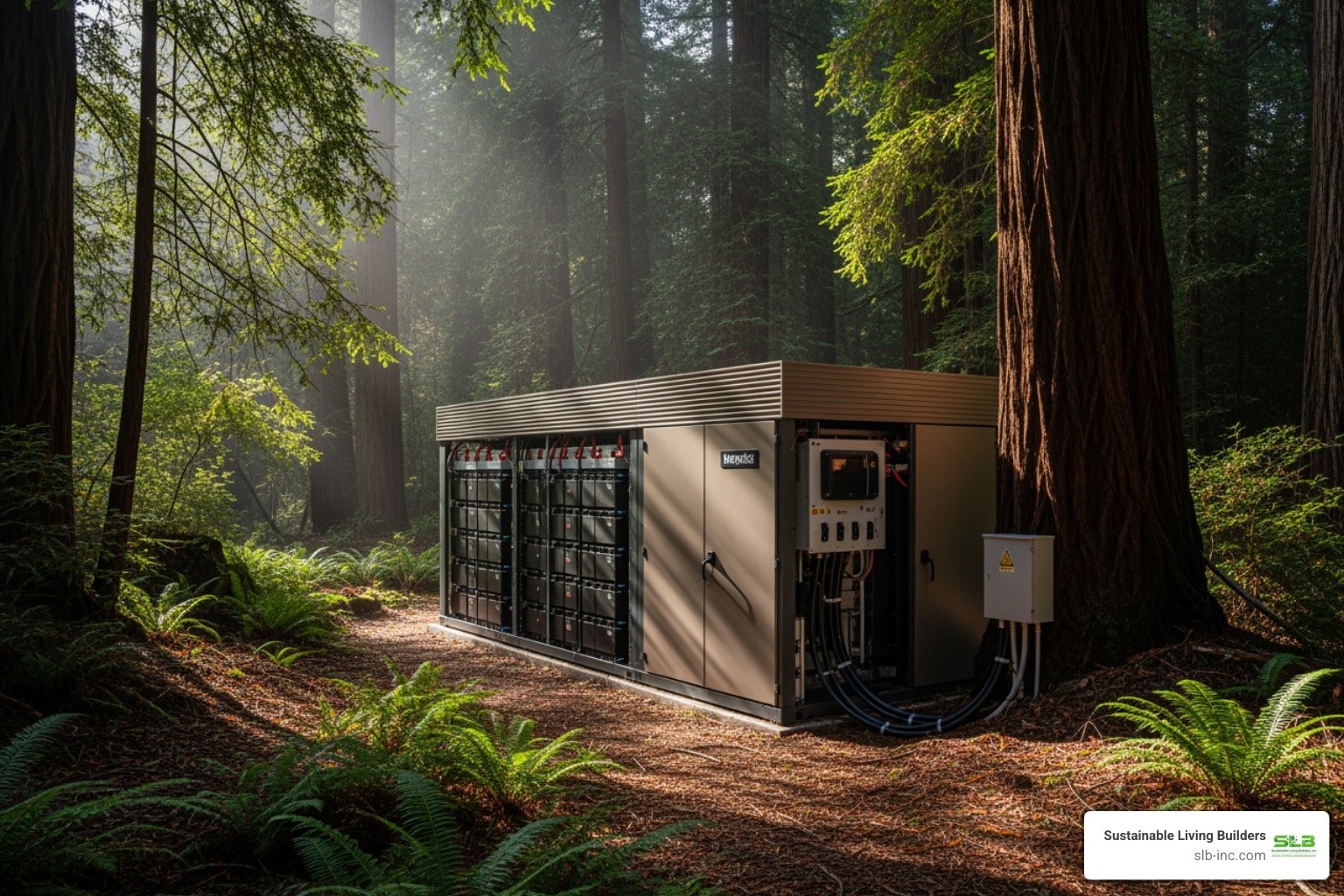
Why Forestville Residents Need Energy Resilience
Living in Forestville, nestled in the heart of Sonoma County, offers unparalleled natural beauty and a vibrant community spirit. However, this idyllic setting also comes with unique challenges, particularly concerning energy reliability. We’ve all experienced the frustration and disruption of unexpected power outages, whether they’re due to severe weather or Public Safety Power Shutoffs (PSPS) during wildfire season. These events highlight a critical need for energy resilience in our homes.
Sonoma County, including Forestville, is frequently impacted by PSPS events. These preemptive power shutdowns, initiated by utility companies, are a necessary measure to prevent wildfires when weather conditions are extreme. While crucial for public safety, they can leave residents without power for extended periods, disrupting daily life, compromising food safety, and creating safety concerns for those reliant on medical equipment.
Beyond PSPS, our region is also susceptible to grid instability and storm-related outages. Heavy rains, strong winds, and even minor accidents can bring down power lines, cutting off electricity to entire neighborhoods. Remember those intense winter storms? They often remind us of the importance of being prepared. For tips on how to safeguard your home against such events, check out our guide on Preparing Your Roof for Storms: A Complete Rainy Season Checklist.
The need for robust emergency power solutions isn’t just about convenience; it’s about community resiliency. When individual homes can maintain power during an outage, it reduces the burden on emergency services and ensures that essential needs are met. Even local industrial operations, like the Canyon Rock quarry near Forestville, recognize this need, utilizing a megawatt of batteries and solar power, with plans to add more. Similarly, institutions like Santa Rosa Junior College have invested in significant battery energy storage systems (1.2 MW, 2 MWh) as part of their micro-grid demonstration projects, allowing essential buildings to operate independently during emergencies. This demonstrates a clear trend: reliable backup power is becoming a fundamental aspect of living securely in our beautiful, yet sometimes challenging, environment.
How Home Battery Backup Systems Work with Solar
Imagine a world where your home generates its own clean electricity, stores it, and uses it whenever you need it, even when the grid goes down. This isn’t science fiction; it’s the reality for homes equipped with solar panels and emergency energy storage batteries in Forestville, CA. These systems work in beautiful harmony to provide consistent, reliable power.
During daylight hours, your rooftop solar panels diligently convert sunlight into electricity. On a sunny day, your panels might produce more energy than your home is currently consuming. Instead of sending all that excess energy back to the grid for minimal credit (especially with newer net metering policies like NEM3 in California), your home battery system captures and stores it. This stored energy becomes your personal power reserve.
When the sun sets, or on cloudy days when solar production is low, your home automatically draws power from the battery instead of relying on the grid. This significantly reduces your reliance on utility companies and can lead to substantial energy cost savings. Some advanced battery systems even feature self-learning algorithms that regulate charging and supply functionalities, optimizing your energy usage based on your patterns and utility rates. For a deeper dive into how solar can transform your home, explore Harness the Power of the Power of the Sun: What Solar Energy Can Do for Your Home.
But the real magic happens during a power outage. When the grid experiences a disruption, your battery system automatically detects the outage and seamlessly switches to providing power to your home. This transition is often so fast that you might not even notice a flicker in your lights. The battery then continues to power your home using the stored energy. If you have solar panels, they can continue to charge the battery during the day, extending your backup power supply for as long as the sun shines. This creates a resilient microgrid right in your home, ensuring your essential appliances, lights, and even critical medical devices remain operational.
This integration of solar and battery storage isn’t just about emergency preparedness; it’s about embracing clean energy and gaining greater energy independence. It’s a proactive step towards a more sustainable and secure future for your Forestville home.
Choosing the Right Emergency Energy Storage Batteries in Forestville, CA
Selecting the ideal emergency energy storage batteries in Forestville, CA, for your home involves more than just picking a brand. It’s about understanding your specific needs, the available technologies, and how different systems can integrate with your lifestyle and existing solar setup. We’re here to help you steer these choices.
When we talk about battery systems, we often discuss scalability and modularity. This means you can start with a system that meets your current needs and expand it later as your energy demands grow or as you add more electrical appliances like EV chargers. Some systems allow for maximum flexibility, with certain models expanding up to 46.08kWh by installing additional units in parallel. Other battery modules can be linked from 2 kWh to 16 kWh in a single cabinet, with multiple units set up in parallel for larger requirements.
A crucial decision is whether you need whole-home backup or if you’re comfortable prioritizing essential loads. Whole-home backup keeps everything running, from your air conditioning to your entertainment system. Essential loads backup focuses on critical items like your refrigerator, lights, and medical devices. Understanding this will help us tailor a solution that fits your budget and lifestyle. For any electrical upgrades needed to accommodate a new system, our team can help with tasks like an Install New Electrical Panel.
For more comprehensive information on the various options available, visit our dedicated page on Energy Storage Batteries.
Sizing Your System: Matching Capacity to Your Needs
When we talk about battery capacity, we use terms like kilowatt-hours (kWh), which measures how much energy a battery can store, and power output (kW), which indicates how much power it can deliver at any given moment. Think of kWh as the size of your fuel tank and kW as the speed at which your engine can deliver power.
To properly size your system, we start by creating a critical appliance list. What absolutely needs to stay on during an outage? Your refrigerator? Medical devices? Lights? Your internet router? Once we know this, we can analyze your energy consumption patterns. We can perform an Energy Audit Services to get a clear picture of your energy usage. Consider your future needs too—are you planning to get an electric vehicle (EV) or add more energy-intensive appliances? These factors will influence the total kWh capacity and kW output required for your emergency energy storage batteries in Forestville, CA.
For instance, some battery systems can be sized from 2 kWh and increased in steps of 2 kWh up to 16 kWh in a single cabinet, making them highly adaptable to specific household energy needs. The goal is to ensure you have enough stored energy to comfortably weather an outage, without over-investing in capacity you don’t need.
Understanding Battery Chemistry and Safety
The heart of any emergency energy storage battery is its chemistry. Today, one of the most reliable and safest options available is Lithium Ferro Phosphate (LFP) cells. Many leading battery brands use LFP chemistry, and for good reason.
LFP batteries are renowned for their thermal stability, meaning they are less prone to overheating and thermal runaway compared to other lithium-ion chemistries. This translates to a safer battery for your home, giving you peace of mind. They also boast an impressive cycle life (the number of times they can be charged and discharged before significant degradation), which contributes to their durability and longevity. Leading batteries, for example, are often backed by a 10-year, 10,000-cycle warranty, highlighting their robust design and LFP cell quality.
While recycling lithium batteries can be more complex than lead-acid, LFP offers a safer and more stable option for residential use. When considering any home improvement, especially those involving electrical systems, safety and reliability are paramount. Just as we prioritize The Most Durable Roofing Materials for California’s Climate for your home’s protection, we ensure that the battery chemistry we recommend meets the highest safety standards.
Key Features for Emergency Energy Storage Batteries in Forestville, CA
When evaluating different emergency energy storage batteries in Forestville, CA, several key features stand out as crucial for performance, longevity, and user experience. We look for systems that offer a blend of robust technology and intelligent design.
Here are the essential features we recommend looking for:
- Warranty and Cycle Life: A strong warranty, such as a 10-year, 10,000-cycle guarantee, indicates manufacturer confidence in durability. High cycle life ensures the battery will last for many years of daily use and numerous emergency events.
- Depth of Discharge (DoD): This refers to how much of the battery’s total capacity can be used before it needs recharging. A high DoD (e.g., 90% or more) means you get more usable energy from your battery, maximizing its effective capacity.
- Round-Trip Efficiency: This measures how much energy put into the battery is available for use later. Higher efficiency (e.g., 95% or higher) means less energy is lost during charging and discharging, leading to better overall performance and savings.
- Inverter Compatibility: Ensure the battery system is compatible with your solar inverter, or consider an all-in-one hybrid system, which integrates the battery, charger, and solar inverter into a single unit. This simplifies installation and ensures optimal performance. For a smooth process, understanding Solar Energy Made Simple: Understanding the Installation Process is key.
- Smart Controls and Monitoring: Modern batteries come with intelligent management systems. These systems often include self-learning algorithms that optimize charging and discharging based on your energy patterns and utility rates. Remote monitoring through a user-friendly app allows you to keep an eye on your system’s performance and energy flow from anywhere.
- Scalability and Modularity: The ability to expand your system later by adding more battery modules or units is a significant advantage, ensuring your investment grows with your needs.
- Integrated Backup Box (if applicable): For dedicated emergency power, some systems require an additional backup box. While these may have limited output (e.g., 1.8 kW continuous power), they are designed to power essential loads during an outage.
- Operating Temperature Range: Given Sonoma County’s climate, a wide operating temperature range (e.g., -2 to 65 degrees Celsius) ensures reliable performance year-round, though some units may benefit from an air conditioner for outdoor installations in very hot regions.
- IP Rating: An IP65 rating indicates protection against dust and water jets, making the unit suitable for both indoor and outdoor installations.
By carefully considering these features, we can help you choose an emergency energy storage battery system that not only meets your backup power needs but also integrates seamlessly into your home’s energy ecosystem.
Maximizing Your System: Operation Modes and Reserve Settings
Once you have your emergency energy storage batteries in Forestville, CA, installed, understanding how to configure its operation modes and reserve settings is crucial for getting the most out out of your investment. It’s like having a high-performance car; knowing how to drive it makes all the difference!
Most modern battery systems offer various operation modes designed to optimize different objectives:
- Time-Based Control (TBC): This mode is a favorite for maximizing financial benefits, especially in areas with Time-of-Use (TOU) electricity rates (common with PG&E, Sonoma Clean Power, and Marin Clean Energy). The battery charges when electricity is cheapest (e.g., off-peak hours) and discharges when it’s most expensive (e.g., peak hours), significantly reducing your energy bills.
- Self-Consumption Mode: In this mode, the battery primarily aims to maximize the use of your self-generated solar power. It stores excess solar energy during the day and uses it to power your home when solar production drops, reducing your reliance on the grid.
- Backup-Only Mode: As the name suggests, the battery remains fully charged, acting purely as a backup power source. It only discharges when there’s a grid outage, ensuring maximum readiness for emergencies.
We often guide homeowners through setting up these modes to align with their specific goals, whether it’s daily savings or ultimate preparedness. This is part of a broader trend towards Home Electrification, where intelligent energy management plays a key role.
Balancing Daily Savings with Emergency Preparedness
This is where the art of battery management truly comes into play. Setting your battery reserve level is a critical decision that directly impacts your emergency preparedness versus your potential daily savings.
If you set your battery reserve to 0%, you’ll maximize the amount of energy available for daily optimization (e.g., selling power back to the grid during peak times under NEM3 or using it during expensive hours). This can lead to significant savings on your energy bills. However, a 0% reserve means that if the grid goes down, your battery will have no power until it recharges from your solar panels. This is a trade-off many consider in California given the new utility rate schedules.
Conversely, setting a higher battery reserve (e.g., 20% or 50%) ensures you always have a dedicated amount of power for emergencies. Many systems also include “Storm Watch” features, which automatically charge your battery to full capacity when severe weather or potential outages are forecast. This helps you balance the desire for energy cost savings with the critical need for backup power during unpredictable events in Forestville. We can help you understand these nuances and choose a setting that gives you peace of mind. After all, are solar panels worth it? Yes, especially when they come with smart battery backup! Learn more at Are Solar Panels Worth It?.
Smart Settings for Emergency Energy Storage Batteries in Forestville, CA
The intelligence built into modern emergency energy storage batteries in Forestville, CA, is truly remarkable. Beyond simple modes, these systems leverage smart settings to continuously optimize performance.
Self-learning algorithms, for example, can analyze your home’s energy consumption patterns, solar production, and even local weather forecasts to make real-time decisions about charging and discharging. This ensures your battery is always working efficiently to meet your needs, whether it’s reducing your utility bill or preparing for an impending outage.
Remote monitoring via smartphone apps gives you complete control and visibility over your system. You can check battery levels, energy flow, and even adjust settings from anywhere. This level of system optimization is key to maximizing both your savings and your preparedness. A user-friendly interface makes managing your home’s energy as simple as tapping a screen. For more advanced users, some systems offer detailed control over settings like “Operation Mode” (e.g., Time-Based Control), “Energy Exports,” and “Permission to Export” to align with specific utility rate schedules and maximize financial benefits.
This smart integration is part of why homeowners in our region, including Napa and Sonoma, are increasingly turning to holistic energy solutions. It’s about creating a truly intelligent home that adapts to your needs and the environment. Find more about this trend by reading Why Napa and Sonoma Homeowners Are Turning to Solar Roofing.
Conclusion: Secure Your Home’s Power and Peace of Mind
In Forestville, where the beauty of nature meets the unpredictability of power outages, investing in emergency energy storage batteries in Forestville, CA, is more than a home upgrade—it’s a strategic move towards energy security and peace of mind. We’ve explored how these systems provide a critical lifeline during Public Safety Power Shutoffs, wildfire season, and severe weather, ensuring your home remains powered when the grid falters.
We understand that choosing the right system involves careful consideration of capacity, battery chemistry, and smart features. Our goal is to empower you with the knowledge to make informed decisions, ensuring your battery system is perfectly sized for your needs, safe, and operates efficiently. From understanding LFP technology to optimizing operation modes for both savings and preparedness, we’re here to guide you every step of the way.
By embracing these advanced energy solutions, you’re not just preparing for the next outage; you’re embracing a more sustainable and independent lifestyle. It’s a proactive approach to home management that improves your family’s safety and comfort, while also contributing to a more resilient Forestville. This commitment to Sustainability is at the core of what we do at Sustainable Living Builders.
To explore the best Energy Storage Batteries for your Forestville home, Contact Us today. Let us help you transform uncertainty into confidence, and power outages into mere inconveniences.