I want to reduce my home’s fossil fuel dependence. Who in Sonoma County specializes in home electrification?
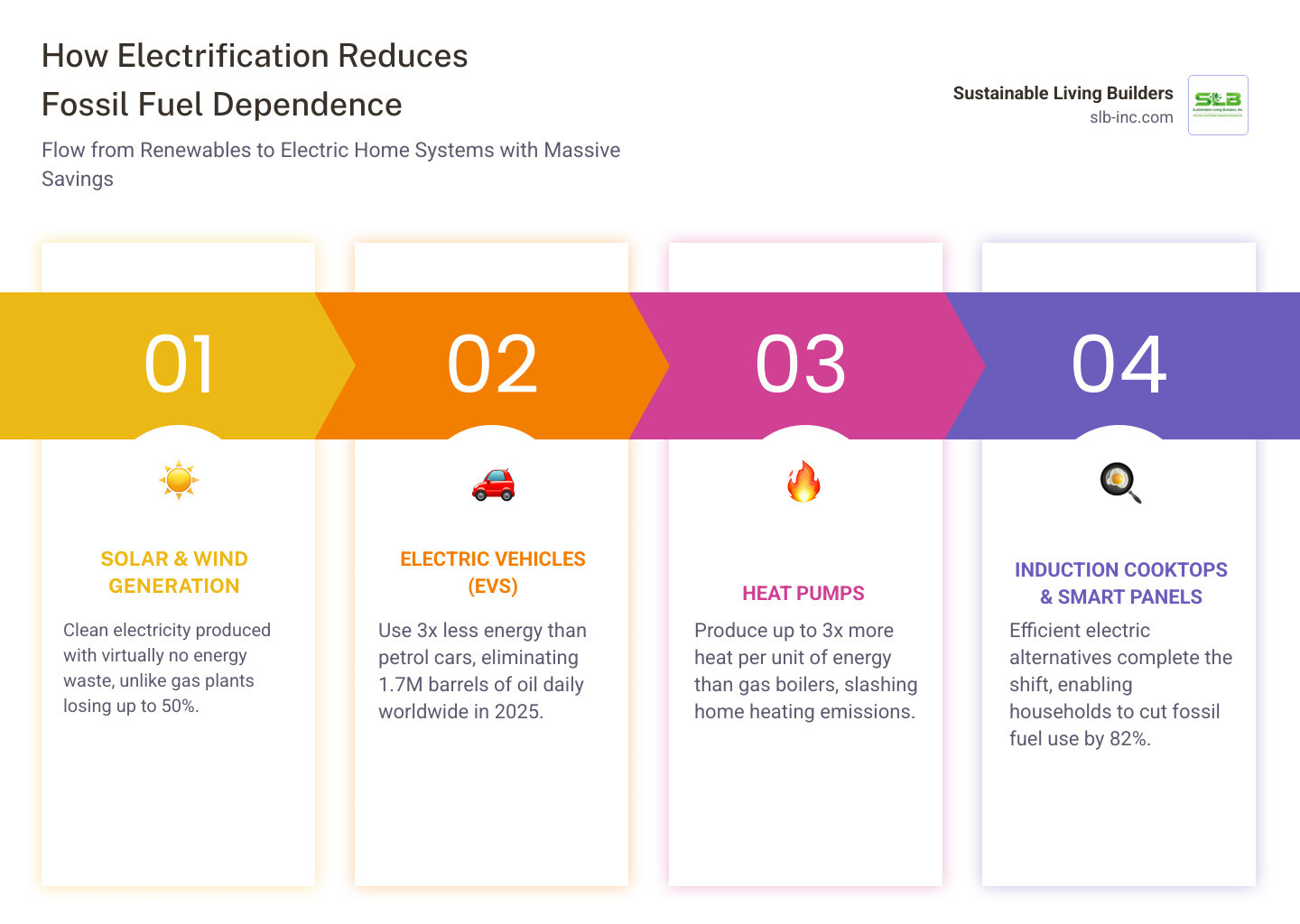
How electrification reduces fossil fuel dependence comes down to one core idea: replacing systems that burn gas, oil, or coal with ones that run on electricity — ideally powered by clean, homegrown sources like solar and wind. Here is a quick breakdown:
- Electric vehicles (EVs) use roughly three times less energy than petrol cars and eliminated 1.7 million barrels of oil per day worldwide in 2025.
- Heat pumps produce up to three times more heat per unit of energy than a gas boiler, slashing home heating emissions.
- Clean electricity from solar and wind generates power with virtually no energy waste, unlike gas plants that lose up to 50% of their input energy.
- The net result: A household with an EV and a heat pump can cut its fossil fuel consumption by as much as 82%.
- At scale: Deploying EVs, renewables, and heat pumps together could reduce fossil fuel imports for importing nations by up to 70%.
Energy needs are evolving. Fossil fuel availability swings with geopolitics. And every appliance that burns fossil fuels inside your home adds to your carbon footprint. For homeowners looking to break that cycle, electrification offers a clear, practical path — one that pays dividends in cleaner air and genuine energy independence.
I’m Sunny, marketing lead at Sustainable Living Builders, where I focus on educating homeowners about sustainable solutions — including how electrification reduces fossil fuel dependence at the household level. In this guide, I’ll walk you through the steps, the technology, and the real-world impact of making the switch.
Understanding How Electrification Reduces Fossil Fuel Dependence
At its simplest, electrification is the process of replacing technologies that use fossil fuels (coal, oil, and natural gas) with technologies that use electricity as their source of energy. In April 2026, this isn’t just a “green” trend; it is a fundamental shift in how we power our lives.

When we talk about home electrification, we are looking at a “virtuous circle.” By switching to electric systems, we enable our homes to run on power generated from renewable sources like solar, wind, and hydroelectricity. This process is the primary driver of decarbonization because it removes the combustion process from your backyard.
Furthermore, sustainable living starts at home. By electrifying, we achieve energy sovereignty. Instead of being beholden to the fluctuating availability of global oil and gas markets, we can rely on electricity generated right here in California—or even right on your own roof.
Efficiency Gains: Why Electric Systems Outperform Combustion
One of the biggest secrets of the energy world is just how much energy we waste when we burn stuff. Traditional fossil fuel systems are inherently inefficient because they lose a massive amount of energy as “waste heat.”
| Technology | Energy Efficiency (Useful Work) | Energy Wasted (as Heat/Friction) |
|---|---|---|
| Internal Combustion Engine (Gas Car) | ~20% | ~80% |
| Electric Motor (EV) | ~89-90% | ~10% |
| Gas Boiler (Heating) | ~90% | ~10% |
| Air Source Heat Pump | ~300% – 400% | 0% (Moves heat instead of creating it) |
As the table shows, an electric motor is nearly five times more efficient than a gas engine. When you replace ac with heat pump systems, you aren’t just changing the fuel source; you are upgrading to a technology that “moves” heat rather than burning fuel to create it. This thermodynamic advantage is exactly how electrification reduces fossil fuel dependence—it simply requires far less raw energy to do the same amount of work.
Shifting to Homegrown Energy for National Security
Relying on fossil fuels means being vulnerable to geopolitical instability. Whether it’s a conflict in the Middle East or supply chain disruptions in Europe, the availability of fuel for your transportation or winter heating is often decided thousands of miles away.
By transitioning to an electric economy, we shift the focus to domestic, renewable energy. In 2025, global solar growth alone was enough to displace gas-fired electricity equivalent to all LNG exports through the Strait of Hormuz. When we use electricity generated from California’s sun and wind, we keep our energy resources within our local economy. This is a key part of slbs vision for a sustainable tomorrow: building a resilient system that can withstand global energy shocks.
Practical Steps for Homeowners to Transition Away from Gas
If you’re ready to stop feeding the fossil fuel machine, the transition doesn’t have to happen overnight. It’s about making a plan to replace aging gas appliances with superior electric versions as they reach the end of their lifespan.
A great place to start is with a step by step guide to transitioning from gas to electric heating systems. For most homeowners in Sonoma or Napa County, the biggest impact comes from addressing the “big three”: your car, your HVAC system, and your water heater.
When your old air conditioner gives out, don’t just replace it with another AC unit. An ac heat pump installation provides both high-efficiency cooling in the summer and incredibly efficient heating in the winter, all from a single electric unit.
How Residential Electrification Reduces Fossil Fuel Dependence at the Source
Many people don’t realize that natural gas systems are “leaky.” Research has shown that up to three-quarters of methane emissions from gas stoves occur when the unit is actually turned off, due to tiny leaks in fittings and lines. By removing gas lines from your home, you eliminate these “fugitive emissions” entirely.
This transition also significantly improves indoor air quality. Gas stoves emit pollutants like nitrogen dioxide (NO2) and benzene, which have been linked to childhood asthma and other health issues.
For your water heating needs, you can look into a batch hot water heater or a backup hot water heater system. Modern heat pump water heaters are now the gold standard for efficiency, often using 70% less electricity than traditional electric resistance heaters and infinitely less gas than traditional boilers.
Upgrading Your Infrastructure for a Smart, Electric Future
To handle an EV, a heat pump, and an induction stove, your home’s “brain”—the electrical panel—might need an update.
If you have an older home in Santa Rosa or Sebastopol, you may need to install new electrical panel units to accommodate the increased electrical load. Our house electrical panel complete guide explains why this is a foundational step for any electrification project.
When you upgrade house electrical panel components, we often recommend looking at “smart” options like the span panel. A smart panel allows you to see exactly where your power is going in real-time. If you’re wondering how can a span panel help monitor electricity usage, it gives you the power to prioritize circuits during a power outage or shift your energy use to times when solar power is most abundant.
The Broader Impact: Community Resilience and Public Health
The benefits of how electrification reduces fossil fuel dependence extend far beyond your property lines. When a whole community—from Marin to Sonoma—shifts toward electric solutions, the collective impact is staggering.
Electrification is a major win for public health. By removing the combustion of fossil fuels in our neighborhoods, we reduce local air pollution. This leads to fewer hospital visits for respiratory issues and a generally higher quality of life.
From a community standpoint, electrification creates “resilience.” To make sure you’re getting the most out of these changes, we recommend our energy audit services to identify where you can increase home energy efficiency even further.
How Community-Wide Electrification Reduces Fossil Fuel Dependence
Beyond the home, we’re seeing electrification transform our cities.
- Electric Public Transit: Buses and trains moving from diesel to electric drastically cut urban noise and pollution.
- Industrial Heat Pumps: Manufacturing plants are now using high-temperature heat pumps to replace gas boilers for drying and heat treatment.
- Smart Lighting: Adaptive LED street lighting can save up to 35% more energy than standard LEDs by adjusting to traffic and weather conditions.
These large-scale shifts ensure that the “grid” we all share becomes more efficient and less reliant on imported fuels.
Frequently Asked Questions about Electrification
What is the main difference between electrification and energy efficiency?
While they work together, they are different strategies. Energy efficiency is about using less energy to do the same task (like adding insulation to keep heat in). Electrification is about changing the source of that energy from fossil fuels to electricity. Ideally, you want to do both: have an electrified home that is also highly efficient!
How does an electric heat pump work in cold climates?
Modern heat pumps are not like the ones from twenty years ago. Today’s cold-climate heat pumps can efficiently pull heat out of the air even when temperatures drop well below freezing. In our local climate—from the chilly mornings in Sebastopol to the coastal breezes of Sonoma—modern heat pumps work exceptionally well year-round.
Can my current electrical panel handle a full home electrification?
It depends on the age and capacity of your home. Most older homes have 100-amp or 125-amp panels. To run a “fully electric” home (EV charger, heat pump, induction stove, etc.), a 200-amp panel is usually the standard. A smart panel can often help you manage this load without needing a massive utility service upgrade.
Conclusion
The journey toward energy independence isn’t just about saving the planet—it’s about taking control of your home’s future. At Sustainable Living Builders, we’ve seen how homeowners in Sonoma, Marin, and Napa Counties are finding peace of mind by disconnecting from fossil fuel reliance.
By understanding how electrification reduces fossil fuel dependence, you can make informed choices that improve your home’s sustainability, your family’s health, and your community’s resilience. Whether you’re starting with a single heat pump or looking for sustainable property solutions for your entire estate, we are here to help.
Ready to start your journey? Explore our home electrification guide.