Why Winter Is the Season That Can Quietly Destroy Your Roof
Post winter roof inspection what to check is one of the most important questions you can ask as a homeowner every spring — and the answer could save you from a very expensive surprise.
Here is a quick overview of what to check:
- Shingles — Look for missing, cracked, curling, or lifted edges
- Flashing — Check around chimneys, vents, and skylights for gaps or rust
- Roof valleys — Look for debris buildup or signs of water tracking
- Gutters and downspouts — Check for sagging, blockages, and granule buildup
- Ice dam evidence — Look for moisture stains on soffits or warped fascia boards
- Attic interior — Check for water stains, musty odors, damp insulation, or daylight leaks
- Roofline — Scan from the ground for any sagging or uneven sections
Winter is hard on roofs in ways most homeowners never see coming. Freeze-thaw cycles, snow loads, and ice dams work silently through the cold months — and by the time spring rains arrive, small vulnerabilities can turn into active leaks fast. Water expands approximately 9 percent when it freezes, and that force is applied over and over again every time temperatures swing above and below freezing. According to industry data, around 78% of springtime roof service requests come from winter damage that went undetected until it was already serious.
The good news? Catching damage early makes a real difference. A quick, systematic inspection in early spring — before heavy rains move in — gives you the chance to address small issues before they become structural ones.
I’m Karlo Jarina, marketing lead at Sustainable Living Builders, and my work helping homeowners understand post winter roof inspection what to check has shown me time and again that proactive care is always less costly than reactive repair. Let’s walk through exactly what to look for so you can head into the warmer months with confidence.
Why a Post Winter Roof Inspection: What to Check for Early Spring Safety
In Northern California, particularly in areas like Santa Rosa, Sonoma, and Napa, we don’t always deal with the ten-foot snowdrifts seen in the Midwest. However, we do face a relentless combination of heavy winter rains, occasional frost, and high winds. These elements can be just as punishing. When you perform a post winter roof inspection what to check for first is the overall structural integrity of your home’s primary defense.
Research shows that nearly 78% of springtime service requests originate from undetected winter-related damage. Many of these issues start small — a tiny crack in a pipe boot or a slightly lifted shingle — but when the spring storms hit Marin or Napa County, those small gaps become highways for water. Because water expands by 9 percent when it freezes, even a light frost can turn a micro-crack into a major leak path.
Safety is our number one priority at Sustainable Living Builders. We always recommend that homeowners start their inspection from the safety of the ground. Climbing onto a roof that may have been weakened by winter storms or is still slippery from morning dew is a risk you don’t need to take. By understanding what to expect during a roof inspection a homeowners checklist, you can better prepare for a professional evaluation while staying safe.
Early intervention is the “secret sauce” of home maintenance. Conducting an early-spring roof inspection can decrease potential repair costs by 60-70% through prompt intervention. Think of it as a wellness check for your home. If you catch a loose piece of flashing in April, you avoid the structural rot that could occur by October. It’s all part of preparing your roof for storms a complete rainy season checklist to ensure your home remains a sanctuary, not a project site.

Exterior Checklist: Post Winter Roof Inspection What to Check First
Grab a pair of binoculars and take a slow walk around your property. This is the most effective way to spot trouble without ever touching a ladder. When scanning the exterior, your eyes should be hunting for “interruptions” in the roof’s uniform look.
- Missing or Damaged Shingles: Look for gaps where a shingle might have been blown away by a winter windstorm. Even one missing shingle exposes the underlayment, which isn’t designed for long-term sun or rain exposure.
- Curling and Buckling: This is a classic sign of aging and winter stress. If the edges are turning up like a dried leaf, the shingle is no longer shedding water effectively.
- Granule Loss: Check your downspout exits. Do you see what looks like coarse sand or coffee grounds? Those are protective granules. If they are piling up, your shingles are losing their UV protection and fire resistance.
- Sagging Lines: Look at the ridgeline of your roof. It should be straight. Any dipping or “swayback” appearance could indicate structural issues caused by heavy moisture or aging supports.
If you notice widespread curling or significant bare spots, it might be time to review the signs your roof needs a replacement to avoid more costly interior damage down the road.
Interior Checklist: Post Winter Roof Inspection What to Check in the Attic
The attic is the “truth-teller” of your home. While the exterior might look fine, the underside of the roof deck often reveals the real story of how winter treated your home. Sunny, our resident home-wellness expert, always says: “If your attic is unhappy, your whole house will eventually feel it.”
When you head into the attic, keep these four things in mind:
- The Smell Test: Is there a musty or earthy odor? This is often the first sign of a slow leak or poor ventilation that has allowed moisture to build up over the winter.
- Damp Insulation: Touch the insulation (wear gloves!). If it feels wet or looks compressed and “crusty,” water has been dripping onto it. Wet insulation loses its R-value, meaning your energy bills in Santa Rosa or Sebastopol will start to climb.
- Water Stains and Streaks: Look for dark “trails” on the wooden rafters or the underside of the roof deck. These are clear indicators of where water has traveled from a leak point.
- Daylight Leaks: Turn off the attic lights. Do you see any pinpricks of light coming through the roof? If light can get in, water can get in.
Proper attic health is a cornerstone of sustainability. By keeping the attic dry and well-ventilated, you are following essential tips to maintain your roof and extend its life.
Identifying Critical Damage to Shingles, Flashing, and Valleys
Once you’ve done your initial “walk-around,” it’s time to focus on the high-risk areas. In our experience across Sonoma and Marin Counties, leaks rarely start in the middle of a shingle. They start at the joints, the penetrations, and the transitions.
Flashing — the thin metal material installed around chimneys, vents, and valleys — is one of the most common sources of roof leaks. Because metal and asphalt shingles expand and contract at different rates during Northern California’s temperature swings, the seals between them can easily break.
Spotting Shingle Issues After Winter
Winter winds can be surprisingly surgical. They often get underneath the edge of a shingle and break the adhesive seal. Once that seal is broken, the shingle “flaps” in the wind, eventually cracking or flying off entirely. This creates a perfect entry point for wind-driven rain.
Check for “nail pops” as well. This happens when the wood deck expands and contracts, pushing the roofing nail upward. This creates a small hump in the shingle and a tiny hole where water can seep in. It’s a minor fix if caught now, but if left alone, it can lead to significant storm damage roofing repair needs. Understanding how heavy rains impact your roof and how to prepare is vital for homeowners in our rainy climate.
Examining Flashing and Sealants
Flashing is your roof’s “waterproofing armor.” During your post winter roof inspection what to check for most carefully is the state of the sealant around your chimney and skylights.
- Chimney Seals: Look for cracked mortar or gaps in the metal “counter-flashing.”
- Pipe Boots: These are the rubber seals around the pipes that stick out of your roof. The sun and winter cold can cause the rubber to crack and pull away.
- Skylights: These are beautiful but are notorious for leaking if the seals aren’t checked after a rough winter. Look for condensation between the panes or stains on the interior drywall.
If these areas look compromised, it’s a good idea to start researching what to look for in a roofing contractor who understands the specific needs of eco-friendly and high-efficiency roofing systems. Regular upkeep here is among the top roof maintenance tips we provide to all our clients.
Evaluating Gutters, Downspouts, and Ice Dam Evidence
Your gutters are the “veins” of your roofing system. If they are clogged or damaged, the whole system “clots,” and water backs up into your home’s foundation or under the shingles.
| Feature | Minor Gutter Clog | Structural Drainage Failure |
|---|---|---|
| Visual Sign | Leaves/twigs visible at the top | Gutter sagging or pulling away from the house |
| Water Flow | Slow dripping from the edges | Water pooling at the foundation or “waterfalling” over the side |
| Debris Type | Natural organic matter | Shingle granules, metal shards, or rust |
| Fix Required | Simple cleaning and flushing | Re-pitching, bracket replacement, or new system |
| Foundation Risk | Low to Moderate | High (leads to basement leaks and soil erosion) |
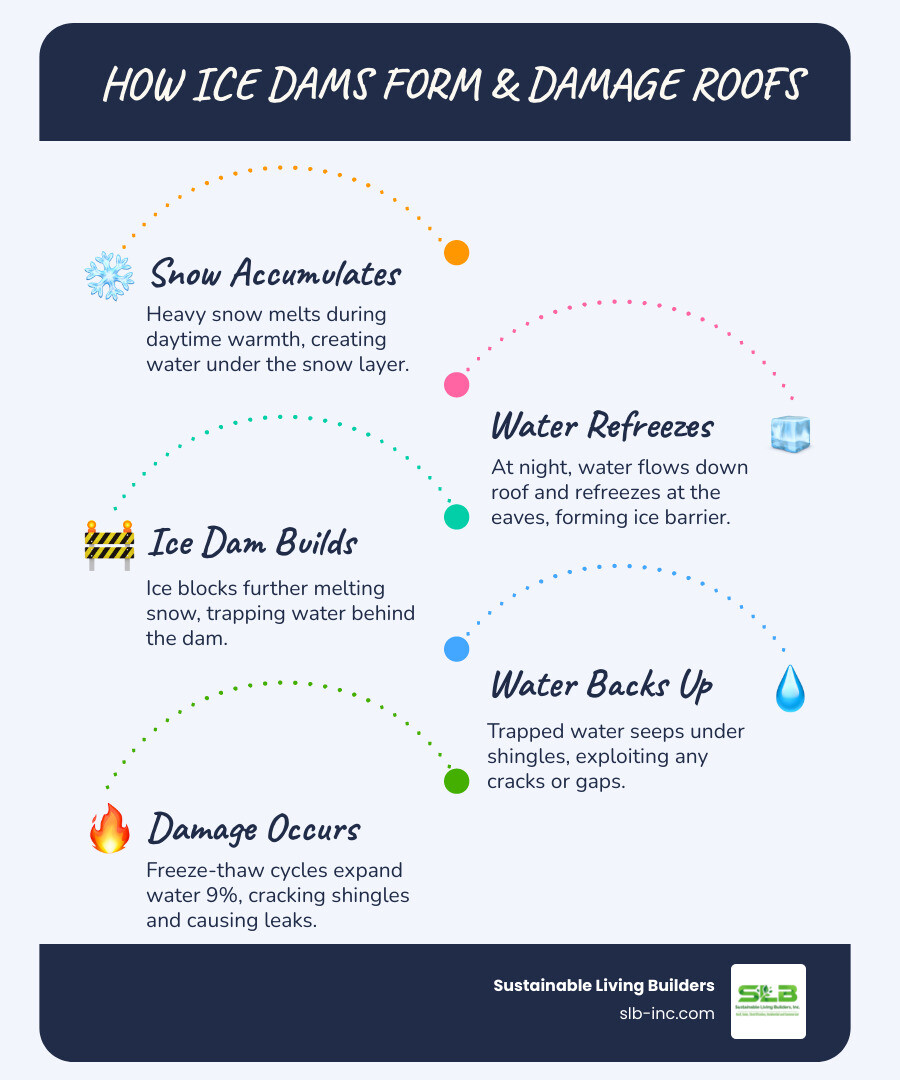
While ice dams are more common in snowier climates, we do see “ice dam remnants” in the higher elevations of Sonoma and Napa County after a particularly cold snap. These form when heat escapes from the attic, melts the frost/snow on the roof, and then that water refreezes at the cold eaves. This “dam” pushes water back up under the shingles. Look for warped fascia boards or water stains on the underside of your roof’s overhangs (the soffits).
When inspecting your gutters, ensure the downspouts are directing water at least 4 to 6 feet away from your foundation. If you need a professional to look at a complex drainage issue, make sure you know the top questions to ask before hiring a roofing contractor.
Prioritizing Repairs and Professional Next Steps
Not all roof issues require a “stop everything” emergency response, but knowing how to prioritize can save your budget. At Sustainable Living Builders, we categorize findings into three levels:
Priority 1: Immediate (The “Fix It Now” List)
- Active leaks (water dripping inside).
- Missing shingles or large sections of exposed underlayment.
- Severely sagging rooflines.
- Separated flashing at chimneys or valleys.
Priority 2: Seasonal (The “Fix This Spring” List)
- Minor granule loss.
- Nail pops.
- Small cracks in pipe boots.
- Clogged gutters.
Priority 3: Monitoring (The “Watch This” List)
- Minor moss or algae growth (cosmetic but can hold moisture).
- Slightly faded shingle colors.
- Small scratches on metal flashing.
When you find damage, document it immediately. Take clear photos from the ground and keep a log of where you saw the issue. This documentation is invaluable for insurance claims or when you are hiring the right roofing contractor to give you an accurate quote.
Frequently Asked Questions about Post-Winter Roof Damage
How often should a post-winter inspection be performed?
We recommend a professional inspection twice a year — once in the fall to prepare for the rain and once in the spring to assess winter damage. However, a homeowner “ground-level” check should be done every April. If your roof is more than 15 years old, an annual professional check is a must to catch aging materials before they fail.
Can I safely inspect my roof without a ladder?
Yes! In fact, we prefer it. Using a pair of high-quality binoculars or even the zoom lens on a modern smartphone allows you to see shingle cracks, missing tabs, and flashing gaps from the safety of your lawn. You can also check the attic and the perimeter of your home for signs of leaks. Leave the “high-wire act” to the professionals who have the proper safety harnesses and training.
What are the most common signs of ice dam damage?
In our region, look for “shadowing” or dark water stains on the exterior soffits (the underside of your roof overhang). You might also see paint peeling on the fascia boards or gutters that seem to be “pulling away” from the house. Inside the attic, look for “rusty” nails or water stains specifically along the very edge where the roof meets the exterior walls.
Conclusion
Taking the time to perform a post winter roof inspection what to check is one of the smartest investments you can make in your home’s longevity. By catching the subtle signs of winter wear now, you protect your home from the heavy spring and summer rains that characterize our beautiful Northern California climate.
At Sustainable Living Builders, we believe that a roof is more than just a cover — it’s the foundation of a sustainable, energy-efficient home. Whether you’re in Santa Rosa, Napa, or anywhere in between, Sunny and our entire team are here to help you transition from winter survival to spring thriving. From solar-ready roofing to high-performance insulation that prevents ice dams before they start, we focus on solutions that are good for your home and the planet.
Don’t wait for a ceiling stain to tell you there’s a problem. Schedule your professional inspection today and let us help you keep your home safe, dry, and sustainable for years to come.