Why Understanding How Solar Battery and SPAN Panel Work Together for Electrification Can Transform Your Home
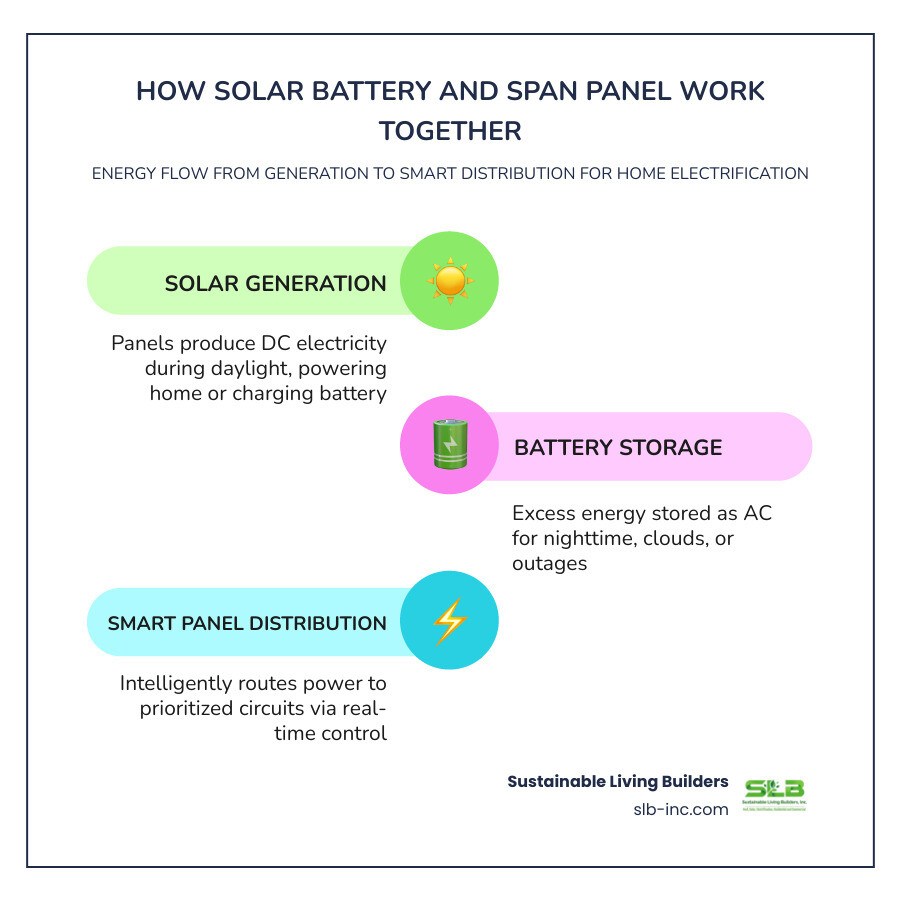
How solar battery and span panel work together for electrification is one of the most practical questions a homeowner can ask in 2026. Here’s the short answer:
- Solar panels generate electricity during daylight hours and send it to your home or battery.
- The solar battery stores excess energy for use at night, during cloudy weather, or when the grid goes down.
- The SPAN smart panel acts as the brain — it replaces your traditional electrical panel and intelligently routes power between solar, battery, and your home’s circuits.
- The SPAN Home App lets you decide which circuits get power first, especially during an outage, so your battery lasts as long as possible.
- Together, they enable whole-home electrification — supporting EVs, heat pumps, induction stoves, and more — without overloading your system.
Most homes still run on traditional electrical panels that were designed over a century ago. They flip circuits on or off, but they can’t think. They don’t know your fridge matters more than your patio lights. They can’t shift your EV charging to off-peak hours. And when the grid goes down, they leave you with a fixed, hard-wired backup plan that may not fit what you actually need in the moment.
In 2023 alone, 28 million people experienced power outages, with severe weather events lasting an average of 18 hours. A solar battery helps — but without smart panel control, you can burn through that stored energy faster than necessary. That’s where SPAN changes the equation.
When a SPAN panel is paired with a solar battery, homeowners gain real-time control over every circuit in their home. Studies from SPAN’s internal testing across more than 1,200 simulated outage scenarios found that this kind of intelligent load management can extend battery backup time by up to 40%. That’s not a small difference when you’re 12 hours into a storm with no grid power in sight.
The Core of Home Electrification: Understanding the SPAN Smart Panel
When we talk about the future of energy in Sonoma and Marin Counties, we aren’t just talking about slapping a few panels on a roof. We are talking about a fundamental shift in how your home interacts with electricity. At the center of this shift is the Span Panel.
Think of your current electrical panel as a “rotary phone” in a world of smartphones. It’s a gray metal box in your garage or on the side of your house that hasn’t changed much since the early 1900s. It uses mechanical switches (breakers) to prevent fires, but it’s essentially “dumb.” It doesn’t tell you how much energy your old garage fridge is sucking up, and it certainly can’t talk to your solar battery.
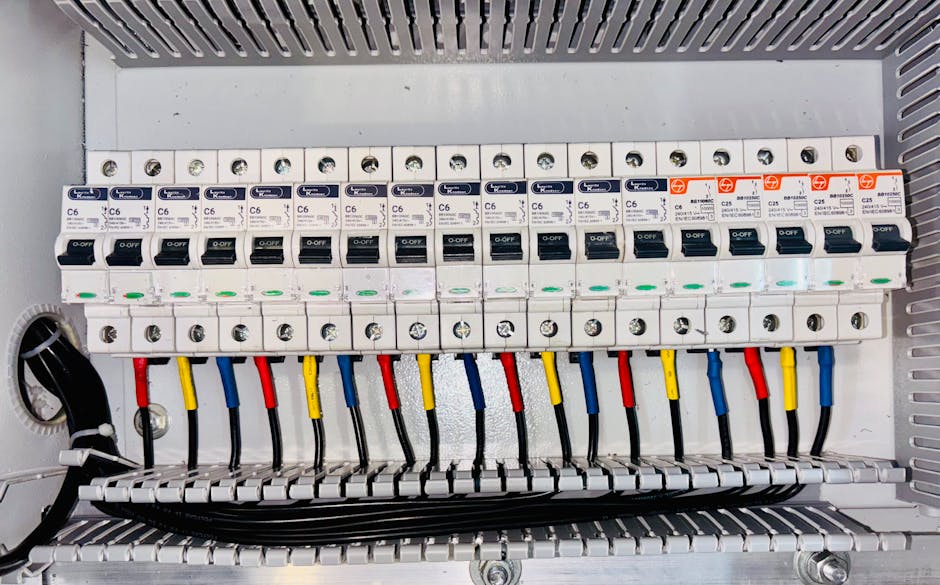
The SPAN panel is a digital upgrade. It is a solid-state, internet-connected hub that replaces your old unit. If you’ve looked through our House Electrical Panel Complete Guide, you know that the panel is the heart of your home’s electrical system. By making that heart “smart,” you gain circuit-level control. This means you can see exactly how much power every single room or major appliance is using in real-time.
For those pursuing Home Electrification, this visibility is a game-changer. You can’t manage what you can’t measure. SPAN allows us to identify “energy hogs”—like that ancient secondary refrigerator or a malfunctioning pool pump—before they inflate your utility bill. It provides the digital infrastructure needed to safely add high-power appliances like EV chargers and heat pumps without always needing a massive, expensive utility service upgrade.
How solar battery and span panel work together for electrification in Santa Rosa
In Santa Rosa and surrounding areas, our grid faces unique challenges, from seasonal storms to high-demand summer days. This is where the synergy between a smart panel and a battery becomes essential. When we help clients with How To Pick The Best Home Electrification Company In Santa Rosa Ca, we emphasize that the integration is what creates true grid resilience.
The SPAN panel acts as a sophisticated traffic controller. During normal operation, it ensures that your solar energy is used first to power your home, then to charge your battery, and finally to export to the grid if there’s a surplus. But it’s the “smart breakers” that do the heavy lifting. They can be programmed to prioritize certain loads. For example, if your EV is charging and you turn on your induction stove, SPAN can temporarily throttle the EV charger to ensure you don’t exceed your system’s capacity. This intelligent load management is the “secret sauce” of modern electrification.
Maximizing Resilience: How solar battery and span panel work together for electrification
Resilience is about more than just having a battery; it’s about how long that battery can keep your life running. We often install Energy Storage Batteries for homeowners who are tired of being left in the dark during PG&E outages. However, a traditional battery setup has a major flaw: it’s static.
In a traditional backup setup, an electrician has to “hard-wire” a few select circuits to a critical loads panel. You might choose your kitchen, a few lights, and your Wi-Fi. If the power goes out, those are the only things you can run. If you suddenly decide you need to run the washing machine or a space heater in a bedroom, you’re out of luck.
When we look at how solar battery and span panel work together for electrification, that limitation disappears. SPAN allows for “whole-home” backup because it can dynamically shed loads. Instead of picking 6 circuits to keep on forever, you can keep the whole house “live” and simply turn off the heavy hitters (like the AC or the dryer) via your phone to save power.
The data is clear: SPAN panels extend battery backup time by up to 40% through this intelligent management. By avoiding unexpected drains and overloads, your stored energy goes much further.
Comparison: Traditional Backup vs. SPAN-Managed Backup
| Feature | Traditional Critical Loads Panel | SPAN-Managed Smart Backup |
|---|---|---|
| Circuit Selection | Fixed at installation (Hard-wired) | Dynamic (Change anytime via app) |
| Control | Manual (Flip physical switches) | Digital (Remote via smartphone) |
| Visibility | None (Guessing battery life) | Real-time (Exact usage per circuit) |
| Backup Duration | Limited by pre-set loads | Up to 40% longer via load shedding |
| Electrification Ready | Requires sub-panels for new loads | Seamlessly integrates EV & Heat Pumps |
For a deeper dive into these advantages, check out The Ultimate Guide To Home Battery Storage Benefits.
Dynamic Load Shedding and the SPAN Home App
The magic happens in the palm of your hand. The SPAN Home App is where you interact with your home’s energy. If you’ve ever wondered How Can A Span Panel Help Monitor Electricity Usage, the app is the answer.
When the grid goes down, the app immediately notifies you. It shows your battery’s state of charge and, more importantly, how many hours of power you have left based on what you are currently running. From the app, you can categorize your circuits into three tiers:
- Must-Have: These stay on until the battery is nearly empty (e.g., refrigerator, medical devices, Wi-Fi).
- Nice-to-Have: These run as long as the battery is above a certain percentage (e.g., living room TV, kitchen outlets).
- Non-Essential: These are automatically turned off the moment the grid fails to preserve energy (e.g., guest room, dishwasher, pool pump).
You can toggle these on the fly. If you decide you really need to finish a load of laundry, you can turn the dryer circuit on, see how it impacts your remaining battery time, and then turn it back off when done. This level of granular, real-time data turns a stressful outage into a managed situation.
Future-Proofing Your Property with Integrated Energy Systems
One of the biggest hurdles to going fully electric is the “panel bottleneck.” Many older homes in Napa and Sonoma Counties have 100-amp or 125-amp service. When you try to add an EV charger (40-50 amps) and a heat pump (30-50 amps), the math just doesn’t work. Traditionally, this meant you had to Upgrade House Electrical Panel and often pay the utility company thousands to upgrade the wires coming from the street.
SPAN changes the game by using “digital service upgrades.” Because the panel can monitor and control the total load in real-time, it can ensure you never pull more power than your service can handle. It can pause your EV charging for the 20 minutes your heat pump is running at full blast. This allows you to add all the modern comforts—induction stoves, heat pump water heaters, and more—without the massive infrastructure headache.
When Picking Your Power A Guide To Home Battery Options, it’s important to consider how that battery will handle these new, heavy electric loads. A smart panel ensures your battery isn’t instantly killed by a high-surge appliance starting up.
Technical Integration: How solar battery and span panel work together for electrification with top storage brands
You might be wondering if this technology is proprietary to one brand. Fortunately, SPAN is designed to be a universal “companion.” It integrates seamlessly with the industry leaders we often install for our customers, including:
- Tesla Powerwall: SPAN communicates directly with the Tesla Gateway to coordinate backup and self-consumption.
- FranklinWH: A robust system that pairs excellently with SPAN for whole-home backup.
- Enphase IQ: For those with microinverter systems, SPAN provides the circuit-level control that Enphase’s standard hardware sometimes lacks.
The integration works through standard communication protocols (like Ethernet or Wi-Fi) and specialized gateways. This allows the system to optimize for Time-of-Use (TOU) shifting. In California, electricity is much more expensive in the evening (typically 4 PM to 9 PM). Your SPAN panel and battery work together to ensure your home runs on stored solar power during those expensive hours, maximizing your “self-consumption” and slashing your utility bill.
If you are a resident looking for Home Energy Storage Batteries In Petaluma Ca, you should know that this combination is the gold standard for modern energy management. You can find more details in The Ultimate Guide To Energy Storage Batteries In Petaluma Ca.
The Installation Journey for a Smart Energy Hub
Upgrading to a smart energy system is a significant move, but we make the process as smooth as possible. When you decide to Install New Electrical Panel, the first step is always a comprehensive site assessment.
Our lead expert, Sunny, and the rest of our team of Rohnert Park Home Electrification Experts will visit your home to map out your current circuits. We don’t just swap boxes; we look at your roof’s solar potential, your garage’s capacity for a battery, and your future plans for EVs or heat pumps.
What to expect during installation:
- The Swap: We remove your old, mechanical panel and install the SPAN unit. This usually takes a single day, during which your power will be temporarily shut off.
- Wiring: We land your existing circuits into the new smart breakers.
- Connectivity: We connect the panel to your home Wi-Fi (or Ethernet) so it can talk to the cloud and your battery.
- Commissioning: Sunny will walk you through the SPAN Home App, helping you name your circuits (e.g., “Kitchen Fridge” instead of just “Circuit 4”) and setting up your initial backup priorities.
We treat your home like our own, ensuring the wiring is clean, labeled, and fully compliant with all local building codes in Sonoma and Marin.
Frequently Asked Questions about SPAN and Solar Batteries
Can I control my SPAN panel when I’m away from home?
Absolutely. Since the panel is connected to the internet, you have full remote access via the SPAN Home App. Whether you’re at work in Santa Rosa or on vacation, you can check your energy production, see if you left the oven on (by looking at the circuit’s draw), or toggle non-essential loads off to save energy.
Does the SPAN panel work with any solar battery brand?
While SPAN is “universal,” it has the deepest integrations with brands like Tesla Powerwall, FranklinWH, and Enphase. It uses smart gateways and communication protocols to ensure the panel knows exactly how much “juice” is in the battery at all times. We can help you determine the best battery match for your specific home needs.
How does the system help during a multi-day power outage?
This is where the system truly shines. During the day, your solar panels will power your home and recharge the battery. SPAN manages the loads to ensure the battery charges as quickly as possible. At night, SPAN sheds non-essential loads so the battery lasts until the sun comes up again. This cycle can continue indefinitely, providing true energy independence during long-term grid failures.
Conclusion
The transition to a cleaner, more efficient home doesn’t have to be complicated. By understanding how solar battery and span panel work together for electrification, you’re taking the first step toward a home that is smarter, safer, and more resilient. You’re moving away from being a passive consumer of expensive grid power and becoming an active manager of your own energy ecosystem.
At Sustainable Living Builders, we are dedicated to helping our neighbors in Santa Rosa, Petaluma, and throughout Sonoma and Marin Counties navigate this evolution. From energy-efficient roofing to the latest in smart home technology, we provide the holistic solutions you need to reduce your carbon footprint and take control of your utility costs.
Ready to turn your house into a smart energy hub? Explore the possibilities of Home Electrification with us today and see how we can help you build a more sustainable future.