Which Roof Is Right for You? A Standing Seam Metal Roof vs Shingle Roof Comparison
Making a standing seam metal roof vs shingle roof comparison is one of the most important decisions a homeowner can face — especially if you care about long-term costs, energy efficiency, and your environmental footprint.
Here is a quick side-by-side to answer the core question right away:
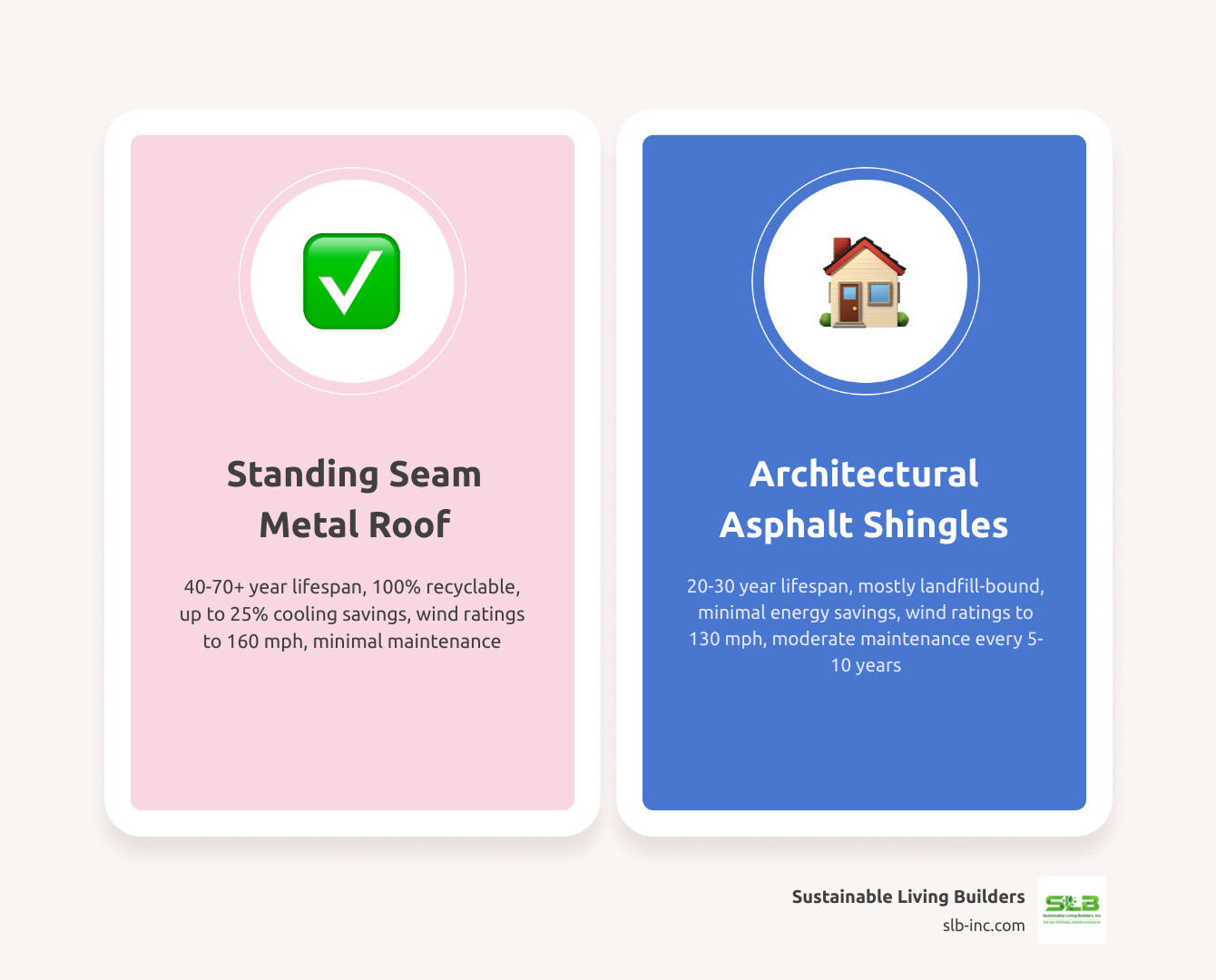
| Factor | Standing Seam Metal | Architectural Asphalt Shingles |
|---|---|---|
| Lifespan | 40-70+ years | 20-30 years |
| Upfront Cost | Higher | Lower |
| Energy Savings | Up to 20-25% cooling reduction | Minimal |
| Weather Resistance | Wind ratings up to 140-160 mph | Up to 130 mph |
| Maintenance | Very low | Moderate (repairs every 5-10 years) |
| Recyclability | 100% recyclable | Mostly landfill-bound |
| Best For | Long-term owners, eco-conscious homes | Budget-conscious, shorter-term ownership |
Most homeowners replacing a roof are really asking one question: is the higher upfront cost of metal worth it over time? The honest answer depends on how long you plan to stay, your climate, and what you value most — low lifetime costs, sustainability, or keeping initial spending down.
In 2026, steel tariffs have pushed metal roofing prices up by roughly 12-18%, making that tradeoff feel even more significant. But the long-term math still tends to favor metal for homeowners planning to stay 10 years or more — potentially saving thousands over a 25-year window when you factor in avoided re-roofing, energy bills, and insurance discounts.
This guide breaks down every factor that matters so you can make a confident, informed choice.
Standing seam metal roof vs shingle roof comparison word guide:
Key Performance Factors in a Standing Seam Metal Roof vs Shingle Roof Comparison
When evaluating your roofing options, you have to look beyond the surface. A roof is your home’s primary shield against the elements. In our region—stretching from the fog-swept shores of Marin County to the sun-drenched vineyards of Napa Valley and the wooded ridges of Sonoma County—weather performance is not just a matter of convenience; it is a matter of safety.
To understand how these two systems match up, we have to look at their structural differences. Asphalt shingles rely on overlapping layers nailed to your roof deck. While modern architectural shingles are highly durable, they still feature thousands of tiny nail holes and exposed edges that wind can catch.
In contrast, a standing seam metal roof uses solid vertical panels joined by raised interlocking seams. The fasteners are completely concealed beneath the metal surface, meaning there are zero exposed screws or nails to back out, rust, or leak. If you want to dive deeper into the core differences, check out The Ultimate Guide to Metal Roofs vs Asphalt Shingles.
From a safety standpoint, both systems can achieve a Class A fire rating—the highest rating available—when installed with the correct underlayment. However, metal has an inherent, non-combustible advantage that makes it highly prized in California’s wildfire-prone areas.
Lifespan and Long-Term Durability
The most striking contrast in any standing seam metal roof vs shingle roof comparison is how long each material lasts.
Asphalt shingles are made from organic felt or fiberglass saturated with asphalt and coated with mineral granules. Over time, the intense California sun cooks these materials. UV rays cause the asphalt to dry out, lose its flexibility, and shed its protective granules. This leads to curling, cracking, and eventual water intrusion. In our local climate, a standard shingle roof has a realistic service life of 15 to 20 years, though premium architectural options can last up to 30 years under ideal conditions. To learn more about what limits or extends these materials, read our Shingle Roof Lifespan Guide.
Standing seam metal roofs, on the other hand, are built to last a lifetime. Typically manufactured from high-grade steel or aluminum, they are virtually immune to the drying, cracking, and curling that dooms asphalt. A professionally installed standing seam metal roof easily boasts a lifespan of 50 to 70+ years—and in many cases, it can last up to 100 years. For a comprehensive look at why metal stands the test of time, explore our guide on How Long Do Metal Roofs Last?.
This massive gap in lifespan completely changes the math on home maintenance. While a shingle roof will likely require minor repairs, shingle replacements, and moss treatments every 5 to 10 years, a standing seam metal roof requires almost zero maintenance beyond keeping the gutters clear.
Weather Performance in Extreme Climates
Our local microclimates in Napa, Sonoma, and Marin counties demand a roof that can handle a bit of everything. From the heavy winter downpours of Sebastopol to the intense summer heat of Santa Rosa and the salty, wind-whipped air of coastal Marin, your roof takes a beating.
- High Winds: Coastal storms can bring fierce winds. Asphalt shingles can lift or tear off if wind speeds exceed their rating (typically 110 to 130 mph). Standing seam metal roofs are engineered as a continuous, interlocking unit. Because there are no shingle flaps for the wind to get under, they regularly achieve wind resistance ratings up to 140 to 160 mph.
- Extreme Heat: During scorching summer days in Santa Rosa or Napa, asphalt shingles absorb massive amounts of solar radiation, transferring that heat directly into your attic and living spaces. Metal roofs reflect this heat, keeping your home naturally cooler.
- Wildfire and WUI Regulations: Many neighborhoods in our hills are designated as Wildland-Urban Interface (WUI) zones. These areas have strict building codes designed to prevent wind-blown embers from igniting homes. Because metal is completely non-combustible, a standing seam system provides unmatched peace of mind when embers are flying.
- Rain and Moisture: In wet winter years, shady, tree-covered neighborhoods in places like Mill Valley or Sebastopol see very little sunlight. This damp environment causes moss, algae, and mold to thrive on asphalt shingles, eating away at the organic binders. Metal roofs are completely impervious to mold, moss, and mildew growth.
Aesthetic Options and Architectural Styles
Your roof makes up to 40% of your home’s visible exterior. Choosing the right material is essential for curb appeal, matching your home’s architectural style, and keeping your local Homeowners Association (HOA) happy. For a breakdown of how various materials look on different homes, check out our resource on the Best Residential Roofing Materials.
Aesthetic Differences in a Standing Seam Metal Roof vs Shingle Roof Comparison
The visual impact of these two roofing styles could not be more different:
- Standing Seam Metal: This style offers a clean, crisp, contemporary look characterized by bold vertical lines. It is incredibly popular on modern farmhouse designs, mid-century modern Eichler homes in Marin County, and sleek contemporary estates in Napa.
- Asphalt Shingles: Shingles provide a classic, textured look that blends seamlessly into traditional neighborhoods. They are highly versatile and fit perfectly on Craftsman bungalows, ranch-style homes, and classic Victorian properties.
Modern standing seam metal is far from the industrial “tin barn” look of the past. Today, homeowners can choose from premium PVDF (Kynar 500) coatings that resist fading and chalking for decades. Popular design trends in 2026 include low-gloss matte finishes, such as matte black, dark bronze, and “weathered gray.” For those looking for a vintage or rustic aesthetic, specialty finishes like bonderized steel (which has a beautiful, non-reflective matte gray look) or pre-painted patina copper can replicate historic metals beautifully. You can learn more about these design trends in our dedicated article on the Standing Seam Metal Roof.
When to Choose Metal Shingles or Impact-Resistant Shingles
If you love the classic look of a traditional roof but want the lifetime durability of metal, you do not have to settle for vertical panels. Metal shingles (often made from stone-coated steel) are stamped to perfectly mimic the texture of traditional asphalt shingles, rustic wood shakes, or elegant Spanish clay tiles. They offer a fantastic middle ground for homes in traditional neighborhoods or communities with strict HOA guidelines that do not allow vertical standing seam panels.
Conversely, if your heart is set on traditional shingles but you want upgraded durability, premium architectural or impact-resistant shingles are the way to go. These use heavy-duty fiberglass mats and modified asphalt to resist wind tear-offs and physical impacts. To see if this path fits your home, read about the Benefits of Shingle Roofing.
Energy Efficiency and Environmental Impact
In Northern California, eco-friendly living is more than a trend—it is a way of life. When comparing standing seam metal to asphalt shingles, the environmental and energy-saving benefits of metal are clear. To understand how sustainable roofing fits into a greener lifestyle, read The Great Roofing Debate and Why Metal Might Be Your Smarter Choice.
Cooling Savings and Insulation Performance
Asphalt shingles are “thermal masses.” They absorb heat from the sun and hold onto it, radiating that heat down into your attic long after the sun goes down. This forces your air conditioning system to work overtime during hot summer afternoons.
Metal roofs are highly reflective. When coated with cool roof pigments, they reflect a massive portion of the sun’s solar radiation back into the atmosphere. Additionally, metal has high thermal emittance, meaning it quickly releases any heat it does absorb rather than storing it.
By keeping your attic temperatures significantly lower, a cool metal roof can lower your home’s cooling energy costs by up to 20-25%. If you want to maximize your home’s efficiency, explore the details in Metal Roofing for Your Home.
Furthermore, standing seam metal roofs are the absolute best platform for solar integration. Because the raised seams are incredibly strong, solar panel mounting clamps can grip the seams directly. This means we can install a complete solar array on your home without drilling a single hole through your roof deck—completely eliminating any risk of future solar-related roof leaks.
Recyclability and Landfill Impact
The lifecycle environmental impact of these materials is night and day:
- Asphalt Shingles: Millions of tons of torn-off asphalt shingles end up in landfills every single year. Because they are manufactured from crude oil, chemicals, and fiberglass, they do not easily biodegrade.
- Standing Seam Metal: Metal roofing is highly sustainable. It is typically manufactured with a high percentage of recycled steel or aluminum and is 100% recyclable at the end of its long life. It never has to see a landfill.
In some cases, because metal is so lightweight, it can be installed directly over a single existing layer of asphalt shingles (a process known as a “roof recover”). This saves you the labor of a complete tear-off and keeps old shingles out of local landfills. For a deeper dive into the lifecycle of these products, read our guide on Roofing Materials Explained Pros Cons Uses.
Financial and Investment Considerations
While we are avoiding specific dollar figures because every home is unique, we can look at the comparative financial landscape of a standing seam metal roof vs shingle roof comparison.
Yes, a standing seam metal roof is a premium architectural product. The upfront investment is significantly higher than that of architectural asphalt shingles. This is due to both the cost of high-grade metal and the specialized training, tools, and labor required to custom-fabricate and install interlocking standing seam panels. However, looking at the upfront cost in isolation misses the bigger picture.
Long-Term Value in a Standing Seam Metal Roof vs Shingle Roof Comparison
To understand the true return on investment, we have to look at the 25-to-50-year horizon. For a side-by-side value analysis, view our Metal Roof vs Shingles comparison.
When you install a high-quality standing seam metal roof, you are essentially buying the last roof you will ever need. Over a 50-year span, a homeowner with an asphalt roof will likely have to pay for two to three complete roof replacements, alongside ongoing maintenance, leak repairs, and moss treatments.
With a standing seam metal roof, those future re-roofing cycles are completely wiped out. When you factor in those avoided replacements, decades of lower cooling bills, and potential discounts on your homeowners insurance premiums (many carriers offer discounts for fire-resistant, wind-resistant metal roofs), metal often becomes the more economical choice over time.
Frequently Asked Questions About Roofing Materials
Are metal roofs noisier in the rain than shingle roofs?
This is one of the most common myths we hear! Many people picture an old, uninsulated barn roof when they think of rain on metal.
For a residential home, the metal panels are installed over a solid wood roof deck, high-quality underlayment, and a fully insulated attic space. These layers act as highly effective acoustic dampening barriers. In real-world conditions, a metal roof is not noticeably louder than an asphalt shingle roof. Most homeowners report only hearing a soft, quiet drumming during the heaviest downpours.
Do metal roofs attract lightning?
No, they do not. Lightning is attracted to the highest point in an area, regardless of what material that point is made of. If lightning does strike a home, a metal roof is actually much safer than wood or asphalt because metal is non-combustible and safely conducts the electrical charge across the surface, dispersing it safely into the ground.
Can you install a metal roof over existing shingles?
Yes, in many cases you can! If local building codes allow it and your existing roof has only a single layer of flat, undamaged shingles over solid decking, a metal roof recover is a viable option. This saves on tear-off labor and keeps waste out of our landfills. However, our team always inspects the underlying roof deck first to ensure there is no hidden dry rot or structural damage that needs to be repaired before the new roof goes on.
Conclusion
Choosing between a standing seam metal roof and a traditional shingle roof ultimately comes down to your personal goals, budget, and how long you plan to enjoy your home. If you want a lower upfront investment and plan to move within the next few years, architectural shingles are a fantastic and reliable choice. But if you are looking for a permanent, highly energy-efficient, fire-safe, and eco-friendly solution that will protect your home for the next half-century, standing seam metal is an investment that pays dividends for decades.
At Sustainable Living Builders, we specialize in providing holistic, sustainable home improvements that protect your family while reducing your carbon footprint. We serve homeowners across Santa Rosa, Sebastopol, Sonoma County, Marin County, and Napa County.
Ready to see which roof makes the most sense for your home? Use our interactive Smart Roof Calculator or connect with our local experts for friendly, honest advice.
Contact Sustainable Living Builders for your roofing needs in Santa Rosa