Why Gutter Maintenance Is Critical for California Homeowners
Here are the most important gutter maintenance tips for California homeowners to protect your property year-round:
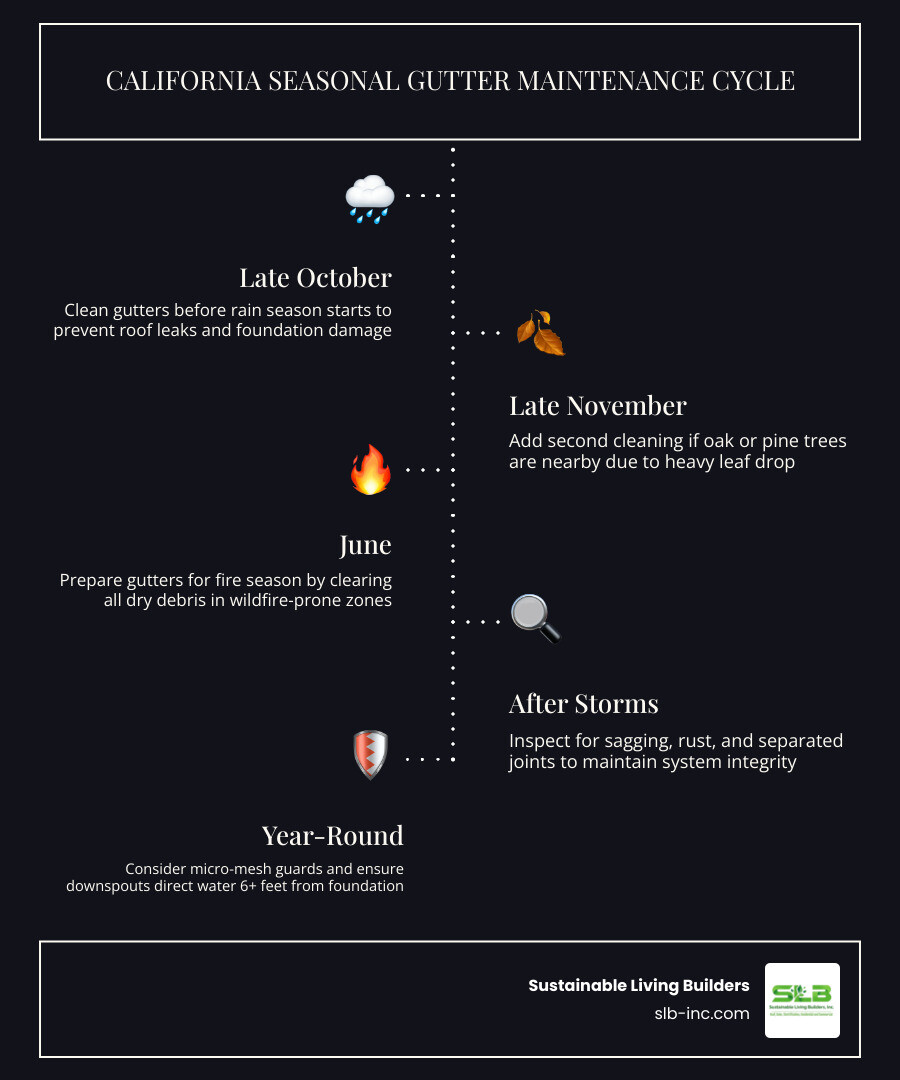
- Clean gutters before rain season (late October) to prevent the most common and costly water damage
- Add a second cleaning in late November if you have oak or pine trees nearby
- Prepare gutters for fire season in June by clearing all dry debris, especially in foothill and mountain zones
- Use metal gutters (aluminum or copper) in wildfire-prone areas
- Check that downspouts direct water at least 6 feet from your foundation to prevent erosion and flooding
- Inspect for sagging, rust, or separated joints after every major storm
- Consider micro-mesh gutter guards to dramatically cut down on cleaning time and debris buildup
California is not like the rest of the country when it comes to home maintenance. Your gutters face a unique combination of threats that most homeowners simply don’t think about until something goes wrong. During rain season, atmospheric rivers can dump enormous amounts of water in just hours. During fire season, embers can travel miles and ignite dry debris sitting in your gutters. And in between, oak trees, clay soils, and intense UV exposure quietly wear your system down.
The result? Clogged or damaged gutters can lead to roof leaks, foundation erosion, mold growth, and even contribute to home fires. The good news is that a simple, seasonal approach to gutter care can prevent most of these problems before they start.
Why Gutter Maintenance Tips for California Homeowners Matter for Wildfire and Water Protection

When we think of home fire safety, we often picture clearing brush or installing fire-resistant siding. However, your roofline is one of the most vulnerable entry points for a wildfire. Wind-blown embers can travel miles ahead of an active fire, landing directly in your roof drainage system. If your gutters are packed with dry leaves, pine needles, or twigs, those embers will find the perfect fuel source.
Once ignited, a gutter fire sits directly against your roof edge, where it can quickly burn through the fascia board, ignite the roof deck, and enter your attic. Under California’s Assembly Bill 3074, homeowners in high fire-risk zones must establish a “Zone 0” ember-resistant area within five feet of their homes. Keeping your gutters completely free of combustible debris is a fundamental requirement of this law. By following a structured Gutter Maintenance Guide, we protect our homes from both fire and water.
Beyond fire safety, proper drainage is vital because of the unique geology of Northern California. In Sonoma, Marin, and Napa counties, many homes are built on highly expansive clay soils. When clay soil dries out during our hot summers, it shrinks and cracks. When the winter rains arrive, it expands rapidly. If your gutters are clogged and overflow, thousands of gallons of water will dump directly next to your foundation. This concentrated moisture causes the clay soil to swell unevenly, putting immense pressure on your foundation and leading to costly structural cracking, basement flooding, and toxic mold growth in crawlspaces.
Protecting Your Roof and Foundation from Atmospheric Rivers
During California’s winter, we frequently experience atmospheric rivers—dense plumes of moisture that can drop several inches of rain in a single day. When gutters are clogged, this massive volume of water has nowhere to go. It backs up under your shingles, rotting the roof decking and leaking into your ceiling.
Uncontrolled runoff also cascades over the sides of your gutters, eroding your landscaping, washing away topsoil, and pooling around your home’s piers or slab. To keep your home dry and stable, you must learn How to Keep Your Roof Drainage System Ready for Heavy Rains before the first storm front hits.
Mitigating Wildfire Risks with Metal Gutter Systems
To maximize fire protection, the materials you choose matter just as much as your cleaning schedule. We strongly advise against using combustible materials near your roofline. Instead, opt for heavy-duty metal gutter systems, such as seamless aluminum or copper.
Unlike materials that can melt, warp, or ignite under extreme heat, metal gutters remain structurally intact during a fire. This prevents burning debris from collapsing onto ground-level vegetation or wood decking, maintaining a clean, non-combustible zone right at your roof’s edge.
The Ultimate California Gutter Maintenance Calendar
Because Northern California experiences highly distinct dry and wet cycles rather than traditional four-season weather, our home maintenance must adapt. We break our year down into four functional gutter seasons: Rain Season (November to March), Dry Season (April to May), Fire Season (June to October), and Leaf Drop Season (September to December).
To keep your home protected, we recommend following The West Coast Guide to Spring Roof and Gutter Care to transition smoothly between these demanding periods.
Essential Gutter Maintenance Tips for California Homeowners in Autumn
Autumn is the most critical window for gutter care. In places like Santa Rosa, Sebastopol, and throughout Napa County, beautiful Valley Oaks and Coast Live Oaks drop leaves, acorns, and heavy tassels (catkins) from September all the way into December.
- Late October: Perform your primary pre-rain cleaning. This clears away the initial summer dust, wind-blown debris, and early leaf drop before the first atmospheric river arrives.
- Late November: Perform a secondary cleaning. By this point, deciduous trees have dropped the majority of their canopy, and a quick follow-up ensures your downspouts remain clear for the heaviest winter storms.
Understanding Why Spring Gutter Maintenance is Your Home’s Best Friend helps you realize that cleaning in the fall prevents debris from rotting in your gutters all winter long.
Spring and Summer Gutter Maintenance Tips for California Homeowners
Once the rains subside in April, your gutters still require attention to prepare for the long, hot summer:
- April & May (The Pollen Rinse): Spring brings heavy pollen and tree blossoms. When mixed with light spring showers, this pollen creates a thick, sticky sludge that can dry like cement inside your gutters. A quick spray-out prevents this summer blockage.
- June (Fire Season Prep): Clear out any late-dropping leaves or twigs. Ensure your roof valleys and gutters are completely bare to eliminate fuel sources for flying embers.
- July & August (Heat Inspections): Intense California sun and UV rays can degrade sealants at gutter joints. Inspect your system for expansion gaps, cracking caulk, or signs of pest nesting. Wasps, birds, and rodents love to make homes in dry, neglected downspouts during the summer.
Step-by-Step DIY Gutter Cleaning and Safety Checklist
Working on a ladder is inherently hazardous. In the United States, ladder falls during home maintenance lead to more than 13,000 emergency room visits annually. Before you begin, always prioritize your physical safety.
- The 4-to-1 Rule: For every four feet of ladder height, the base of the ladder should extend one foot away from the wall.
- Use a Ladder Stabilizer (Standoff): Never lean your ladder directly against your gutters. This can bend the metal, loosen the mounting brackets, or cause the ladder to slide. A stabilizer attaches to the ladder and rests safely on your roof or siding.
- Work with a Spotter: Never clean gutters alone. Always have someone on the ground to secure the ladder base and assist you.
- Wear Personal Protective Equipment (PPE): Use heavy leather work gloves to protect your hands from sharp metal edges and animal droppings. Wear safety goggles to shield your eyes from flying debris and mold spores, and wear thick, non-slip rubber-soled shoes.
Proper Cleaning and Flushing Techniques
Once you are safely positioned, follow these step-by-step instructions to clean your gutters efficiently:
- Scoop the Big Stuff: Start near the downspout and work your way outward. Use a plastic gutter scoop or a garden trowel to remove large clumps of leaves, twigs, and dirt. Place the debris directly into a bucket hanging from your ladder rather than throwing it onto your lawn.
- Clear the Downspout Openings: Ensure the strainers at the top of your downspouts are clear. If your downspout is clogged, gently feed a plumber’s snake or a stiff wire down the tube to break up the blockage.
- Flush the System: Take a garden hose with a spray nozzle up the ladder. Flush the gutters with water, spraying toward the downspouts. This washes away fine silt, shingle grit, and pollen.
- Test the Flow and Slope: As you flush, watch how the water moves. Gutters must have a slight downward slope toward the downspouts—typically a quarter-inch drop for every 10 feet of run. If water pools in the middle of a run, your hangers may need to be adjusted or tightened to restore the proper slope.
Upgrading Your System: Gutter Guards and Material Selection
If you are tired of spending your weekends on a ladder, upgrading your system is a smart, long-term solution. Installing high-quality gutter guards can reduce your annual cleaning time from hours to just a few minutes of light brushing.
| Guard Type | Debris Filtered | Pros | Cons |
|---|---|---|---|
| Micro-Mesh Guards | Pine needles, oak catkins, shingle grit, leaves | Maximum protection; fire-resistant; rarely clogs | Higher initial investment |
| Traditional Screen Guards | Large leaves, twigs | Inexpensive; easy to install | Pine needles and oak catkins slide right through; requires frequent manual cleaning |
| Foam / Brush Inserts | Mid-to-large leaves | Cheap; simple DIY install | Traps organic material; can grow moss and become a fire hazard when dry |
To choose the best option for your home’s surrounding trees, consult our comprehensive Gutter Guards Installation Guide.
Choosing the Right Metal Gutter Materials
When replacing your gutters, selecting the right metal is crucial for durability, particularly in our diverse Northern California microclimates.
- Seamless Aluminum: This is the industry standard for a reason. Aluminum is lightweight, rust-proof, and custom-extruded on-site to fit your home perfectly. Because there are no seams along the straight runs, the risk of leaks is dramatically reduced.
- Copper Gutters: If you live in coastal Marin County or near the salt fog of the San Pablo Bay, copper is the ultimate choice. While aluminum can eventually corrode from salt air, copper naturally oxidizes over time, developing a beautiful protective patina. Copper gutters can easily last 60 to 100 years with minimal maintenance.
For homeowners in Sonoma County looking to upgrade, our team provides custom Gutter Installation in Petaluma CA tailored to protect against coastal moisture and local weather patterns.
Frequently Asked Questions about California Gutter Care
How often should California homeowners clean their gutters?
For most homes in Santa Rosa, Sebastopol, and surrounding areas, twice a year is the baseline. Clean once in late October to prepare for the winter rains, and once in June to clear dry debris for fire season. However, if your property is nestled under a heavy canopy of Redwood, Oak, or Pine trees, you may need to clean them three to four times a year to prevent severe clogs.
What are the signs that my gutters need repair or replacement?
Look for these warning signs during your inspections:
- Sagging or Pulling Away: Gutters pulling away from the fascia boards indicate that the fasteners have loosened or the wood behind them is rotting.
- Visible Rust or Cracks: Rust spots on steel gutters or hairline cracks in aluminum joints will quickly expand under the pressure of heavy rains.
- Water Stains on Siding: If you see dark lines or peeling paint on your siding, your gutters are overflowing or leaking from the rear.
- Standing Water: If water remains in your gutters more than an hour after a rainstorm, they are improperly sloped.
If you notice these issues, it may be time to look into the Best Gutter Installation in Petaluma CA to restore your home’s protection.
When should I hire a professional for gutter maintenance?
While DIY cleaning is possible for single-story homes with flat ground access, you should hire a professional if:
- Your home is two or more stories high.
- Your roof has a steep pitch or fragile clay tiles that can crack underfoot.
- You notice structural damage, such as rotted fascia boards or sagging gutter runs.
- You don’t have a spotter or the proper safety equipment.
Understanding the Gutter Cleaning Services Importance ensures that your system is inspected thoroughly by experts who can catch hidden issues before they turn into costly repairs.
Conclusion
Your gutters are your home’s first line of defense against the elements. By keeping them clean, properly sloped, and made of high-quality metal materials, you protect your property from devastating water damage, foundation movement, and wildfire ember hazards.
At Sustainable Living Builders, we specialize in providing holistic, eco-friendly home improvements. From energy-efficient roofing and advanced solar integrations to smart home systems, we help homeowners throughout Santa Rosa, Sebastopol, Sonoma County, Marin County, and Napa County reduce their carbon footprint while protecting their investments.
Ready to make your home more resilient? Explore our professional solutions for Sustainable Living Builders Gutters today, or use our interactive Smart Roof Calculator to plan your next sustainable home upgrade!