Why Spring Roof and Gutter Tasks for California Homeowners Can’t Wait
Spring roof and gutter tasks for California homeowners are some of the most important maintenance steps you can take to protect your home after a long, wet winter. California’s rain season runs from November through March, and it delivers roughly 80% of the state’s annual rainfall in just a few months. By the time April arrives, your roof and gutters have been working hard — and they may be showing it.
Here is a quick overview of the core spring tasks to prioritize:
- Clear gutters and downspouts of winter debris, oak catkins, and pollen buildup
- Inspect shingles for curling, cracks, granule loss, or missing sections
- Check flashing around chimneys, skylights, and vents for rust or cracked sealant
- Examine the attic for moisture stains, damp insulation, or musty odors
- Trim overhanging branches to at least 6-10 feet from the roofline
- Test gutter slope and water flow to ensure drainage moves away from your foundation
- Assess fire risk by removing dry debris before summer heat sets in
Skipping these steps is not just an inconvenience. Clogged gutters can lead to foundation damage, fascia rot, and interior water intrusion. And with California’s intense summer heat and wildfire season arriving fast, the spring window is short.
This guide walks through every task in plain language, with regional tips for areas like the East Bay, Sacramento, and the Central Valley — so you know exactly what to do and when.
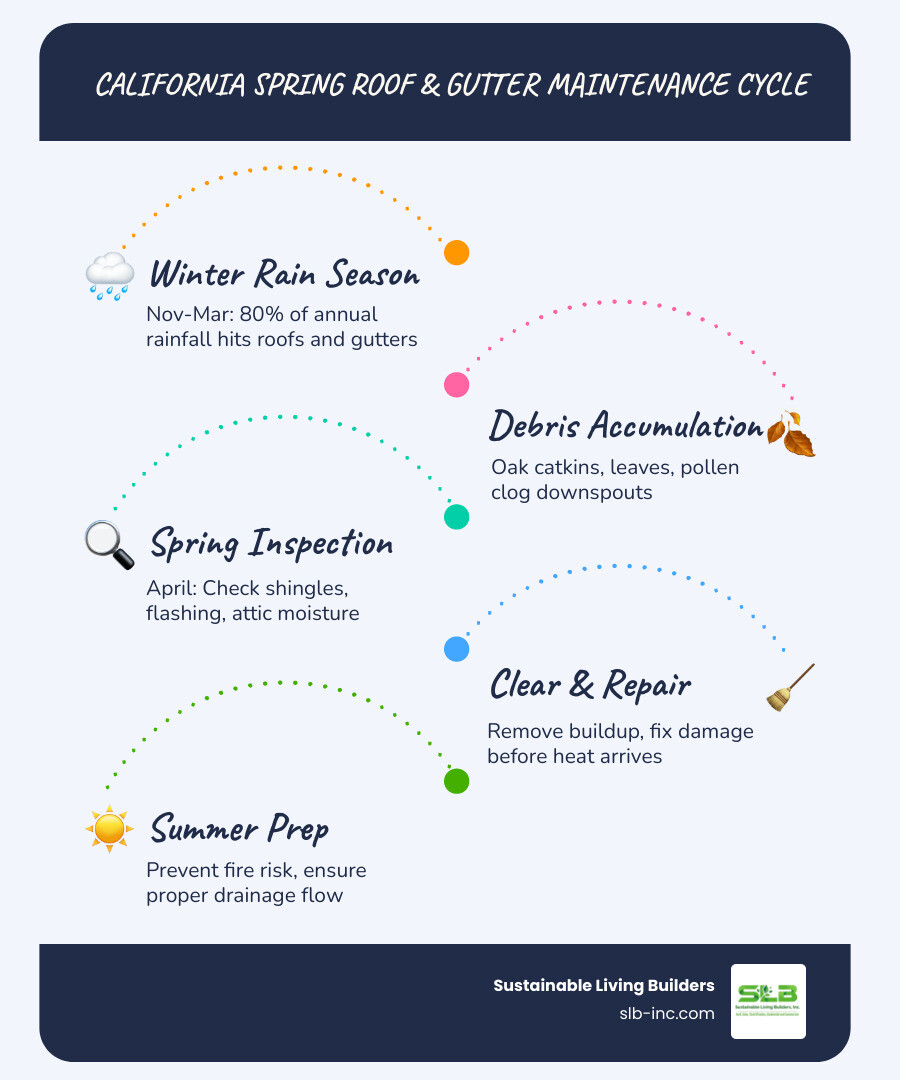
Simple guide to spring roof and gutter tasks for california homeowners terms:
Why Spring is the Critical Window for California Roof Maintenance
In our service areas—from the lush hills of Sonoma and Marin to the historic neighborhoods of Napa—April 2026 marks a major transition. We’ve just emerged from the “rain season,” where nearly all of our annual precipitation falls. This concentrated moisture puts immense pressure on your home’s exterior.
Spring is the “Goldilocks” zone for maintenance. It is late enough that the heaviest storms have passed, allowing us to see the full extent of winter’s wear, but early enough to get ahead of the baking summer sun. In California, we don’t just worry about rain; we worry about UV degradation. Intense sunlight can “bake” a roof from the outside in, especially if the shingles were already weakened by winter winds.
Furthermore, as we move toward June, the focus shifts to fire season. Any debris left in your gutters from the spring bloom becomes highly flammable kindling during a dry spell. Taking care of these tasks now ensures your home is resilient against both water and fire. For more on extending your roof’s lifespan, check out our Tips To Maintain Your Roof And Extend Its Life.

Understanding How Heavy Rains Impact Your Roof And How To Prepare is the first step in realizing that a roof isn’t just a cover—it’s a complex system that needs a post-storm “physical” every year.
Essential Spring Roof and Gutter Tasks for California Homeowners
When we talk about spring roof and gutter tasks for California homeowners, we like to think of it as a holistic health check for your house. It isn’t just about scooping out a few leaves; it’s about ensuring the entire drainage and protection system is intact.
A proper spring routine should include:
- A thorough cleaning: Removing the “pollen sludge” that accumulates in late March.
- A visual shingle scan: Looking for signs of aging or storm trauma.
- Flashing verification: Ensuring the metal seals around your chimney and vents haven’t pulled away.
- Attic “sniff test”: Checking for the musty odors that signal a hidden leak.
To get started, refer to our Gutter Maintenance Guide and read about What To Expect During A Roof Inspection A Homeowners Checklist.
Inspecting Shingles and Flashing After Winter Storms
Winter in Northern California often brings high winds that can lift shingle edges. Once a shingle is lifted, it loses its seal, making it easy for the next rain or even summer wind to tear it off. We recommend using binoculars to stay safely on the ground while looking for “cupping” or “curling” shingles.
Pay close attention to your gutters during cleaning. If you see what looks like dark sand, that’s granule loss. Those granules are the “sunscreen” for your roof; without them, the asphalt underneath dries out and cracks. We’ve compiled the Top Roof Maintenance Tips to help you identify these subtle signs early.
Flashing is equally critical. Most leaks don’t happen in the middle of the roof; they happen at the joints. Check the metal around chimneys and skylights. If the sealant is cracked or the metal is rusted, water will find its way in. For those looking to maximize their investment, we have guides on the Best Ways To Ensure That Your Roofing Lasts Longer and 4 Best Ways To Ensure That Your Roofing Lasts Longer.
Clearing Debris to Prevent Spring Roof and Gutter Tasks for California Homeowners Issues
In areas like Santa Rosa and Sebastopol, our majestic Oak trees are a blessing for shade but a curse for gutters. In the spring, Oaks drop “catkins”—those long, stringy tassels. When these mix with spring rain and pollen, they create a thick, heavy sludge that can weigh down your gutters and cause them to sag.
If your gutters aren’t sloped correctly (usually 1/4 inch of drop for every 10 feet), this sludge will sit and rot your fascia boards. This is why Gutter Cleaning Services Importance cannot be overstated. We often recommend Seamless Gutters Installation Maintenance for homeowners tired of leaks at the seams. If you are doing a DIY check, you can learn How To Measure Gutter Size to ensure your system is actually large enough to handle our heavy winter downpours.
Regional Maintenance Priorities: From the East Bay to the Central Valley
While we focus on Sonoma, Marin, and Napa, we know that California’s microclimates mean your roof faces different enemies depending on where you live.
| Region | Primary Debris/Risk | Maintenance Priority |
|---|---|---|
| Sonoma/Napa | Oak catkins & Vine dust | Deep gutter flush in April |
| Marin Coast | Salt spray & Moss | Shingle surface cleaning |
| Central Valley | Extreme UV & Dust | Attic ventilation & Shingle check |
| Sacramento | Heavy Oak leaf drop | Multiple gutter cleanings |
In the East Bay, the clay soil can shift after heavy rains, meaning you should check that your downspouts are still directing water at least 6 feet away from the foundation. Poor drainage on a sloped lot can lead to foundation repairs costing upwards of $15,000.
To keep your home safe, follow our guide on How To Keep Your Roof Drainage System Ready For Heavy Rains and use our Preparing Your Roof For Storms A Complete Rainy Season Checklist. Don’t forget to check the Elbows Gutters Guide to ensure the most common clog points are clear.
Preparing for Fire Season and Summer Heat
As the landscape turns from green to gold, fire safety becomes our top priority. Dry leaves and twigs in a gutter are essentially a fuse leading straight to your roof’s substructure. During a wildfire, embers can travel miles. If an ember lands in a clogged gutter, it can ignite the debris and the wooden fascia boards.
One of the best ways to mitigate this is by installing high-quality micro-mesh gutters. These guards prevent debris from entering while allowing water to flow. For homeowners in fire-prone regions like the Napa foothills, this is a vital part of “defensible space.”
Check out our Gutter Guards Installation Guide to see which type fits your home. For those with historic or specific architectural styles, our Half Round Gutters Homeowners Guide offers aesthetic solutions that don’t compromise on safety.
Finally, ensure your attic is breathing. Proper ventilation keeps the attic cool during 100-degree days, preventing your shingles from “cooking” and extending their life by up to 10 years.
Frequently Asked Questions about California Spring Maintenance
How often should I clean my gutters in the spring?
For most California homeowners, once in mid-April is sufficient. However, if you are surrounded by Valley Oaks or live in a high-pollen area, you may need a second “rinse” in May. This prevents the spring pollen from hardening into a concrete-like sludge during the summer heat.
Are gutter guards worth it for California fire protection?
Yes. Beyond reducing maintenance time from hours to minutes, quality micro-mesh guards are a key fire-hardening feature. They prevent the accumulation of “fine fuels” (dry leaves and needles) that are easily ignited by wind-blown embers.
When should I call a professional vs. DIY for spring roof and gutter tasks for california homeowners?
If your home is a single story and you are comfortable on a ladder, basic gutter cleaning and ground-level visual inspections are great DIY tasks. However, if you have a multi-story home, steep roof pitches, or suspect structural damage, call a professional. Over 13,000 ER visits happen every year due to gutter-related falls—it’s always better to stay safe.
Conclusion
At Sustainable Living Builders, we believe that a healthy home starts with a holistic approach. By staying on top of your spring roof and gutter tasks for California homeowners, you aren’t just preventing leaks; you’re protecting your home’s value and preparing it for a sustainable future.
Whether you are looking to upgrade to an energy-efficient cool roof or you’re getting your home ready for solar integration, we are here to help. Our team serves Santa Rosa, Sebastopol, and the surrounding counties with expert, eco-friendly solutions.
Ready to ensure your roof is ready for the year ahead? Explore our Roofing Services and let us help you build a more resilient, sustainable home. Reach out to us today for an inspection that looks at the big picture of your home’s health.