Why Spring Is the Best Time for Your Roof and Solar Checkup
A spring roof and solar inspection checklist is one of the most valuable tools a homeowner can use after winter to protect their home and energy system before problems get expensive.
Here is what a complete spring inspection covers:
Exterior (Roof)
- Missing, curled, or cracked shingles
- Granule buildup in gutters
- Rust, gaps, or lifted flashing around chimneys, vents, and valleys
- Sagging roofline or damaged soffits and fascia
- Clogged or detached gutters and downspouts
Exterior (Solar Panels)
- Debris, dirt, or bird nests on panel surfaces
- Visible microcracks or discoloration
- Loose or corroded mounting brackets and racking
- Wiring condition and insulation integrity
- Inverter status lights and error indicators
Interior and Attic
- Water stains or dark spots on attic decking
- Damp or compressed insulation
- Musty odors suggesting mold growth
- Daylight visible through roof boards
- Blocked or obstructed soffit and ridge vents
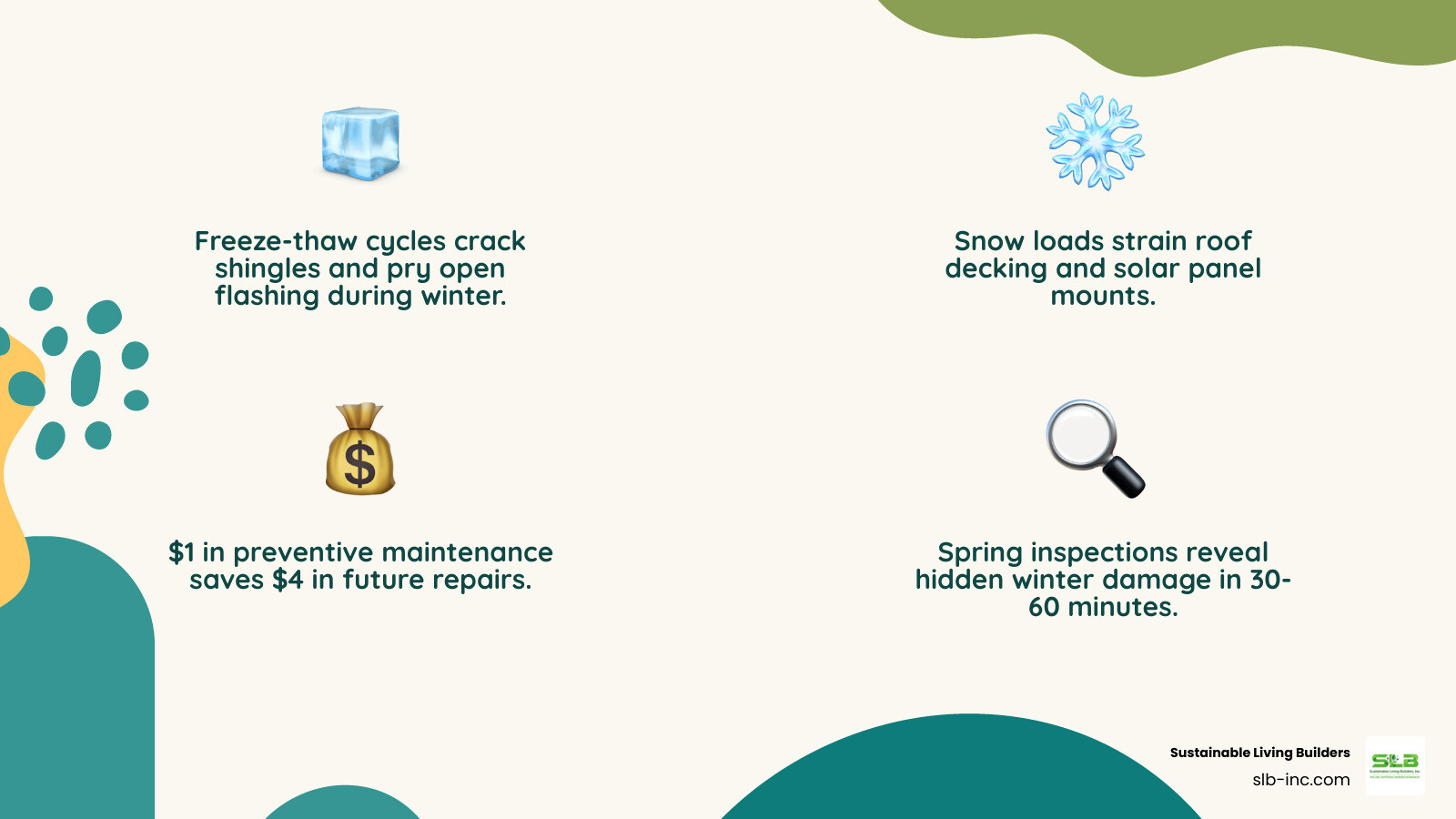
Winter is hard on both roofs and solar systems. Freeze-thaw cycles crack shingles, pry open flashing, and stress solar panel mounts. Snow loads strain roof decking. And because much of this damage hides under snow, spring is often the first chance you get to see what winter actually left behind.
The good news is that catching problems early pays off. Research shows that for every dollar spent on preventive maintenance, homeowners can avoid roughly four dollars in future repair costs. A basic ground-level and attic inspection takes most homeowners just 30 to 60 minutes, and it can mean the difference between a minor fix now and a major repair later.
Asphalt shingles — the most common roofing material in the U.S. — should be inspected at least once a year. If your roof is over 10 years old, twice a year is recommended. And if you have solar panels, spring is also the ideal moment to check that your system came through the colder months performing at full capacity.
Key terms for spring roof and solar inspection checklist:
Benefits of Early Detection in April 2026
As we move through April 2026, the rainy season in regions like Sonoma and Marin County begins to taper off, revealing the true impact of winter weather. Early detection is your best defense against the high costs of neglect. When we identify a small crack in a shingle or a loose solar mount now, we prevent that issue from turning into a structural failure during a summer heatwave or an autumn storm.
Following Top Roof Maintenance Tips ensures that your home remains energy-efficient. A damaged roof often leads to compromised insulation, which forces your HVAC system to work harder. Similarly, a solar system with debris buildup or microcracks won’t produce the energy you expect, costing you money on every utility bill. By being proactive, you extend the longevity of your entire home system and ensure you are ready for whatever the 2026 storm season brings.
The Essential Spring Roof and Solar Inspection Checklist: Exterior Tasks
Safety is our primary concern. You don’t always need to climb a ladder to perform a high-quality inspection. In fact, most of this spring roof and solar inspection checklist can be completed from the safety of the ground using a good pair of binoculars.

When we look at the exterior, we are looking for how the home “sheds” water and how the solar panels “catch” the sun. After the heavy rains we often see in Northern California, checking the drainage path is vital. Our guide on Preparing Your Roof For Storms A Complete Rainy Season Checklist highlights that the best time to fix a leak is when it’s sunny outside.
Visual Signs to Include in Your Spring Roof and Solar Inspection Checklist
When scanning your roof, keep an eye out for these specific red flags:
- Curled or Buckled Shingles: This often indicates that the shingles are reaching the end of their life or that your attic has poor ventilation, causing shingles to “cook” from the inside out.
- Granule Loss: If you see what looks like dark sand in your gutters, your shingles are losing their protective coating. This is one of the clearest Signs Your Roof Needs A Replacement.
- Flashing Failures: Check the metal around your chimney and vents. Rust or gaps here are the number one cause of roof leaks because water can slide right behind the shingles.
Safe Solar Panel Surface Evaluation
Your solar panels have spent months facing the elements. While they are built to be tough, they aren’t invincible.
- Debris Buildup: Leaves, dust, and even bird nests can create “hot spots” on panels, reducing their efficiency significantly. Knowing How Often To Clean Solar Panels is key—usually, a good spring cleaning is necessary to wash away winter grime.
- Microcracks: While hard to see without close inspection, look for any spider-web patterns on the glass. These can be caused by heavy hail or extreme temperature swings.
- Pest Activity: In areas like Santa Rosa and Sebastopol, squirrels and birds love the warm, sheltered space under solar panels. Check for any protruding sticks or nesting materials that could damage wiring.
Inspecting Solar Components and Mounting Systems
The panels themselves are only part of the story. The “bones” of your solar system—the mounting hardware and electrical components—need a checkup too.
We recommend checking the stability of the racking system. Winter winds can vibrate the panels, which may lead to loose bolts or shifted brackets over time. Our guide, Dare To Shine Brighter A Guide To Maintaining Your Solar Panels, emphasizes that a secure mount is essential for both safety and performance.
Critical Solar Hardware Checks
- Inverter Health: Check your solar inverter (usually located in the garage or on an exterior wall). Are there any red or orange error lights? Most modern systems have an app, but a physical check ensures the hardware is venting properly and free of dust.
- Wiring Integrity: Look for any hanging wires. Exposure to the sun and wind can degrade wire insulation. If you see bare copper or frayed edges, it’s time to call in the experts.
- Racking Stability: Ensure the mounting brackets are flush against the roof. If you see any “lift,” it could indicate that the lag bolts have loosened or that the roof deck underneath is softening. If you are in the process of a new install, remember these 4 Tips For Finding The Right Contractor For Your Solar Installation to ensure high-quality hardware is used from the start.
Interior and Attic Checks for Hidden Damage
Some of the most dangerous roof problems don’t show up on the outside. They hide in your attic. We always suggest making an attic “walk-through” a mandatory part of your spring roof and solar inspection checklist.
A healthy attic should be cool and dry. If it feels like a sauna, your ventilation is likely blocked. Using Tips To Maintain Your Roof And Extend Its Life often starts with ensuring the air can flow from your soffits out through your ridge vents.
Identifying Leaks and Moisture Issues
Grab a flashlight and look for these “hidden” signs of trouble:
- Daylight: If you can see pinpricks of light coming through the roof boards, water can get in too.
- Water Stains: Look for dark streaks or “rings” on the wood. Even if they feel dry now, they indicate a leak that occurred during the winter rains.
- Damp Insulation: Wet insulation loses its R-value, meaning your home won’t stay cool this summer. It also becomes a breeding ground for mold.
- Musty Odors: If the attic smells like an old basement, moisture is trapped somewhere. This is often a sign of poor ventilation or a slow, hidden leak near solar mounting penetrations.
When to Call a Professional for Your Spring Inspection
While a DIY check is a great first step, it doesn’t replace the trained eye of a professional. If your roof is over 15 years old, or if you’ve noticed any of the “red flags” mentioned above, it is time to bring in the pros.
Understanding What To Expect During A Roof Inspection A Homeowners Checklist can help you prepare. A professional will have the safety gear—like harnesses and non-slip boots—to actually get on the roof and check the seals around your solar mounts and vent pipes.
DIY vs. Professional Inspection: What’s the Difference?
| Feature | DIY Inspection | Professional Inspection |
|---|---|---|
| Safety | High risk if climbing; safe from ground | Trained in fall protection and ladder safety |
| Tools | Binoculars, flashlight, camera | Drones, moisture meters, thermal cameras |
| Solar Check | Visual surface check | Electrical testing and torque-checking mounts |
| Documentation | Personal notes/photos | Formal report for insurance or home value |
| Depth | Surface level | Structural and systemic evaluation |
Essential Tools for a DIY Spring Roof and Solar Inspection Checklist
If you’re handling the initial walk-through yourself, we recommend having these tools ready:
- High-Powered Binoculars: To see shingle edges and flashing from the sidewalk.
- Smartphone/Camera: To document anything suspicious so you can show a contractor.
- Flashlight: For the attic inspection.
- Safety Gloves: If you are clearing debris from reachable gutters.
Before you start, it’s helpful to review these Roof And Solar Screening Questions so you know exactly what to ask if you do find a problem.
Frequently Asked Questions about Spring Maintenance
How often should I perform a roof and solar inspection?
We recommend a thorough inspection at least twice a year—once in the spring to catch winter damage, and once in the fall to prepare for the rain. You should also do a quick visual scan after any major wind or hail storm.
Can I clean my solar panels myself?
Yes, but be careful! Never use abrasive chemicals or high-pressure washers, as these can cause microcracks or destroy the anti-reflective coating. Usually, a soft brush and a garden hose are all you need. If your panels are high up or very dirty, hiring a professional is much safer.
What are the most common signs of winter roof damage?
In Northern California, the most common issues are “wind-lifted” shingles and clogged gutters. Because our winters are wet, we also see a lot of fascia rot caused by water backing up under the eaves when gutters are full of leaves.
Conclusion
Taking the time to complete a spring roof and solar inspection checklist is an investment in your home’s future. At Sustainable Living Builders, we believe in a holistic approach to home health. Your roof protects your family, and your solar system powers your life—keeping them both in top shape is the best way to reduce your carbon footprint and your monthly expenses.
Don’t let small winter repairs turn into Common Roof Replacement Mistakes by waiting too long to act. Whether you are in Santa Rosa, Napa, or anywhere in Sonoma County, our team is here to help you transition into the sunny season with confidence.
Schedule your professional spring inspection today and let us help you keep your home efficient, sustainable, and safe.