California Roofs Face a Unique Challenge — Here’s How Metal and Shingle Stack Up
Metal roof durability vs shingle in California weather is one of the most important decisions a homeowner can make — and the stakes are higher here than almost anywhere else in the country. California’s climate doesn’t play by normal rules. Depending on where you live, your roof has to survive blistering inland heat, coastal salt air, ember showers from wildfires, and powerful Santa Ana winds — sometimes all within the same year.
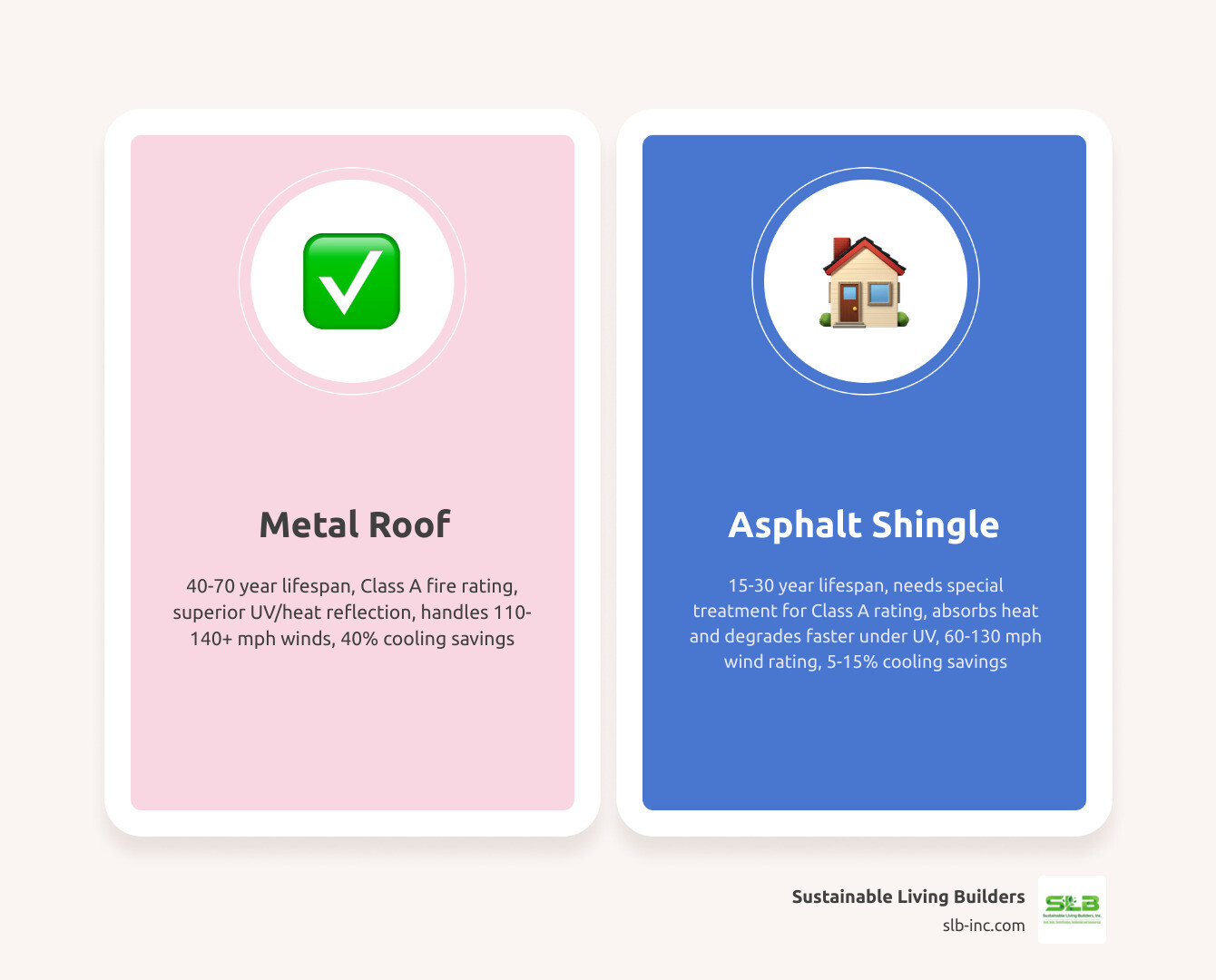
Here’s a quick look at how the two materials compare across California’s key climate challenges:
| Climate Factor | Metal Roof | Asphalt Shingle |
|---|---|---|
| Lifespan | 40-70 years | 15-30 years |
| Fire resistance | Class A (inherently noncombustible) | Class A possible, requires special underlayment |
| UV and heat degradation | Low — reflects solar radiation | Moderate to high — absorbs heat, granules wear |
| Coastal salt air | Good with aluminum or coated steel | Moderate — algae and moisture can accelerate wear |
| Santa Ana wind uplift | Rated 110-140+ mph | Rated 60-130 mph depending on grade |
| Energy savings | Up to 40% cooling cost reduction | 5-15% with cool-rated options |
| Solar panel compatibility | Excellent — clamp mounts, no penetrations | Good — requires flashed mounts |
The short answer: metal roofs outperform asphalt shingles in nearly every California climate stress category, but they cost more upfront. Shingles remain a solid option for homeowners with shorter ownership timelines or tighter budgets.
The longer answer depends on your specific region, how long you plan to stay in your home, and what risks matter most to you — wildfire, heat, or coastal corrosion. This guide breaks all of it down so you can make a confident, informed choice.
Quick metal roof durability vs shingle in california weather terms:
- fire resistance metal vs shingle comparison
- is a metal roof better than asphalt shingles
- standing seam metal roof vs shingle roof comparison
Metal Roof Durability vs Shingle in California Weather: The Ultimate Climate Test
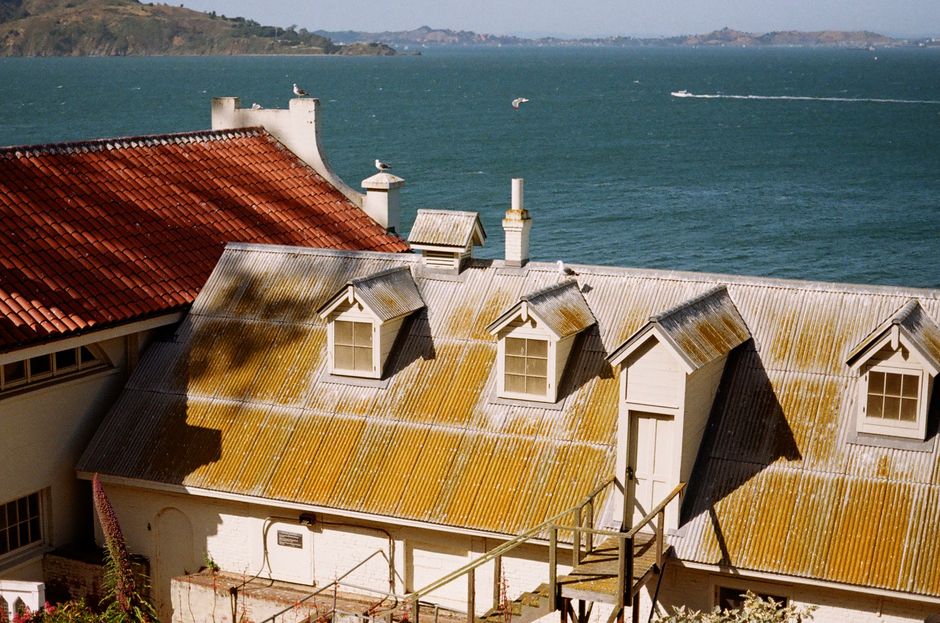
When we look at the North Bay — specifically across Santa Rosa CA, Sebastopol CA, and the surrounding areas of Sonoma County, Marin County, and Napa County — we see a fascinating patchwork of microclimates. You can start your morning in the cool, damp redwood fog of Sebastopol, drive through the windy coastal hills of Marin, and end your afternoon in the baking heat of the Napa Valley.
For a roof, this geographic diversity is a grueling endurance test. Your home’s shield must handle extreme shifts in temperature, moisture, and fire risk. When choosing between metal and asphalt shingles, understanding how these materials behave in your specific neighborhood is the key to a smart, future-proof investment.
To help you visualize how these materials perform under local conditions, let’s look at the ultimate guide to metal roofs vs asphalt shingles through a regional lens:
| North Bay Microclimate Zone | Primary Weather Threat | Best Material Fit | Why It Wins |
|---|---|---|---|
| Coastal Marin & Sonoma (e.g., Bodega Bay, Point Reyes) | Salt spray, high humidity, wind-driven rain | Aluminum or coated metal | Resists rust, prevents mold/algae growth, handles coastal winds |
| Inland Valleys (e.g., Napa Valley, Sonoma Valley) | Intense UV rays, extreme summer heat | Standing seam metal | Reflects solar radiation, stays cooler, avoids thermal cracking |
| Forested & WUI Zones (e.g., Santa Rosa hills, Sebastopol redwoods) | Wildfire embers, falling debris, moss/mildew | Class A metal | Noncombustible, sheds debris easily, does not support moss growth |
As our lead consultant Sunny often points out, “A shingle roof in a shaded, damp Sebastopol backyard faces a completely different set of enemies than a metal roof on a sun-drenched hill in Calistoga. Matching your material to your microclimate is everything.”
Evaluating Metal Roof Durability vs Shingle in California Weather Under Intense UV and Heat
If you live in the hotter inland valleys of Napa or Sonoma County, summer temperatures regularly climb into the triple digits. This intense solar exposure triggers two primary destructive forces: UV degradation and thermal expansion.
Asphalt shingles absorb a massive amount of solar heat. Over time, this constant baking dries out the asphalt core, causing the protective colored granules to loosen and wash away. Once these granules are gone, the underlying fiberglass mat is exposed to direct sunlight, leading to curling, cracking, and eventual leaks. If you want to dive deeper into how long shingles can withstand this cycle, check out our comprehensive shingle roof lifespan guide.
Metal roofs, on the other hand, handle extreme heat with ease. Instead of absorbing solar radiation, metal reflects it. However, metal has its own reaction to temperature changes: thermal expansion and contraction. On a hot summer afternoon in Santa Rosa, a metal roof will expand, and as the night cools down, it will contract.
Modern metal roofing systems solve this issue beautifully. High-quality standing seam systems are installed with thermal expansion clips. These clips allow the metal panels to glide smoothly back and forth as temperatures shift, preventing buckling, warping, or fastener fatigue. To understand how this impacts the overall service life of your home, read our guide on how long do metal roofs last.
Why Metal Roof Durability vs Shingle in California Weather Matters for Wildfire and Wind Resistance
For homeowners in the North Bay, wildfire safety is not a hypothetical concern — it is a top priority. In the Wildland-Urban Interface (WUI) zones of Sonoma, Marin, and Napa Counties, a roof is your home’s most vulnerable surface during a wildfire.
During a fire, wind-blown embers can travel miles ahead of the actual flame front. If these embers land on a roof with dry, cracked shingles or accumulated pine needles, they can easily ignite the structure.
This is where the comparison between metal and shingles becomes critical. Metal roofing systems are inherently noncombustible and carry a natural Class A fire rating. They provide superior protection because their smooth, interlocking surfaces leave no gaps or crevices where wind-driven embers can lodge and smolder.
While premium asphalt shingles can also achieve a Class A fire rating, they require specialized, fire-resistant underlayments to do so, and their rough texture can trap flying embers. For a detailed breakdown of fire-performance metrics, consult the definitive guide to fire resistance metal vs shingle comparison.
Wind resistance is another critical factor. When strong seasonal winds sweep through the canyons of Napa and Sonoma, they test the physical attachment of your roof. Standard shingles rely on adhesive strips that can degrade over time, making them susceptible to wind uplift and blow-offs. Metal roofing panels are mechanically fastened or interlocked, allowing them to withstand extreme wind speeds without budging.
Long-Term Performance: Lifespan, Corrosion, and Storm Resistance
When winter arrives in Northern California, it often brings intense atmospheric rivers. These prolonged, heavy rain events dump inches of water on our homes in a matter of days. Preparing your home for these seasonal shifts requires a roof that can handle massive water volume and high winds simultaneously. If you’re planning ahead, our preparing your roof for storms a complete rainy season checklist is an excellent place to start.
Both metal and asphalt shingles can keep your home dry, but they handle moisture and storm stress in fundamentally different ways. To learn more about how extreme downpours test your home’s structural integrity, read about how heavy rains impact your roof and how to prepare.
Coastal Salt Air and Corrosion Resistance
For homes located in coastal Marin County or near the windy shores of Bodega Bay, the air carries a constant mist of corrosive salt. This marine environment is incredibly harsh on standard metal surfaces.
If you install a basic galvanized steel roof near the coast, the salt air will quickly break down the zinc coating, leading to rust and premature failure. To prevent this, coastal homeowners must select the right metal alloy. Aluminum roofing is highly recommended for marine environments because it naturally resists salt-water corrosion. Additionally, high-performance protective coatings like PVDF (Kynar 500) provide an extra layer of defense against chalking and fading. For an in-depth look at historical metal options and how they hold up, see our tin roof lifespan guide.
Asphalt shingles do not rust, but they face a different coastal threat: moisture-driven organic growth. The persistent fog and high humidity of coastal zones create the perfect breeding ground for mold, mildew, and blue-green algae. While many modern shingles feature copper-containing granules to resist algae, these protective chemicals eventually leach out, leaving the shingles vulnerable to unsightly dark streaks and organic decay.
Heavy Rains, Atmospheric Rivers, and Wind Uplift
During an atmospheric river, water doesn’t just fall straight down — it is often driven sideways by powerful gusts of wind. Under these conditions, traditional shingle roofs can suffer from “wind uplift.” If the wind gets underneath the edge of a compromised shingle, it can peel it back, exposing the underlayment and decking to direct water intrusion.
Metal roofing systems, particularly standing seam profiles, feature interlocking panels that run continuously from the ridge to the eave. Because there are no horizontal seams or exposed fasteners, there is virtually no way for wind-driven rain to penetrate the metal barrier. This structural integrity makes metal exceptionally resilient against the unique weather patterns of our region. For more tips on safeguarding your property, check out a homeowners guide to surviving the Sonoma elements.
Energy Efficiency, Solar Compatibility, and Title 24 Compliance
California is a national leader in energy efficiency and green building codes. For homeowners planning a re-roof, navigating these regulations is a key part of the process. In particular, California’s Title 24 Building Energy Efficiency Standards place a strong emphasis on “cool roofs” — roofing systems that reflect sunlight and reject heat to reduce building energy use.
Both metal and shingles offer Title 24 compliant options, but metal systems have an inherent physical advantage when it comes to thermal performance and solar integration. To explore this comparison in detail, read the complete guide to standing seam metal roof vs shingle roof comparison.
When it comes to upgrading your home’s efficiency, pairing a new roof with solar panels is one of the smartest moves you can make. Here is why standing seam metal roofs are widely considered the gold standard for solar integration:
- Zero Roof Penetrations: Solar installers can use specialized seam clamps that grip the raised ribs of a standing seam roof. This means no holes are drilled into your roof deck, eliminating the risk of future leaks.
- Perfect Lifespan Alignment: A high-quality solar panel system is designed to last 25 to 30 years. If you install solar on a shingle roof that is already 10 years old, you will eventually have to pay to detach and reinstall the panels when the shingles fail. A metal roof easily outlasts the lifetime of the solar panels, saving you from double labor expenses.
- Enhanced Panel Efficiency: Because metal roofs stay cooler, they help lower the ambient temperature around your solar panels. Solar panels actually operate more efficiently at cooler temperatures, meaning a metal roof can help your solar system generate more electricity on hot summer days.
Cool Roof Technology and Attic Heat Reduction
To meet Title 24 standards, a roofing material must demonstrate high solar reflectance (the ability to reflect solar energy back into the atmosphere) and high thermal emittance (the ability to radiate absorbed heat away from the building).
Unpainted metal roofs reflect a significant amount of solar radiation, but pre-painted metal roofs coated with specialized cool pigments perform even better. These advanced coatings can reflect up to 90% of solar heat. By keeping the roof surface cool, a metal roof can reduce your attic temperatures dramatically, translating to significant savings on your summer cooling bills. To learn more about how this thermal behavior can benefit your home, explore the great roofing debate and why metal might be your smarter choice.
Asphalt shingles have made great strides in cool roof technology. Manufacturers now offer “cool-rated” shingles that feature highly reflective granules. While these shingles represent a major upgrade over traditional dark shingles, they still absorb more heat than metal, and their reflective properties can degrade over time as dirt and debris accumulate in the textured surface.
Solar Panel Integration and Roof Penetrations
If you choose to install solar panels on an asphalt shingle roof, the installation process requires lag bolts to be drilled directly through the shingles and into your wooden roof rafters. While professional installers use metal flashing and heavy-duty sealants to keep these penetrations watertight, every single hole represents a potential point of failure over the next 30 years.
With a standing seam metal roof, the entire solar array can be mounted using non-penetrating clamps. This clean, elegant system preserves the structural integrity of your roof and protects your manufacturer’s warranty. For a side-by-side comparison of how these materials interact with solar systems, check out our guide on metal roof vs shingles.
Practical Ownership: Maintenance, Noise, and Long-Term Value
Beyond weather resistance and energy savings, a roof must fit into your daily life. Homeowners often worry about the practical aspects of owning a metal roof. Will it make your home sound like a tin barn during a winter storm? How much work is required to keep it in top shape? And does it actually add value to your property when it comes time to sell?
Let’s look at the day-to-day reality of owning these two roofing systems. To understand the fundamental characteristics of each option, read our article roofing materials explained pros cons uses.
To keep your roof performing at its best, a little preventative care goes a long way. Here is a quick comparison of the typical maintenance tasks required for each material:
- For Asphalt Shingles:
- Regular inspections for cracked, curled, or missing shingles after high wind events.
- Periodic removal of moss, algae, and lichen, which can trap moisture and rot the shingles.
- Cleaning out gutters to prevent granules from building up and blocking water drainage.
- Trimming overhanging tree branches to prevent them from scraping off the protective granule coating.
- For Metal Roofs:
- An annual visual inspection to ensure valleys and gutters are clear of leaves and debris.
- Checking that rubber pipe boots and flashing around chimneys remain sealed and intact.
- A simple rinse with a garden hose to wash away accumulated dust or pollen.
- Verifying that fasteners (on exposed-fastener systems) remain tight and secure.
Noise Levels During Rain and Storms
One of the most persistent myths about metal roofing is that it is incredibly noisy when it rains. Many people associate metal roofs with old barns or open-air sheds where rain creates a deafening clatter.
In a modern residential installation, this is simply not the case. Your metal roof is not installed over open air; it is built on top of a solid wooden roof deck, followed by high-quality synthetic underlayment, attic insulation, and drywall ceilings. This dense sandwich of materials acts as an excellent acoustic barrier. In fact, studies have shown that a properly installed residential metal roof is no louder than an asphalt shingle roof during a heavy downpour. For more on how shingle roofs behave acoustically and structurally, see our post on the benefits of shingle roofing.
Resale Value, ROI, and Homeowner Insurance Impact
Investing in a high-quality roof is an investment in your home’s equity. Because metal roofs are known for their extreme durability and fire resistance, they are highly attractive to potential buyers. A metal roof can increase your home’s resale value and curb appeal, particularly on modern, mid-century, or rustic farmhouse architectural styles common in Sonoma and Napa Counties.
Additionally, because metal roofs offer superior protection against wildfire embers, some homeowners insurance carriers in California offer premium discounts for homes with Class A metal roofs. Given the challenging insurance market in California’s high-fire-risk zones, having a noncombustible roof can be a massive advantage in securing and maintaining affordable coverage. To explore how different premium materials impact your home’s long-term value, read our guide on the best residential roofing materials.
Frequently Asked Questions about California Roofing Durability
Do metal roofs get hotter than shingles in California summers?
No. This is a common misconception. While metal is highly conductive, it actually reflects the majority of solar radiation back into the atmosphere, whereas dark asphalt shingles absorb and hold onto that heat. When paired with a properly ventilated attic space and a radiant barrier underlayment, a cool-rated metal roof will keep your attic and home significantly cooler during hot summer days than standard shingles.
Are metal roofs permitted by most California HOAs?
Yes, though it depends on your specific community’s architectural guidelines. While some highly traditional HOAs require a specific look, many modern communities welcome standing seam metal roofs due to their clean aesthetics, fire safety benefits, and longevity. If your HOA has strict rules requiring a traditional look, stone-coated steel roofing is an excellent alternative — it offers the durability of metal while mimicking the appearance of traditional clay tile or wood shakes.
How do metal roofs perform during California’s rainy season?
Metal roofs perform exceptionally well during the rainy season. Because they feature continuous vertical panels and interlocking joints, they shed water incredibly fast and are highly resistant to leaks, even during severe atmospheric rivers. Their smooth surface also prevents water from pooling, ensuring rapid drainage into your gutter system.
Conclusion
Choosing between a metal roof and asphalt shingles comes down to aligning your home’s needs with your long-term goals. If you plan to stay in your home for decades, want the absolute best defense against wildfires and extreme weather, and plan to integrate solar panels, a metal roof is a future-proof investment that pays off in energy savings, durability, and peace of mind. If you have a shorter timeline or prefer a lower upfront investment, modern cool-rated shingles remain a reliable, high-performing choice.
At Sustainable Living Builders, we specialize in helping North Bay homeowners find the perfect, eco-friendly solutions for their homes. Whether you are in Santa Rosa, Sebastopol, or anywhere across Sonoma, Marin, and Napa Counties, our team is here to guide you every step of the way.
Ready to upgrade your home with a smart, sustainable roof? Schedule a consultation with Sustainable Living Builders today, and let us help you build a safer, more energy-efficient future.