Why Spring Gutter Maintenance After Rainy Season Protects Your Home
Spring gutter maintenance after rainy season is one of the most important steps you can take to protect your home from water damage, foundation erosion, and costly repairs.
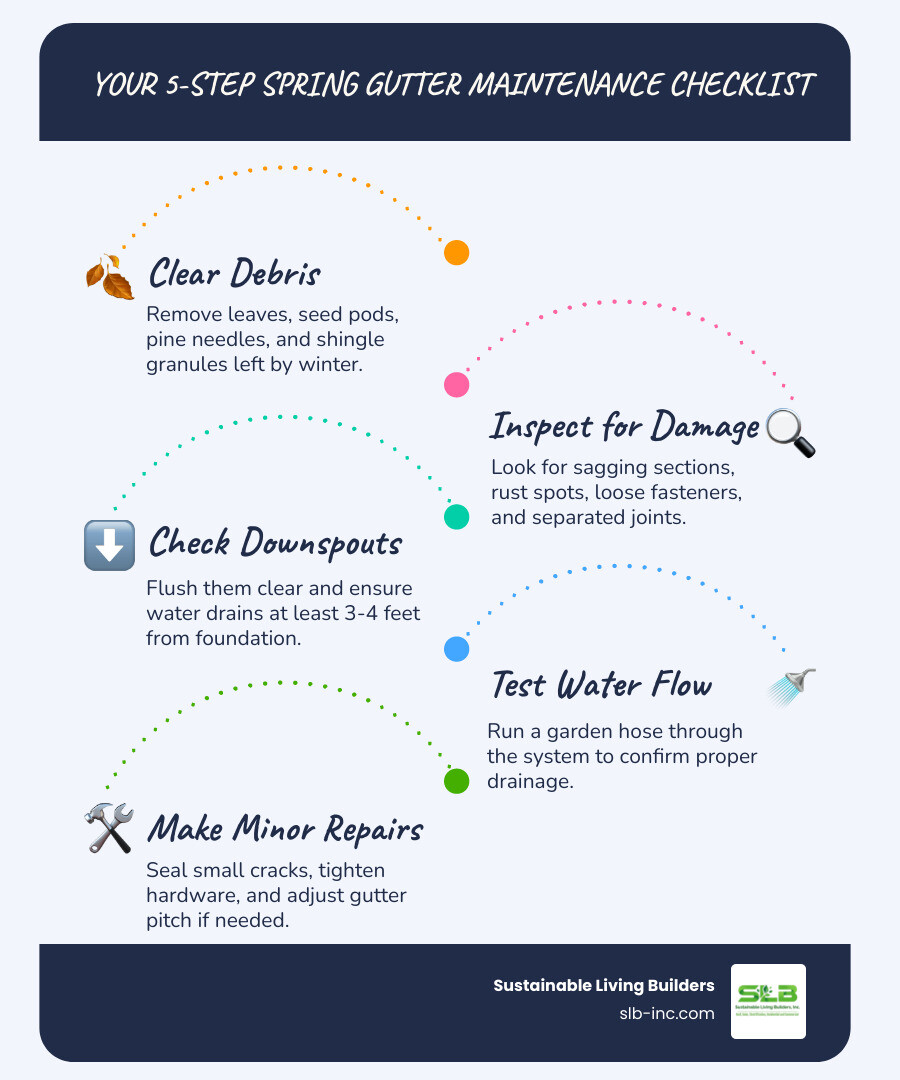
Here is a quick summary of what it involves:
- Clear debris – Remove leaves, seed pods, pine needles, and shingle granules left behind by winter weather
- Inspect for damage – Look for sagging sections, rust spots, loose fasteners, and separated joints
- Check downspouts – Flush them clear and make sure water drains at least 3-4 feet from your foundation
- Test water flow – Run a garden hose through the system to confirm proper drainage
- Make minor repairs – Seal small cracks, tighten hardware, and adjust gutter pitch if needed
Winter is hard on your gutters. Freezing temperatures, ice buildup, heavy rain, and wind all take a toll on your drainage system. By the time spring arrives, debris has often packed in tightly — and the first heavy spring storm can push a stressed, clogged system past its breaking point.
According to FEMA, keeping gutters and downspouts clean and clear is a direct way to reduce flood risk around your home. And the stakes are real: clogged gutters are linked to a significant share of basement flooding events and can silently cause rot, mold, and foundation damage over time.
The good news? A focused spring inspection and cleaning — done before the heaviest rains hit — can head off most of these problems before they become expensive.
Simple spring gutter maintenance after rainy season glossary:
The Critical Need for Spring Gutter Maintenance After Rainy Season
As we move into April 2026, the transition from winter to spring brings a unique set of challenges for homeowners in Santa Rosa and Napa. While we often think of winter as the “messy” season, spring is when the consequences of that mess truly manifest. During winter, gutters endure significant stress from heavy winds, freezing nights, and the accumulation of debris that sits damp for months.
When the skies open up for those heavy spring showers, a clogged system can’t keep up. Instead of water flowing safely to the downspouts, it spills over the edges. This overflow isn’t just a nuisance; it’s a direct threat to your home’s structural integrity. Understanding how heavy rains impact your roof and how to prepare is the first step in realizing that gutters are your roof’s primary defense mechanism.
Without proper spring gutter maintenance after rainy season, water pools at the base of your home, leading to foundation erosion. This is why FEMA highlights gutter care as a vital part of reducing flood risk. To ensure you haven’t missed a step in your seasonal home care, we recommend reviewing our preparing your roof for storms: a complete rainy season checklist to see how gutters fit into the bigger picture of home preservation.
Common Debris Found During Spring Gutter Maintenance After Rainy Season
You might wonder how your gutters got so full when the trees were bare all winter. In Northern California, spring brings its own “litter.”
- Samara Fruit: Often called “helicopters,” these winged seeds from maples and other trees can travel 50 to 100 feet. They are notorious for wedging themselves into gutter corners and even sprouting if left in damp debris.
- Acidic Pollen: This is a hidden danger. Pollen is surprisingly acidic. When it mixes with water, it can actually begin to corrode the protective coating on metal gutters, leading to premature aging.
- Pine Needles: For our neighbors in more wooded areas of Sonoma County, pine needles are a year-round battle. They weave together to create thick, felt-like mats that block water flow completely.
- Shingle Granules: If you see a lot of sand-like grit in your gutters, these are granules from your asphalt shingles. Their presence often indicates that your roof has taken a beating over the winter and needs an inspection.
For more details on identifying these materials, check out our gutter maintenance guide.
Risks of Neglecting Post-Winter Care
Neglect isn’t just about messy gutters; it’s about the “domino effect” of damage. Clogged gutters are responsible for roughly 14% of catastrophic basement floods. When water overflows, it doesn’t just stay outside; it can seep into the soil, press against your foundation, and eventually find its way into your crawlspace or basement.
Furthermore, trapped moisture against the fascia board (the wood behind the gutter) leads to rot and mold growth. Once the wood softens, the gutters may literally pull away from the house under the weight of wet debris. Taking steps to prevent basement flooding starts at the roofline, not the ground.
Identifying Structural Damage and Necessary Repairs
Cleaning is only half the battle. During your spring gutter maintenance after rainy season, you must play detective. Winter weather can cause metal to expand and contract, loosening the very hardware that holds the system together.
Look for sagging sections where the gutter seems to dip. This usually means a fastener has come loose or the weight of winter ice has bent the hanger. Separated joints are another common issue; if the sealant at the seams has failed, water will leak through the gaps rather than reaching the downspout. If you are dealing with older systems, you might find seamless gutters installation & maintenance to be a much more durable, low-maintenance alternative for our local climate.
For those with galvanized steel gutters, look for rust spots. Small patches of rust can be sanded and treated, but extensive corrosion usually signals it’s time for a replacement. If the gutters are structurally sound but look worn, painting galvanized gutters can restore their curb appeal and provide an extra layer of protection.
| Feature | Minor Repair (DIY Friendly) | Full Replacement (Professional Needed) |
|---|---|---|
| Leaks | Small holes or leaking seams | Multiple large holes or rusted-through sections |
| Fasteners | Tightening a few loose screws | Gutters pulling away from rotten fascia |
| Pitch | Adjusting a single sagging hanger | Entire run is sloped incorrectly or warped |
| Aesthetics | Peeling paint or minor stains | Heavy rust, dents, or collapsed sections |
Checking Gutter Pitch and Alignment
Gutters shouldn’t be perfectly level. To work correctly, they need a slight slope—roughly a quarter-inch for every ten feet—toward the downspouts. If you see standing water in your gutters after a dry spell, the pitch is off. This standing water is more than just a weight issue; it’s a breeding ground for mosquitoes and can lead to rust. Tightening hardware and ensuring the hangers are positioned correctly is essential for maintaining this gutters alignment.
Inspecting for Hidden Leaks
Sometimes the damage isn’t obvious from a ladder. Take a walk around your home’s exterior. Do you see water stains on the siding? Is there peeling paint on the soffits or fascia? These are “smoking guns” for gutter leaks. In cities like Santa Rosa, where we see heavy seasonal shifts, these leaks can quickly lead to interior wall damage if not addressed. If you’re unsure what to look for, our guide on home gutters in Santa Rosa, CA provides local insights into common failure points.
Step-by-Step Guide to Thorough Spring Gutter Maintenance
Ready to roll up your sleeves? Performing spring gutter maintenance after rainy season is a systematic process. It’s not just about scooping out the big stuff; it’s about ensuring the entire drainage “highway” is open for traffic.
Before you begin, gather your tools: a sturdy ladder, a gutter scoop (or a plastic trowel), heavy-duty gloves, safety goggles, and a garden hose. The gutter cleaning services importance cannot be overstated if you have a multi-story home or feel uncomfortable with heights.
Performing Spring Gutter Maintenance After Rainy Season Safely
Safety is our number one priority. Never perform gutter work alone; always have a “spotter” on the ground to steady the ladder.
- Ladder Stability: Ensure your ladder is on level, firm ground. If you are working over garden beds, use a ladder stabilizer to avoid damaging your gutters or slipping.
- Three-Point Contact: Always keep two hands and one foot, or two feet and one hand, on the ladder at all times.
- Protective Gear: Wear thick gloves to protect against sharp metal edges and hidden debris like bird nests or even the occasional wasp nest. Eye protection is a must when flushing the system to avoid getting debris in your eyes.
Flushing and Testing the System
Once the visible debris is removed, it’s time for the “stress test.” Take your garden hose up to the end of the gutter farthest from the downspout. Turn the water on and watch the flow.
- Check the Slope: Does the water move quickly toward the downspout, or does it pool in the middle?
- Clear the Downspouts: If water backs up, you have a clog in the downspout. You can often clear these by spraying a high-pressure stream of water down the hole or using a plumber’s snake for stubborn blockages.
- Look for Leaks: While the water is running, look at the bottom of the gutters and the seams. Any dripping indicates a hole or a failed seal that needs attention.
Learning how to keep your roof drainage system ready for heavy rains involves this regular testing to ensure no hidden blockages remain.
Optimizing Downspouts and Drainage for Foundation Protection
The job isn’t finished when the water leaves the gutter. The most common mistake homeowners make is letting the downspout dump water right at the base of the foundation.
The EPA recommends redirecting downspouts so the water can soak into the ground in a permeable area rather than rushing onto hard surfaces or pooling against your walls. Proper soil grading is also key; the ground should slope away from your foundation at a rate of at least one inch per foot for the first six feet.
Drainage Best Practices:
- Extend downspouts at least 3 to 4 feet away from the house.
- Use splash blocks to prevent soil erosion at the exit point.
- Ensure extensions are securely fastened so they don’t blow away during storms.
- Consider underground drainage pipes if your yard has poor natural runoff.
Ensuring Proper Downspout Spacing
Does your system have enough “exits” for the water? A standard rule of thumb is to have one downspout for every 30 to 40 feet of gutter. If you have a long run of gutter that constantly overflows during heavy rains—even when clean—you likely need an additional downspout to handle the volume. For those looking to minimize future work, our gutter guards installation guide explains how high-quality mesh covers can keep the system flowing freely by blocking the debris that causes these backups.
Frequently Asked Questions about Spring Gutter Care
How often should I perform spring gutter maintenance after rainy season?
At a minimum, you should do a thorough cleaning and inspection once in early spring. However, if your property has many overhanging trees—especially maples or pines—you may need to check them again in late May after the “helicopter” seeds and pollen have finished falling. Always do a quick visual check after any major spring storm.
What are the signs that my gutters need immediate professional attention?
If you see gutters pulling away from the house, water stains inside your attic or on your ceiling, or large cracks in your foundation, call a professional immediately. Additionally, if your home is two stories or higher, or if there are power lines near your roofline, DIY maintenance becomes significantly more dangerous and is best left to experts.
Are gutter guards effective for reducing maintenance in tree-heavy areas?
Yes, but they are not “set it and forget it” solutions. Quality stainless steel mesh guards are excellent at keeping out leaves and pine needles while allowing water to enter. They can reduce your cleaning frequency from four times a year to just once a year for a quick surface brush-off. Avoid cheap plastic or foam inserts, as these often clog themselves or become homes for pests.
Conclusion
At Sustainable Living Builders, we believe that a healthy home starts with a sustainable approach to maintenance. By staying on top of your spring gutter maintenance after rainy season, you aren’t just cleaning—you’re investing in the longevity of your roof, your foundation, and your peace of mind.
Whether you are in Sebastopol, Sonoma, or Marin County, our team—led by Sunny—is here to provide holistic solutions that protect your home from the elements. From energy-efficient roofing to smart drainage systems, we help you reduce your carbon footprint while securing your biggest investment.
Don’t wait for the next “Atmospheric River” to find out your gutters are failing. If you’ve noticed sagging, leaking, or overflow, it’s time for an expert look. We specialize in home gutters in Santa Rosa, CA and surrounding areas, ensuring your drainage system is as efficient as the rest of your home.
Ready to ensure your home is storm-ready? Schedule your professional spring inspection today and let us help you keep your home safe, dry, and sustainable.